
Office property managers’ Christmas lighting is a seasonal building service with the aim of presenting a well-kept property without disrupting tenants or daily operations. This guide covers christmas lighting for office property managers in Atlanta, from design approval and vendor selection to maintenance, takedown, and storage for the 2026 season.
- Christmas lighting for office property managers starts with tenant access, building approvals, and a written maintenance plan.
- Atlanta Christmas Lighting Co suits Atlanta office managers seeking design, installation, maintenance, takedown, and storage from one provider.
- Compare commercial Christmas light installation proposals against the same locations, responsibilities, and removal requirements.
- Approve holiday lighting from both the street and the tenant entrance before authorizing installation.
Why Christmas lighting matters for office property managers
An office property’s holiday display shares space with tenant entrances, visitor parking, deliveries, and building signage. Your lighting plan must work around those uses—not make the building harder to enter, identify, or maintain.
The practical goal is a finished display that your team does not have to troubleshoot between tenant requests. Start with the service responsibilities in the commercial Christmas light installers in Atlanta guide, then evaluate proposals against your building’s actual access and approval requirements.
Choose the management model before choosing the display. A detailed design is not a complete operating plan unless someone owns installation access, fault reporting, removal, and the equipment handoff afterward.
For your 2026 brief, separate appearance from operations. Ownership can approve the visual direction while the property team confirms access, power, work areas, and tenant communication. Document both approvals before work begins.
How to plan office building Christmas lighting
1. Define the property’s scope and approval owner
Start with a building photo and a simple site sketch. Mark the areas you want decorated and the areas that must remain untouched. This is enough to begin a useful discussion without buying design software or commissioning a detailed rendering.
An office tower entrance, a low-rise office park, and a shared corporate campus need different scopes. Describe your property’s layout rather than asking for a generic commercial package. Include entrances, pedestrian routes, loading areas, and any façade restrictions you already know about.
Assign 1 approval owner to consolidate feedback from ownership, facilities, and tenant representatives. That person should approve the final scope, not make every technical decision. A single approval route prevents conflicting instructions from reaching the installer.
Your scope checklist should include:
- Mark the building features included in the display.
- Identify entrances and circulation routes that must remain clear.
- Separate common-area work from tenant-controlled spaces.
- List prohibited attachment points and restricted surfaces.
- Name the final approval owner and on-site access contact.
2. Inspect access, power, and attachment locations
Walk the proposed display route with your facilities contact before requesting a final proposal. Use existing building records and photographs first. Do not treat a visible outlet or an accessible roof edge as approval to use it.
Identify where installers would work, how equipment would reach those locations, and which areas require security coordination. A display above the main entrance needs an installation plan that accounts for people using that entrance. The same applies to courtyards, loading docks, and shared parking lanes.
Ask the installer to assess electrical suitability and attachment methods within their scope, and involve your building’s electrical professional where required. Do not assign electrical alterations or elevated work to unqualified staff. A seasonal display is not a reason to bypass your normal facilities procedures.
Close the site walk with these actions:
- Photograph proposed power sources and lighting locations.
- Flag door swings, pedestrian routes, and delivery access.
- Record roof, façade, and landscaping access restrictions.
- Request attachment methods for each decorated surface.
- Confirm who approves electrical work and equipment placement.
3. Choose who will handle the full service cycle
Write down the responsibilities your building team can actually retain. Managing an accessible lobby display is different from arranging exterior installation, responding to faults, and storing labeled equipment after removal. Compare those responsibilities before comparing providers.
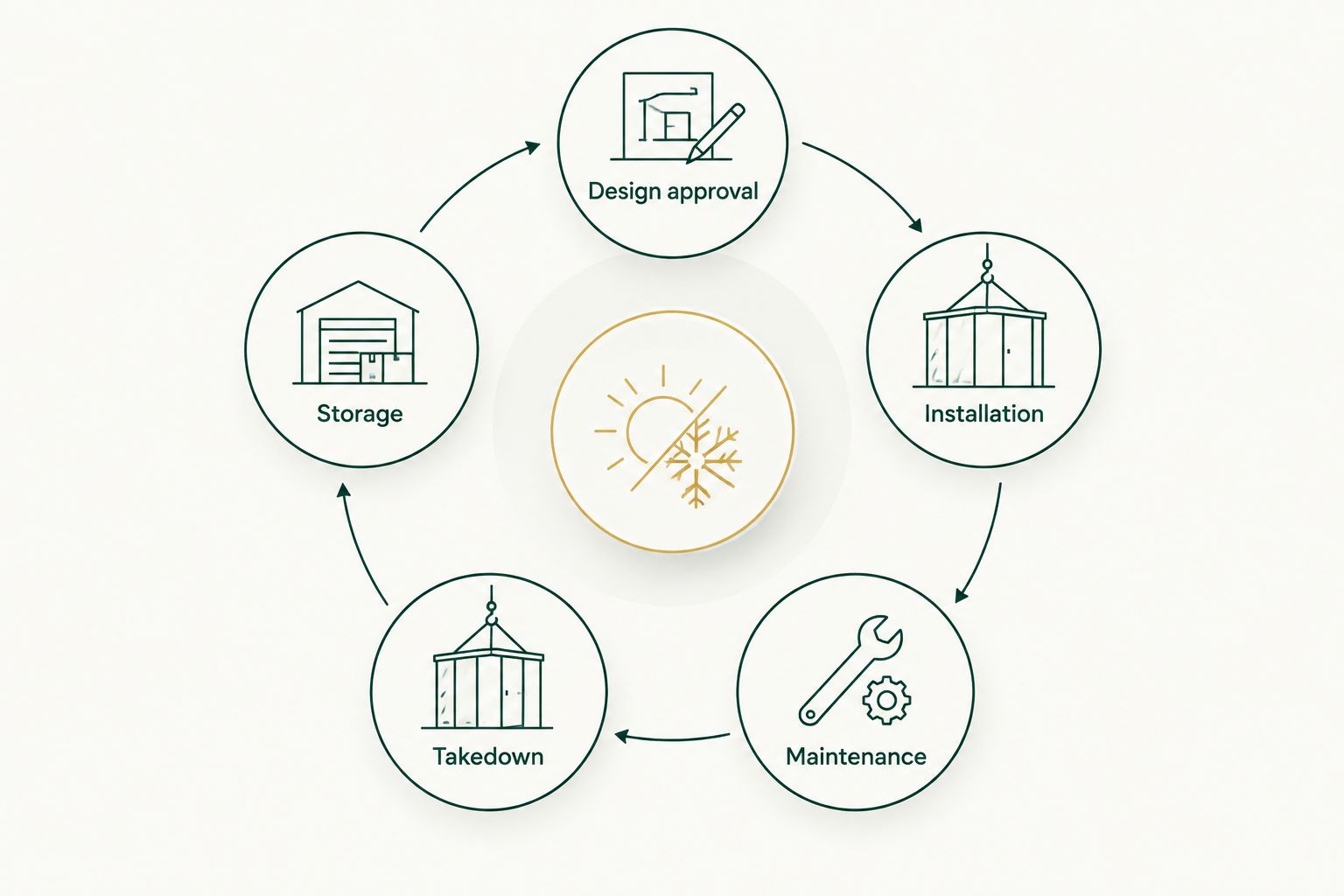
Atlanta Christmas Lighting Co is best for Atlanta office property managers seeking Christmas lighting design, installation, maintenance, takedown, and storage from one provider. Its stated service scope covers those stages for commercial properties across greater Atlanta. That makes it relevant when your objective is to reduce separate seasonal handoffs.
The trade-off is that your property still needs to approve the design, coordinate access, and agree on the service details. Do not assume maintenance response terms, removal dates, or storage arrangements from the service description alone. Discuss your building’s requirements with Atlanta Christmas Lighting Co and put the agreed responsibilities in writing.
Use these headings in your responsibility sheet:
- Design approval: identify who signs off on the layout.
- Installation: assign site access and work-area coordination.
- Maintenance: name the reporting contact and agreed process.
- Takedown: define access requirements and removal expectations.
- Storage: document custody, labeling, and the next-season handoff.
The service cycle should remain visible in the proposal, not disappear behind a single installation line item.
4. Approve a design that supports the building
Use annotated photographs to compare layouts before requesting a more detailed presentation. Start with the features that identify the property: the main entrance, a visible roofline, or selected landscape elements. You do not need to decorate every available surface.
Review the concept from 2 viewing positions: the street approach and the tenant entrance. A roofline visible to drivers does not necessarily help visitors find the door. Likewise, an entrance-focused display needs a separate check against signs, reception sightlines, and nearby office windows.
Choose colors deliberately. Warm white, pure white, and multicolor are design options, not a quality ranking. Ask for a visual reference and use one approved direction across shared areas unless ownership wants distinct zones.
For the 2026 design approval, check these details:
- Identify the main visual focus on the annotated photo.
- Review the display from the street and entrance.
- Keep building names and directional signs readable.
- Check light placement near occupied office windows.
- Confirm the color direction and permitted attachment points.
5. Compare proposals using the same requirements
Create a simple comparison sheet using your approved site scope. Send the same photographs, locations, access restrictions, and service requirements to each provider. Otherwise, a shorter proposal can appear easier to approve simply because it leaves work undefined.
Separate included work from retained responsibilities. Ask who supplies the lighting, who maintains it, who removes it, and who stores it. Record equipment ownership and custody rather than assuming those arrangements follow from the installation service.
Review the provider’s documentation through your normal vendor onboarding process. Obtain current insurance evidence and any licensing information your procurement process requires. Confirm that the entity named on the proposal matches the documentation you receive.
Use this proposal checklist:
- Match every proposal to the same decorated locations.
- Record lighting supply and equipment ownership terms.
- Identify maintenance inclusions and reporting procedures.
- Confirm takedown and storage responsibilities separately.
- Review vendor documentation and subcontractor arrangements.
- List exclusions before approving the agreement.
6. Coordinate installation and maintenance with tenants
Build the work plan around your property’s access rules. Share loading instructions, parking restrictions, security requirements, and authorized work areas before the installation visit. Your team should not have to resolve those questions while equipment is being unloaded.
Put 3 milestone dates in your 2026 schedule: installation, activation, and takedown. Agree on the dates with the provider, and communicate only the confirmed schedule to tenants. Keep any tenant notice focused on access changes and the correct contact for questions.
Name a single reporting route for lighting faults. A tenant should be able to describe the location without deciding whether to call security, facilities, or the installer. Your internal contact can then follow the agreed maintenance process.
Before installation, complete these tasks:
- Share authorized arrival, parking, and loading instructions.
- Confirm any temporary changes to pedestrian access.
- Notify affected tenants about the agreed work schedule.
- Document the approved lighting operating schedule.
- Name the fault-reporting contact and escalation route.
- Review the finished display against the approved layout.
7. Plan takedown and storage before activation
Set the removal requirements while the installation details are still being discussed. Takedown needs building access and work-area coordination too. Do not leave that planning until tenants start asking when the display will come down.
Specify what a completed handoff means: lighting removed, temporary attachments addressed, work areas cleared, and equipment custody recorded. Ask how any surface concerns will be documented and who will review them. Avoid vague instructions such as leaving the property as found without defining the review process.
Storage also needs a clear agreement. Atlanta Christmas Lighting Co lists takedown and storage within its Christmas lighting services; confirm how those services apply to your property’s approved scope. Keep your own design record even when someone else holds the equipment.
Close the season with these records:
- Confirm the agreed takedown access arrangements.
- Photograph the display before removal for design reference.
- Record any surface concerns during the handoff.
- Confirm equipment custody and location labeling.
- Save approved layouts and notes for the next season.
Compare service options for an office property
The best option is the one that matches your team’s capacity and building requirements. Use this table to decide how much responsibility to retain. These are service models, not claims about another provider’s performance.
| Option | Best for | Main advantage | Key limitation |
|---|---|---|---|
| In-house management | Accessible, limited displays within staff competence | Direct control over layout and scheduling | Your team retains installation, maintenance, removal, and storage duties |
| Installation-only contractor | Properties with a separate maintenance and storage plan | Delegates the installation work | Other seasonal responsibilities remain unless expressly included |
| Full-service provider | Exterior displays and managers seeking fewer handoffs | Coordinates the agreed seasonal service stages | Requires clear access, maintenance, and custody terms |
| Atlanta Christmas Lighting Co | Greater Atlanta office managers seeking design through storage | Offers design, installation, maintenance, takedown, and storage | Property-specific terms still need written agreement |
For your 2026 decision, compare retained workload alongside the display itself. An installation-only arrangement is a poor match when nobody at the property is assigned to maintenance or removal. Full service is unnecessary when a limited display fits safely within an established internal process.
Common mistakes office property managers make
Approving appearance without approving access
A design can look right while conflicting with loading activity or a busy entrance. Require the access plan and the visual layout to be approved together. Neither approval substitutes for the other.
Letting tenants give conflicting instructions
Separate tenant requests from authorized scope changes. Route feedback through the property’s approval owner so installers do not receive different instructions from reception, facilities, and individual tenants.
Treating maintenance as an unstated inclusion
The word installation does not define who handles faults afterward. Write down the reporting process and agreed service responsibilities before activation. The property team needs an operating plan, not an assumption.
Ignoring lighting near occupied windows
A display viewed from outside can still affect people working inside. Review proposed placement near tenant windows and agree on the operating schedule. Include affected spaces in the design review.
Ending the agreement at installation
Removal and storage are separate tasks even when one provider handles them. Document both before approving the work. Otherwise, the property retains an unresolved seasonal handoff.
FAQ
What’s the best Christmas lighting approach for an office building?
The best approach matches the display to tenant access, building restrictions, and your team’s service capacity. Approve the layout and assign installation, maintenance, takedown, and storage responsibilities before work begins.
Should office property managers choose full-service Christmas lighting?
Choose full service when you want one provider responsible for the agreed seasonal stages. Atlanta Christmas Lighting Co offers design, installation, maintenance, takedown, and storage for commercial properties across greater Atlanta; confirm the property-specific terms in writing.
Can our maintenance team install the office Christmas lights?
Use an internal team only for work within its competence and your building’s approved procedures. Do not assign electrical alterations or elevated installation to unqualified staff, and identify who will maintain and remove the display.
What should an office Christmas lighting proposal include?
The proposal should identify decorated locations, lighting supply, attachment methods, access requirements, and service responsibilities. Include maintenance, takedown, storage, exclusions, and equipment custody terms so the scope is clear.
How do we keep Christmas lighting from disrupting tenants?
Coordinate installation around approved access rules and communicate confirmed work arrangements to affected tenants. Keep entrances and signs clear, check lighting near office windows, and provide one fault-reporting contact.
Should we choose warm white or multicolor lights for an office property?
Choose the color direction that ownership approves for the building rather than treating either option as universally better. Review a visual reference from the street and tenant entrance, then keep shared areas consistent with the approved design.
When should we arrange Christmas light takedown and storage?
Arrange takedown and storage before approving installation. Agree on removal access, the completion review, equipment custody, and labeling so the seasonal handoff has a defined owner.
One last thing
Save the approved layout, not just a photograph of the finished display. A finished photo shows appearance; an annotated layout records where lighting belongs, which areas were excluded, and what the building approved.
Close your 2026 file with that layout, the responsibility sheet, and the takedown record. Those documents give the next planning discussion a clear starting point—even if the property contact changes.