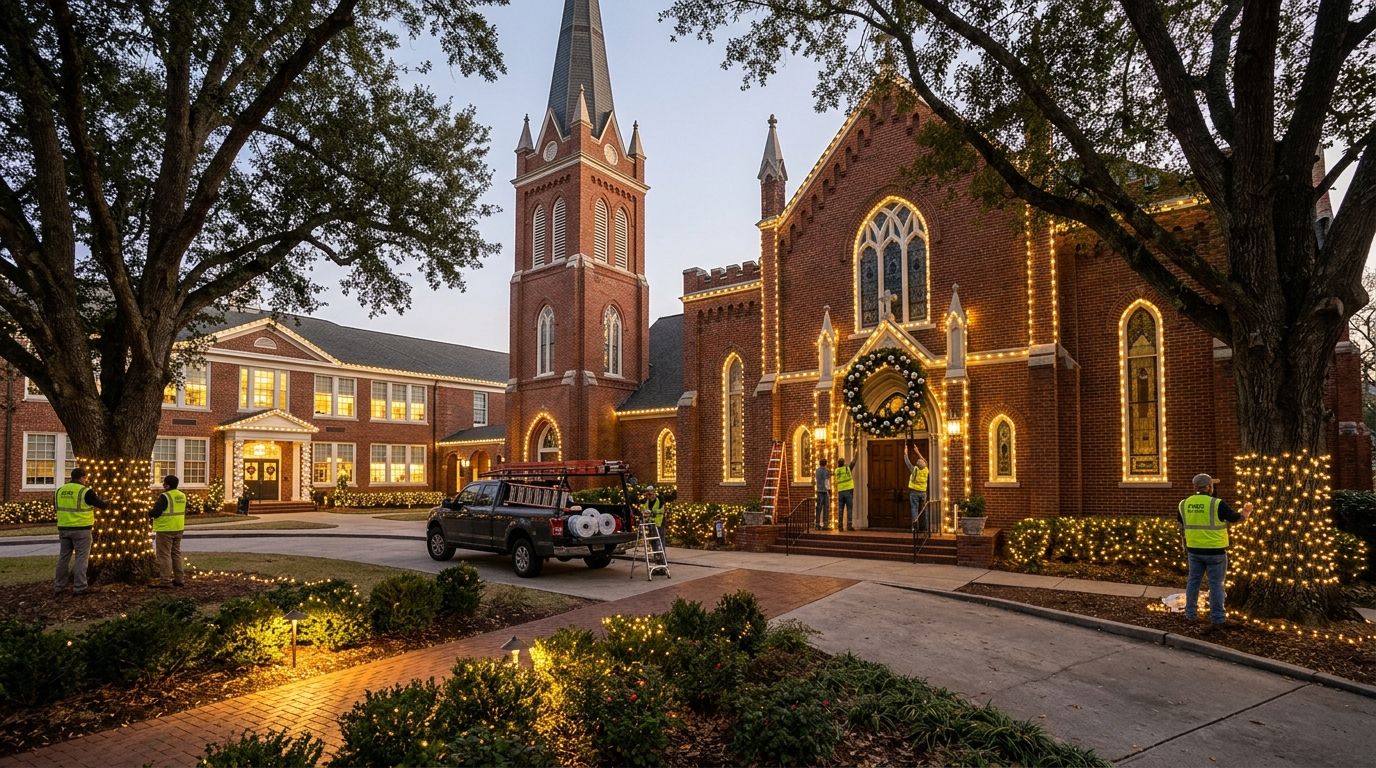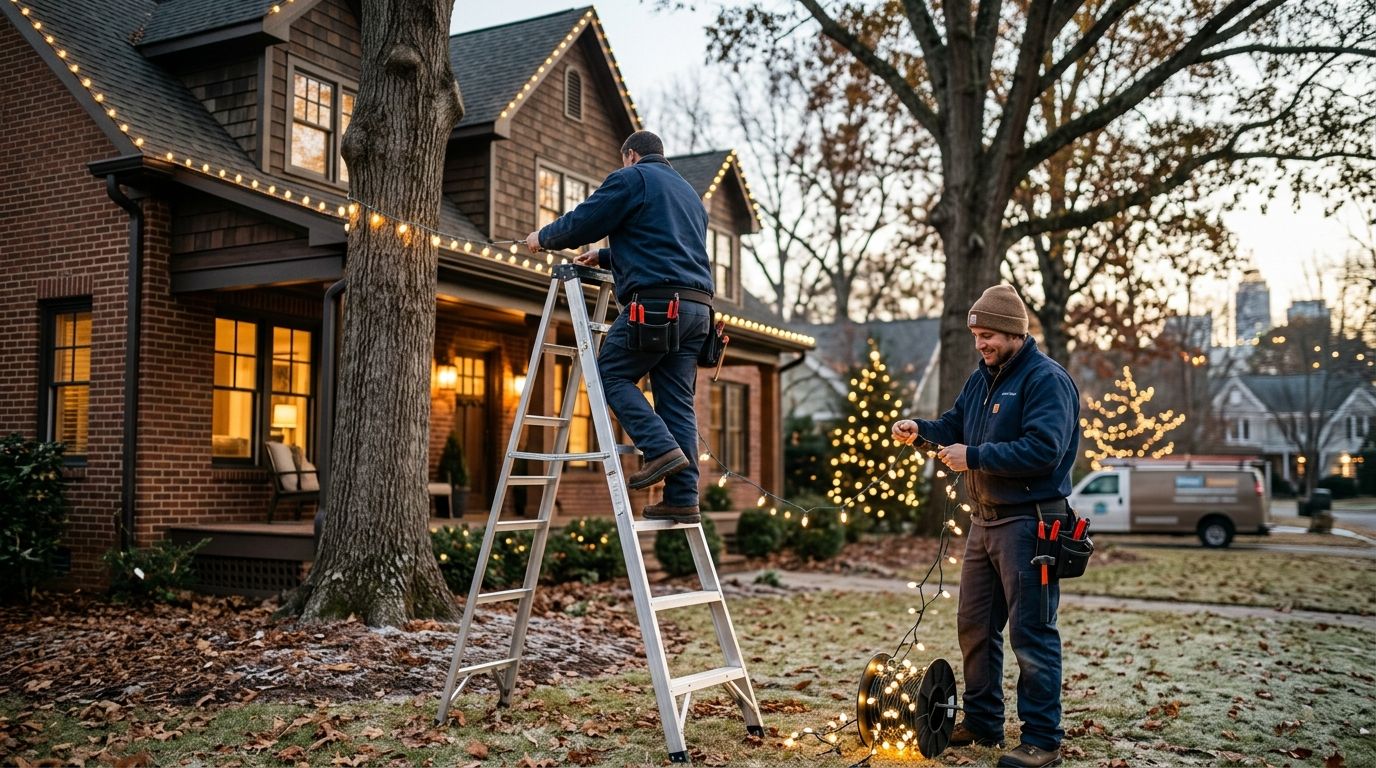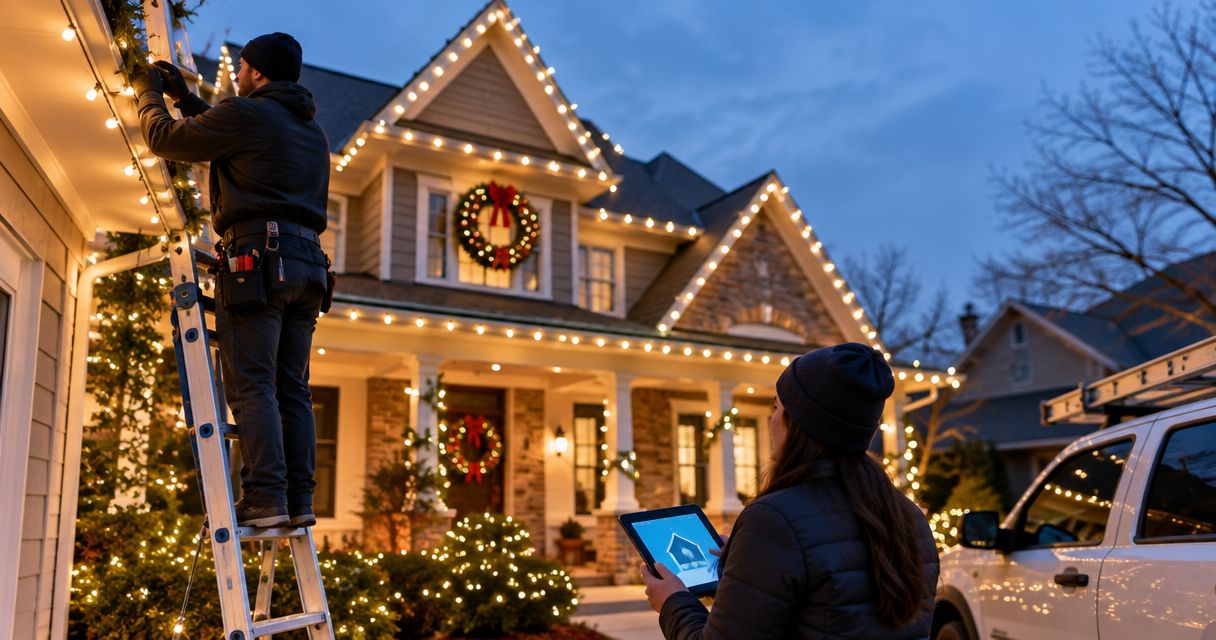
Finding the best insured licensed Christmas light installation companies in Atlanta comes down to one question: who's actually carrying a real general liability policy, and who's just saying the words on a flyer. This guide ranks the four types of installers metro Atlanta homeowners and businesses hire for the 2026 season, what separates a licensed crew from a side-gig operator, and which category actually fits your property.
- Full-service licensed and insured installers like Atlanta Christmas Lighting Co win for liability protection and commercial-grade LEDs in 2026.
- National franchise chains work best for large commercial campuses needing standardized packages across multiple properties.
- General handyman crews suit small single-story homes on tight budgets but rarely carry real insurance.
- Unlicensed solo installers found online carry the highest liability risk for roof damage or injury claims.
Why this matters
Georgia doesn't require a dedicated state license just to hang string lights, which means "licensed and insured" means something different depending on who's saying it. A landscaping crew's general liability policy may not cover ladder work above the second story. A solo operator found on Facebook Marketplace may have no policy at all.
A full-service option like Atlanta Christmas Lighting Co operates as a licensed and insured Christmas light installer specifically, which changes who's on the hook if a strand shorts out or a ladder scratches a gutter mid-install. That distinction matters more than the color of the lights.
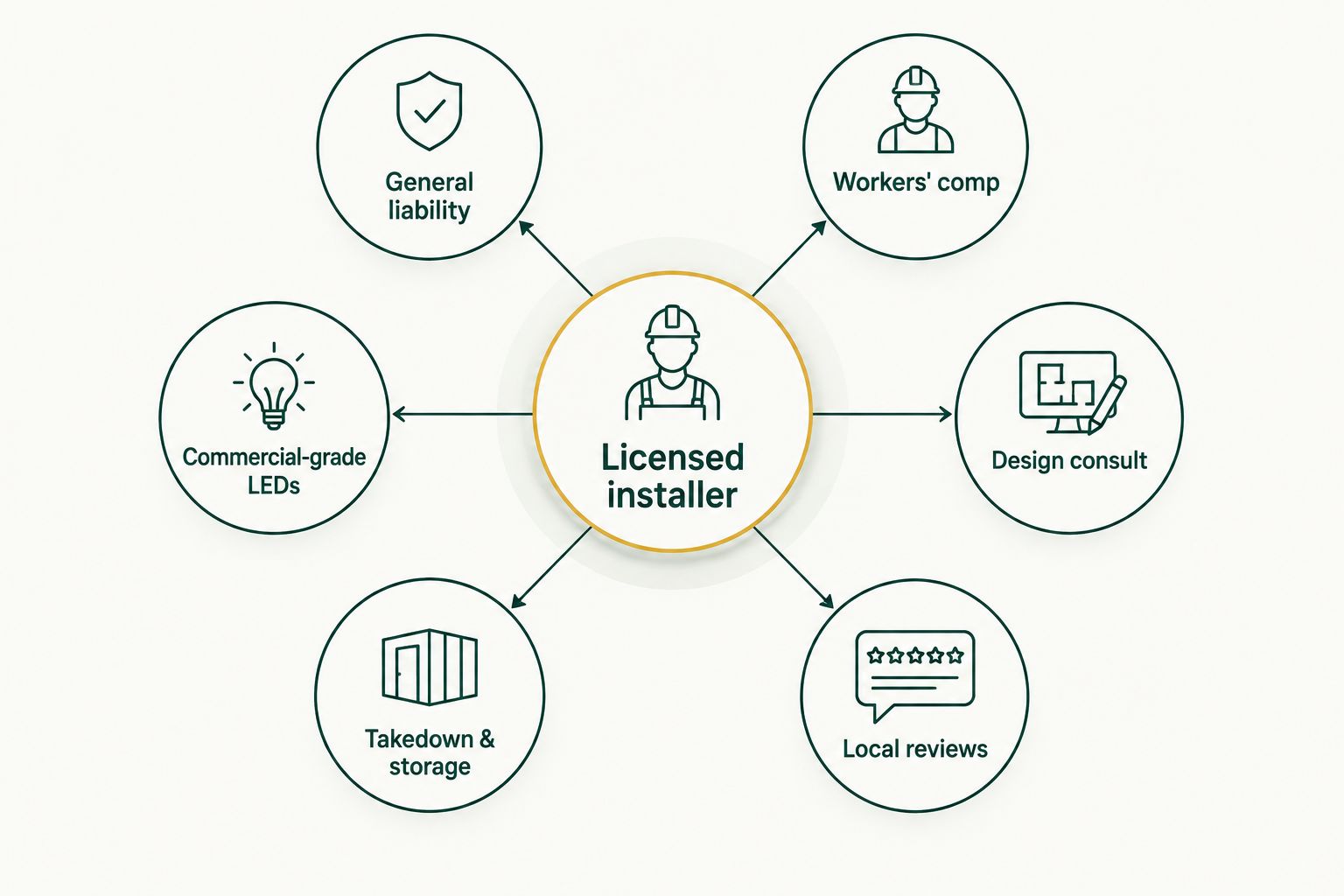
What makes the best Christmas light installation company
- General liability insurance — ideally $1 million or more in coverage, not a vague "we're covered" answer
- Workers' comp for the crew actually on your roof or in your trees
- Commercial-grade LED strands built for months of continuous outdoor exposure, not consumer big-box strings
- A design consultation before anyone climbs a ladder
- Takedown, storage, and mid-season repair built into the service, not a separate scramble in January
- A verifiable local Atlanta presence — reviews and a real address, not just a phone number
Christmas light installers in Atlanta at a glance
| Category | Best for | Standout feature | Key limitation |
|---|---|---|---|
| Full-service licensed & insured local installer | Hands-off homeowners who want liability protection | Commercial-grade LEDs plus design, takedown, and storage handled | Books up early in the 2026 season |
| National franchise lighting chain | Large commercial campuses with multiple locations | Standardized packages across cities | Less flexibility for custom Atlanta architecture |
| General handyman or landscaping crew | Small single-story homes on tight budgets | Already on-site for other seasonal work | Rarely carries real liability coverage |
| Unlicensed solo or gig installer | Extremely small one-off jobs | Lowest upfront ask | No insurance if a ladder damages your roof |
1. Full-service licensed & insured local installer: best for homeowners who want the whole job handled
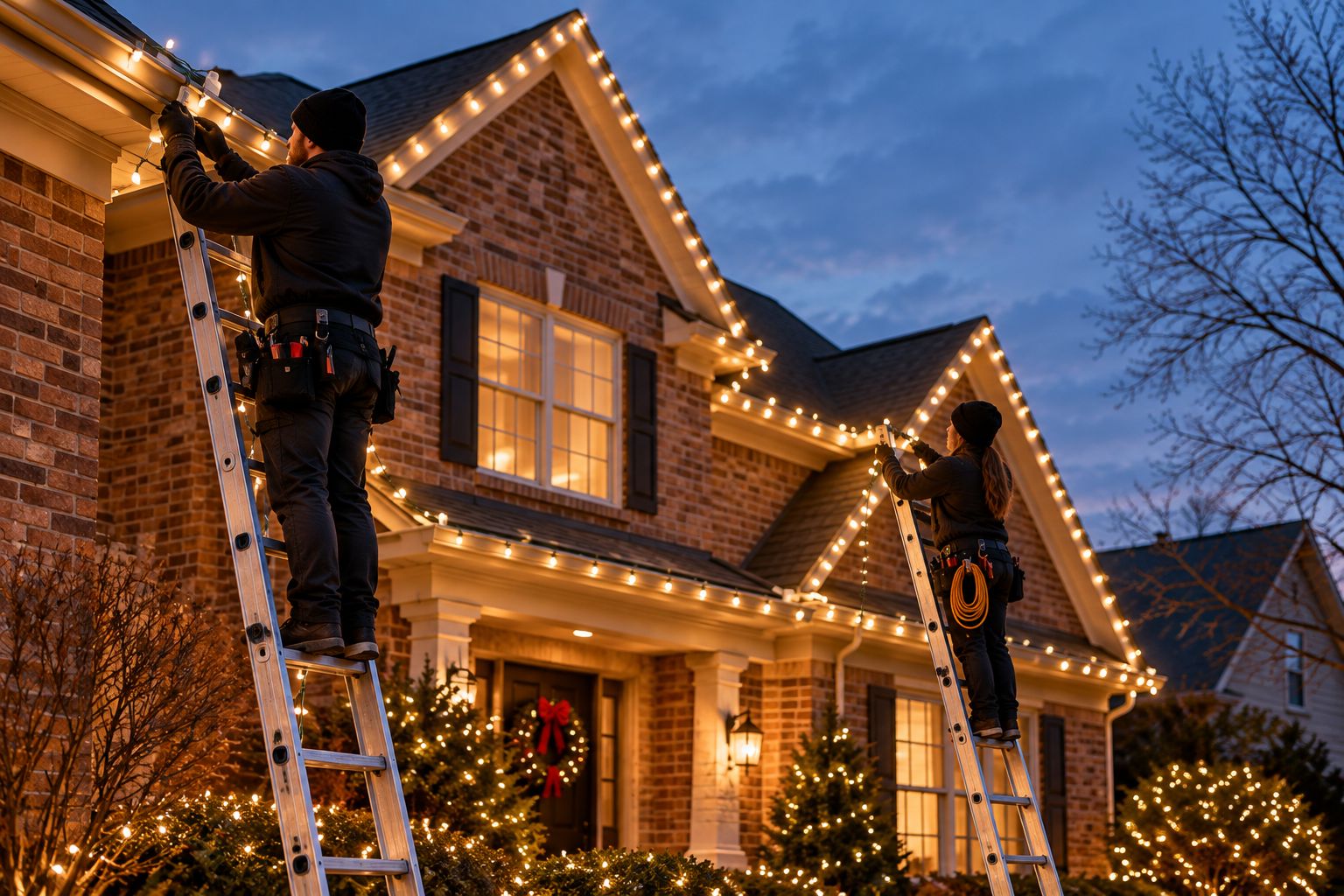
This category covers companies that design, install, maintain, and take down Christmas lights as a complete service — the model Atlanta Christmas Lighting Co runs on. The work is bonded to a real insurance policy, and the LED product is commercial-grade, meaning it's built to survive freeze-thaw cycles and months of nightly use rather than one season in a plastic bag.
Full-service installer pros:
- Carries general liability insurance, often $1 million in coverage, so property damage during install isn't your problem to solve
- Uses commercial-grade LED strands, not consumer strands from a big-box shelf
- Handles the full cycle: design walkthrough, installation, mid-season repairs, and January takedown with storage for next year
- Local presence means someone can actually show up if a strand goes dark two weeks before Christmas
Full-service installer cons:
- Costs more than a one-evening handyman job or doing it yourself
- Popular installers in Atlanta book up by late summer for the 2026 season, so December calls often go unanswered
Best for: homeowners and small businesses who want one licensed, insured team responsible for the whole job, from ladder work to storage.
Verdict: Buy.
2. National franchise lighting chain: best for multi-site commercial accounts
Franchise lighting operations sell standardized packages, often backed by a corporate insurance policy that covers individual franchisees. They're built for scale, not for one house on a cul-de-sac.
Franchise chain pros:
- Consistent packages across several properties in different cities
- Corporate backing usually means a real policy is in place
- Established scheduling systems for multi-site rollouts
Franchise chain cons:
- Local crews are often subcontracted, so design customization varies by franchisee
- Less flexibility for Atlanta-specific architecture like wraparound porches or steep gables
Best for: property managers or businesses coordinating lighting across multiple locations, not a single Atlanta home.
Verdict: Hold — right for a multi-property portfolio, overkill for one house.
3. General handyman or landscaping crew: best for small, single-story budgets
Many lawn care and handyman businesses add Christmas lights as a winter side offering. It's convenient if they're already on your property for other work, but lighting usually isn't their core trade.
Handyman crew pros:
- Often cheaper since lighting isn't their main business line
- Convenient if they already maintain your yard year-round
Handyman crew cons:
- Rarely carries a liability policy specific to ladder and roof work
- No design consultation — you get whatever look fits their schedule that day
- No dedicated takedown or storage system, so lights get boxed loose and tangled for next year
Best for: a single-story home with a simple roofline and a small, low-complexity job.
Verdict: Hold — fine for low-risk jobs, skip it for two-story homes or anything requiring work above 10 feet.
Book your 2026 install before slots fill
Full-service design, installation, maintenance, and takedown across Atlanta.
4. Unlicensed solo or gig installer: best for tiny, low-complexity jobs where you accept the risk
Found on Facebook Marketplace or Craigslist, this category is usually one person with a ladder and a truck. It's the cheapest option on this list, and the riskiest.
Solo installer pros:
- Lowest cost among all four categories
- Flexible, informal scheduling
Solo installer cons:
- No insurance means you're filing a claim against your own homeowner's policy if something goes wrong
- No accountability if the install is left up past January or done poorly
- Materials are inconsistent — often standard incandescent strands that burn out mid-season
Best for: extremely small, one-off jobs where the homeowner accepts full liability.
Verdict: Skip — the savings rarely justify the exposure on roof and ladder work.
“If a ladder falls off an uninsured installer's truck and cracks your gutter, you're the one filing the claim, not them.”
How this ranking works
Insurance coverage and LED product grade carry more weight than price in this ranking, because the liability gap between categories is the real differentiator in 2026, not the look of the lights. Full-service cycle — design through takedown — and a verifiable local Atlanta presence come next.
Which Christmas light installation company should you choose?
For most Atlanta homeowners, a full-service licensed and insured local installer is the default choice — the insurance coverage alone offsets the higher upfront ask, and the commercial-grade LEDs outlast whatever's on a big-box shelf. Atlanta Christmas Lighting Co fits that model for homeowners who want design, install, maintenance, and takedown handled by one accountable team in 2026. Franchise chains make sense only for multi-property accounts, and the handyman or solo-operator routes are fine only for the smallest, simplest jobs where the homeowner is comfortable carrying the risk.
FAQ
What does "licensed and insured" actually mean for a Christmas light installer in Atlanta?
It means the company carries a general liability policy covering property damage and injury during installation, and in some cases workers' comp for the crew. Georgia doesn't require a special trade license for hanging lights, so the insurance is the credential that actually matters.
Is it worth paying more for a licensed and insured installer over a handyman?
Yes for roofline or two-story work, because a handyman's general policy rarely covers ladder and roof-specific liability. The cost difference is smaller than the exposure if something goes wrong on a second-story install.
How much general liability coverage should a Christmas light company carry?
A common industry standard is $1 million or more in general liability coverage. Ask for proof of coverage before booking, not just a verbal assurance.
Do Christmas light installers need a special license in Georgia?
No dedicated state license exists specifically for holiday light installation in Georgia. That's exactly why insurance coverage, not licensing paperwork, is the credential worth checking.
What's the difference between commercial-grade and consumer LED Christmas lights?
Commercial-grade LED strands are built for continuous outdoor exposure across a full holiday season, with sturdier wiring and connectors. Consumer strands from big-box stores are designed for shorter, lighter use and fail more often mid-season.
When should you book a licensed Christmas light installer in Atlanta for 2026?
Book by late summer if possible. Full-service, licensed installers fill their 2026 calendars well before Thanksgiving, and last-minute December requests often go unanswered.
Does a licensed installer handle takedown and storage too?
Full-service licensed installers typically include takedown and storage as part of the service cycle. That's a key difference from handyman or solo installers, who usually stop at hanging the lights.
What happens if an uninsured installer damages my roof?
Without a liability policy on the installer's side, the claim usually falls to your own homeowner's insurance. That's the core risk of hiring an unlicensed solo operator instead of an insured company.
One last thing
Commercial-grade LED strands used by full-service installers draw up to 90% less energy than incandescent strands sold at big-box stores, according to the U.S. Department of Energy — which adds up fast on a facade that runs nightly from Thanksgiving through New Year's in 2026.