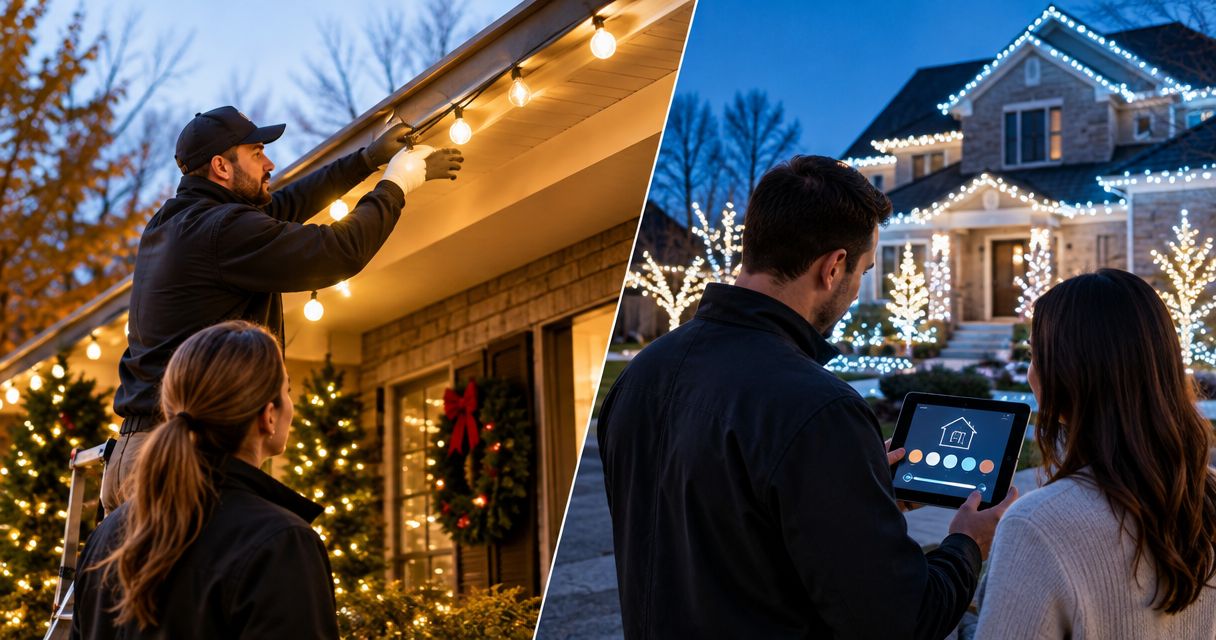
Choose Atlanta Christmas Lighting Co if you want professional Christmas light design, installation, maintenance, takedown and storage across greater Atlanta; choose Lights All Year if its written proposal better meets your property’s specific design, service and scheduling requirements. This 2026 comparison separates the confirmed full-service offering from the details you need in writing before choosing an installer.
- Atlanta Christmas Lighting Co provides full-service Christmas lighting for residential and commercial properties across greater Atlanta.
- For Atlanta Christmas Lighting Co vs Lights All Year, compare written scopes—not company names.
- Choose Lights All Year when its documented design, maintenance and removal terms better match your property.
- Confirm equipment ownership, service responsibilities and storage terms before signing with either installer.
Why this matters
A Christmas lighting decision covers more than installation day. You also need to know who handles a dark section, when decorations come down and where the equipment goes afterward.
The useful comparison is responsibility across the whole season. A detailed installation proposal still leaves work on your shoulders if maintenance, removal or storage sits outside the agreement. Decide what you want handled before comparing providers.
Atlanta Christmas Lighting Co is a fit for Atlanta homeowners and businesses seeking full-service Christmas lighting from design through storage. That identifies the service fit—not a promise about response times, equipment ownership or contract terms.
At a glance
Use this table as the outline for your comparison. A request to confirm something is a buying question, not a finding that either provider lacks it.
| Dimension | Atlanta Christmas Lighting Co | Lights All Year |
|---|---|---|
| Best for | Homeowners and businesses seeking a full-service Christmas lighting provider | Buyers whose property requirements are better met by its written proposal |
| Design and installation | Professional Christmas light design and installation | Request a property-specific design and installation scope |
| Standout feature | Service offering spans design, installation, maintenance, takedown and storage | Identify the strongest relevant feature in the proposed scope |
| In-season maintenance | Maintenance is part of the stated service offering; confirm terms | Confirm coverage, exclusions and the service-request process |
| Takedown and storage | Both are part of the stated service offering; confirm arrangements | Confirm whether both are included and who remains responsible |
| Property and location fit | Residential and commercial properties across greater Atlanta | Confirm the exact address and property type are covered |
| Schedule and accountability | Get installation, service and removal arrangements in writing | Apply the same written scheduling requirements |
| Pricing model | Confirm whether the proposal bundles or separates each service | Confirm the same structure before comparing totals |
The table does not establish a permanent-lighting capability, a warranty advantage or a faster repair service for either company. Those are separate claims that require specific documentation.
Full-service scope favors the confirmed offering
For your 2026 Christmas display, the clearest documented distinction is the client’s stated service range: design, installation, maintenance, takedown and storage. You can start with a provider that offers the full sequence, then check exactly how the agreement assigns each task.
That is useful if you want one company involved from planning through removal. It does not establish that every task is included in every proposal or that every property receives identical terms.
Lights All Year wins this dimension for your purchase if its written scope covers a requirement the competing proposal leaves out. Examples of requirements to compare include a particular display area, an agreed removal arrangement or a clearly defined maintenance responsibility. These are selection criteria, not claims about its current offering.
Recommendation: choose the complete written scope over the more reassuring headline. The limitation of a broad full-service description is that it cannot replace a property-specific agreement.
Design wins belong to the proposal that shows your property
A design comparison needs more than a preference for warm white or multicolor lights. You need to see which parts of the property receive lighting and which remain outside the project.
Ask both providers to distinguish the roofline, entrance, trees and landscape features in their proposals. For a commercial property, identify customer-facing areas and any access restrictions before approving the design.
Evaluate each proposal against the same brief:
- Display areas: Name the surfaces and features you want included.
- Appearance: Describe the light color and overall look you want.
- Attachment approach: Ask how the proposed installation relates to your surfaces.
- Power plan: Ask how the installer will assess the proposed setup.
- Exclusions: Identify decorations, areas and follow-up work outside the scope.
Lights All Year is the better design choice when its proposal answers your brief more clearly and you prefer the documented result. The client is the better choice when its design does that job better. Neither outcome follows from the company name.
Maintenance is a tie until the service terms separate them
Maintenance appears in the client’s stated offering. The practical question is what that means for your particular installation once the lights are operating.
For both proposals, ask how you report an issue, who assesses it and which work falls within the agreement. Distinguish a failed light from damage, a power issue or a requested design change; the contract needs to explain responsibility rather than treating every problem as identical.
For a business planning a 2026 holiday event, name the event date when discussing service requirements. Ask the provider to state the applicable arrangements without assuming that maintenance means immediate attendance.
Treat maintenance as a tie until comparable written terms establish a difference. Do not award either company a response-time advantage based on a general promise to look after the display.
Takedown and storage favor clear responsibility
Takedown and storage are part of the client’s service offering. Their value to you depends on the details: who schedules removal, who stores the equipment and what happens before another installation.
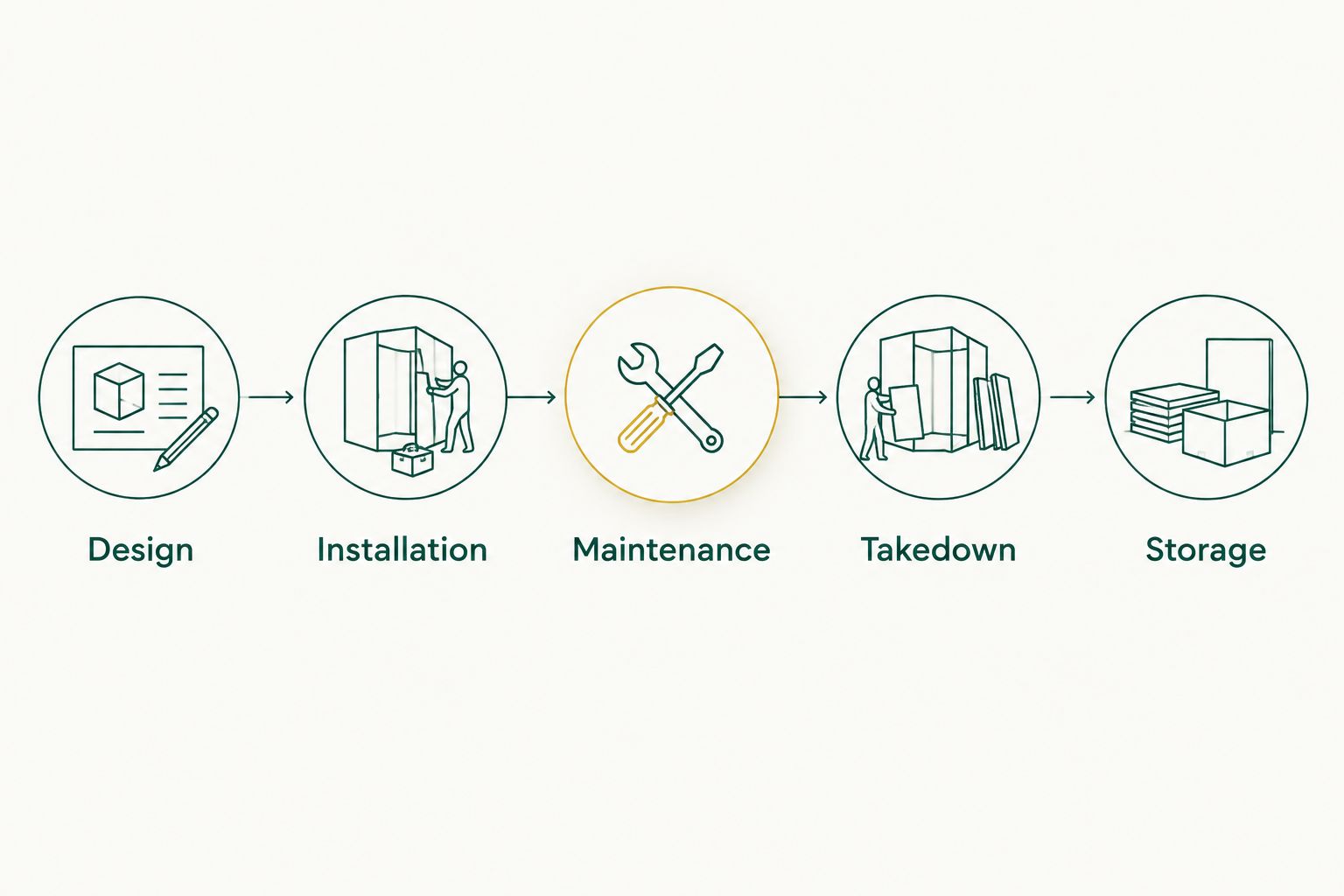
Request an agreement that follows the whole process:
- Design: Approve the display areas and appearance.
- Installation: Confirm access and the agreed work.
- Maintenance: Establish how service requests are handled.
- Takedown: Record the removal arrangements.
- Storage: Establish custody and return arrangements.
This sequence gives you a practical way to compare both companies. It also exposes a common gap in a proposal: explaining installation carefully while leaving the end of the season vague.
Storage does not, by itself, establish ownership. Ask who owns the lights, what is stored, how the equipment is identified and what happens if you do not renew the service.
Lights All Year wins this part of your decision if its written removal and storage arrangements suit you better. A provider that offers storage is not automatically the better fit for a buyer who wants to retain possession of the equipment.
Property fit starts with your address, not an Atlanta label
The confirmed service area is greater Atlanta, with both residential and commercial properties included in the client’s offering. That is a useful starting point, not confirmation of a particular installation date or site requirement.
For either company, supply the address, property type and relevant access information before evaluating the proposal. A homeowner’s brief and a shopping center’s brief should identify their different responsibilities rather than rely on the same general description.
If you manage a commercial property, specify who approves the design, who authorizes access and who receives service updates. If you own a home, identify any approval requirements and areas you do not want disturbed.
Lights All Year is the better property fit when its confirmed coverage and site-specific scope match your requirements more closely. Do not infer coverage, commercial experience or a particular installation capability without confirmation.
Scheduling is another tie until dates are agreed
For the 2026 season, give both companies the same desired display date and any access restrictions. Then distinguish your preferred date from the date the provider agrees to deliver.
A useful scheduling discussion covers installation, service communication and removal. Ask how weather-related changes are communicated and who you contact when your property’s access arrangements change.
Neither company earns a scheduling win simply by replying first. A quick response is helpful, but it does not establish an installation commitment or a repair deadline.
Use these questions before accepting either proposal:
- What installation arrangement will appear in the agreement?
- What do I need to prepare before the crew arrives?
- How will scheduling changes be communicated?
- How will removal be arranged after the display period?
Choose the provider whose written schedule fits your obligations. If neither proposal addresses a firm event deadline, resolve that issue before approving the work.
Pricing models: compare bundled and separate responsibilities
For a 2026 comparison, ask whether each proposal bundles the seasonal work or separates design, installation, maintenance, removal and storage. Do not assume either company uses a particular model until the proposal explains it.
A bundled scope makes responsibilities easier to review together. Separately listed services make it easier to see which tasks you are accepting or declining. Neither structure is automatically better; the deciding factor is whether it matches the work you want handled.
Equipment terms deserve their own question. Establish whether the agreement involves equipment you own, equipment supplied for the service or another arrangement explicitly described by the provider.
Compare the same design and responsibilities before evaluating the financial terms. A smaller display or an installation-only scope is not equivalent to a broader seasonal service.
You can review the client’s Christmas lighting services before requesting a property-specific scope. Ask for the inclusions and exclusions together so you do not have to reconstruct the agreement from separate conversations.
Request a property-specific lighting scope
Describe your Atlanta property, display goals and desired installation timing.
Final verdict: choose by the responsibility you want handled
Choose Atlanta Christmas Lighting Co for full-service seasonal planning
Best for: Atlanta homeowners and property managers seeking design through storage. The stated offering covers the seasonal service sequence and both residential and commercial properties.
The next step is to turn that service description into an agreement for your property. Confirm maintenance terms, ownership, scheduling and removal rather than treating the general offering as a complete contract.
Choose Lights All Year for a better-matched written proposal
Best for: buyers whose specific requirements are better addressed by its documented proposal. Choose Lights All Year when the agreed design, site coverage, service responsibilities or schedule fit your brief better.
That is a concrete reason to choose a competitor. It does not require assuming that Lights All Year installs permanent systems, offers broader coverage or provides different guarantees.
One-glance scorecard
| Dimension | Winner |
|---|---|
| Full-service scope | Client’s confirmed offering is the starting advantage; compare the actual agreements |
| Design | Provider with the clearer, preferred property-specific design |
| Maintenance | Tie until written coverage distinguishes the proposals |
| Takedown and storage | Provider with the better-matched removal and custody terms |
| Property and location fit | Provider confirming your address and site requirements |
| Scheduling | Tie until commitments establish a difference |
| Pricing structure | Provider matching the same scope to your preferred responsibilities |
FAQ
Is Atlanta Christmas Lighting Co better than Lights All Year?
Atlanta Christmas Lighting Co is a fit when you want professional Christmas lighting services spanning design, installation, maintenance, takedown and storage across greater Atlanta. Choose Lights All Year instead when its written proposal better matches your property’s requirements.
Does Lights All Year install permanent Christmas lights?
Do not infer permanent-lighting capability from the Lights All Year name. Ask the company to confirm the installation type, equipment and service terms in its proposal.
Which company is better for a commercial Christmas display?
Choose the company whose written commercial scope fits your site, approval process and operating requirements. Confirm access arrangements, maintenance responsibility and removal before approving the work.
Does a full-service Christmas lighting agreement include storage?
Only the agreement establishes whether storage is included in your project. Ask who retains the equipment, who owns it and what happens when the service ends.
How should I compare Christmas lighting proposals in 2026?
Give both providers the same property brief and compare design, installation, maintenance, takedown and storage. Resolve differences in scope before comparing the financial terms.
Which Christmas lighting company repairs problems faster?
A faster-service claim requires a documented commitment that applies to your property. Ask both companies for their reporting process and applicable service terms rather than assuming maintenance guarantees immediate attendance.
One last thing
Ask what happens if you do not book again after the 2026 season. That question brings equipment ownership, storage custody and return arrangements into the same conversation.
Choose the agreement that explains the ending as clearly as the installation. You should understand what remains your responsibility before the lights go up—not discover it when they come down.