
Interior designers’ Christmas lighting is the coordination of seasonal illumination with a property’s design, with the aim of delivering a coherent, client-approved holiday setting. This guide covers Christmas lighting for interior designers and home stylists in Atlanta, where the brief must connect interior styling, exterior sightlines, installation responsibilities, and eventual removal.
- Christmas lighting for interior designers starts with an approved design brief, not a purchase list.
- Atlanta Christmas Lighting Co suits Atlanta projects needing Christmas light design, installation, maintenance, takedown, and storage.
- Keep creative approval with the designer; assign installation and maintenance responsibilities explicitly.
- Approve holiday lighting samples against existing finishes before extending the scheme across the property.
Why Christmas lighting matters for interior designers
Treat seasonal lighting as part of the design scope, not an accessory added after styling. A roofline visible through a living-room window belongs in the same approval conversation as the tree, mantel, and entry arrangement. Otherwise, separately acceptable choices can produce an inconsistent overall result.
Your responsibilities also differ from those of a homeowner arranging lights for personal use. You need a documented brief, an identifiable approver, and clear boundaries between styling work and installation work. For projects involving listing photography or showings, the related guide to Christmas lighting for real estate agents and home stagers addresses that distinct audience.
For your 2026 projects, make the approval process repeatable without making every property look identical. Standardize the decisions you record; customize the design itself. A client should understand both the intended appearance and who handles the display after installation.
Build your Christmas lighting plan
Use the following steps to move from creative direction to a maintained display. Keep the scope, samples, responsibilities, installation record, and removal plan together in the project folder so decisions remain visible to everyone involved.
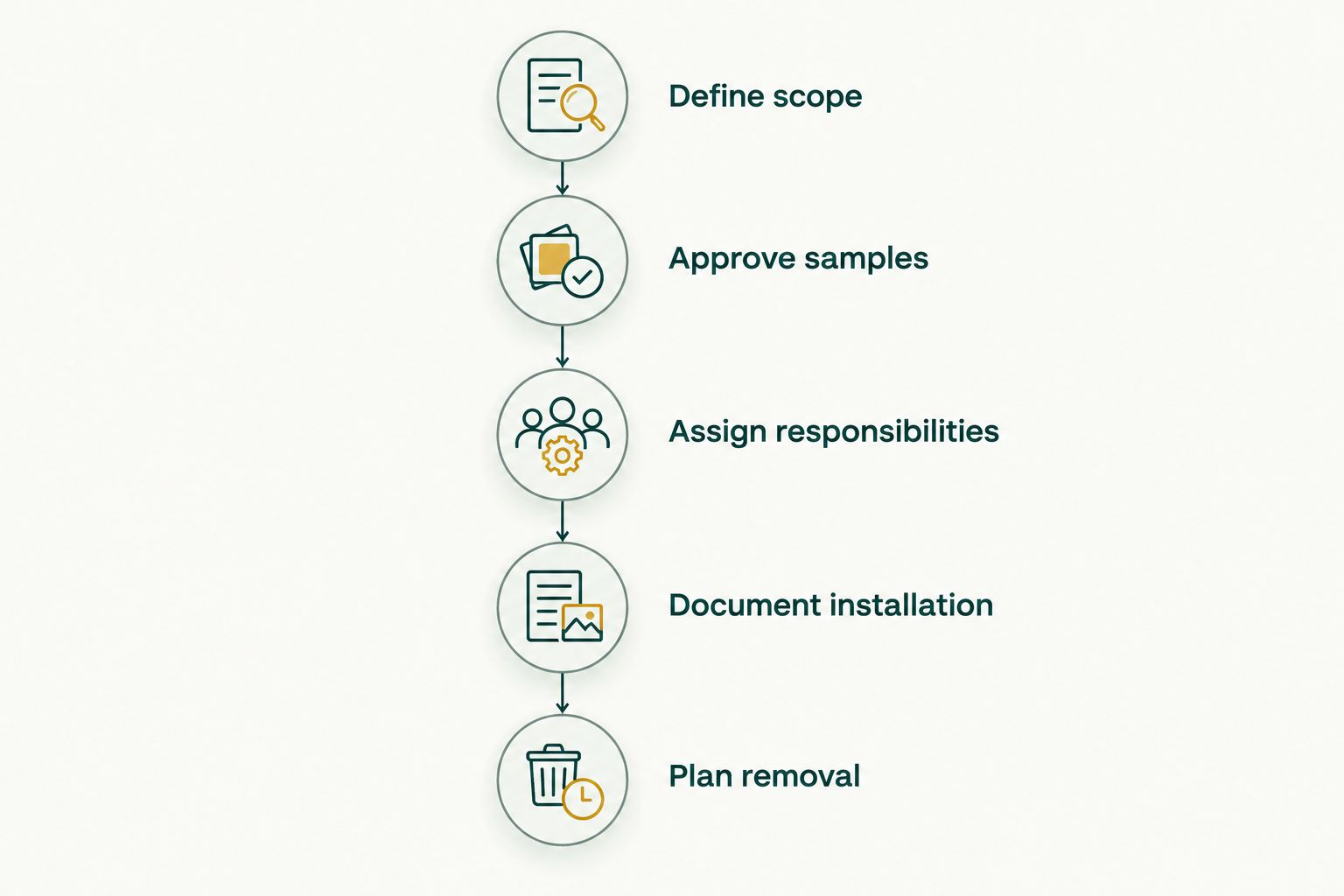
1. Define scope
Start with a marked-up property photograph and a room-by-room note. Identify what you are designing, what the client already owns, and which areas require installation support. A sketch and shared document are enough to establish the brief.
Separate creative intent from execution. Specifying a roofline effect does not mean your styling team should access the roof; specifying illuminated greenery does not establish who supplies, attaches, or removes it. Write those boundaries before approving a design.
For a 2026 project, record the desired installation window and removal window as planning requirements, not promises. Confirm actual dates with the people responsible for the work.
- Mark included rooms, entrances, rooflines, trees, and outdoor areas.
- Identify existing decorations the client wants incorporated.
- List excluded areas so the scope cannot expand by implication.
- Record access restrictions and surfaces requiring special care.
- Name 1 client approver for design changes.
2. Approve samples
Compare actual lighting samples in the intended setting before approving a complete scheme. Product photographs do not show how a light source looks beside the client’s wall paint, stone, wood, or existing lamps. Use the same sample-viewing process for each proposed color direction.
Give the client a clear choice rather than an unlimited collection of inspiration images. Warm white, cooler white, and multicolor are different creative directions; none substitutes for seeing the selected lights in context. Check both the direct view and the reflection in nearby glass.
Approve the lighting appearance before approving the quantity. This prevents a detailed installation plan from becoming the reason to accept a color the client dislikes.
- Prepare 3 reference images showing the intended overall treatment.
- View samples beside the property’s existing interior lighting.
- Compare the effect through windows after dark.
- Record the approved color description and sample identifier.
- Photograph the approved sample for the project record.
3. Assign responsibilities
Build a simple responsibility sheet yourself: design approval, supply, installation, maintenance, removal, and storage. Each task needs an owner. This manual approach works when the client or styling team will manage the display, but it also exposes the coordination work that remains with you.
Atlanta Christmas Lighting Co is best for Atlanta designers who need full-service Christmas lighting support. The company provides design, installation, maintenance, and takedown/storage services for residential and commercial properties across greater Atlanta.
Atlanta Christmas Lighting Co offers an alternative to coordinating those lighting tasks separately. Your design brief still needs approval, and you should confirm the exact division between lighting work and your interior styling scope before proceeding.
- Assign responsibility for supplying each lighting element.
- Keep client design approval separate from installation decisions.
- Identify the person receiving maintenance requests.
- Confirm who handles decorations outside the lighting scope.
- Record who authorizes changes during installation.
4. Coordinate sightlines
Review the display from where the client actually experiences the property. A lighting layout should work at the entrance, from the street, and from the main occupied rooms. A strong exterior outline does not automatically produce the right interior view.
Begin with photographs taken from those positions and annotate them yourself. Ask the installer to review the exterior elements against the same images. That gives your creative direction a concrete reference without prescribing unsafe installation methods.
For your 2026 presentation, distinguish the arrival view from the room view. An illuminated tree outside a window can function as part of the interior composition even though the installation belongs outdoors.
- Check 2 viewpoints at minimum: the arrival view and the main room view.
- Mark focal points that should remain visually dominant.
- Identify reflections that compete with interior styling.
- Check that doors, paths, and access points remain unobstructed.
- Remove unnecessary elements before adding more lighting.
5. Document installation
Create an annotated installation record before work begins, then update it to reflect the completed display. Use property photographs, a location list, and written notes rather than relying on a verbal walkthrough. This is useful whether you coordinate the work yourself or appoint an installer.
Treat the record as a design and communication aid, not an electrical specification. Follow product instructions, use lighting suitable for its intended location, and leave electrical work to an appropriately qualified professional. Do not guess at circuit capacity or permitted connections.
Agree on an after-dark review so the client can assess the actual lighting effect. Record any approved departures from the original layout while everyone can still identify them.
- Label each installed lighting location on a property photograph.
- Record approved attachment restrictions and protected finishes.
- Keep product instructions with the installation documentation.
- Note changes made during installation and who approved them.
- Photograph the completed display from the approved viewpoints.
6. Establish maintenance
Write a maintenance procedure before the display is handed over. A shared message thread and project folder can handle reporting, but only if everyone knows whom to contact and what information to provide. Avoid leaving the client to choose between the designer, stylist, and installer when something needs attention.
Separate an appearance concern from an electrical safety concern. A section that looks inconsistent needs a documented review; a damaged cord or unsafe condition needs appropriate professional attention. Do not ask the client to climb, modify wiring, or improvise repairs.
Your 2026 handover should describe the reporting route without implying an unconfirmed response deadline. Put any agreed service terms in the project documentation.
- Name the primary contact for lighting issues.
- Ask for a photograph and the affected location when reporting a fault.
- Explain which adjustments require installer approval.
- Confirm responsibility for approved maintenance work.
- Keep maintenance notes with the original design record.
7. Plan removal
Decide how the display will come down before it goes up. If you manage removal manually, assign the work, prepare labels, and identify a suitable storage location. Do not let removal become an unplanned extension of the styling engagement.
Professional takedown and storage address a different need from installation alone. They place the end-of-season work within the lighting service, while your responsibility remains documenting the design and any client-requested changes.
For the end of the 2026 season, confirm access arrangements and ownership of the stored materials. A lighting plan, labeled inventory, and completed-display photographs provide a useful starting point when planning another season.
- Agree on the removal window with the client and installer.
- Identify who removes lighting and who removes other decorations.
- Label materials by room, elevation, or outdoor location.
- Record where materials will be stored and who controls access.
- Retain approved photographs and notes for future design decisions.
Compare delivery options for your project
Choose the operating model before choosing the display’s complexity. Each option can support a design brief, but each leaves a different amount of work with you. Compare responsibilities, not just the installation task.
| Option | Best for | Practical advantage | Key limitation |
|---|---|---|---|
| Designer-led, client-managed lighting | Small styling scopes with a client willing to manage setup and removal | Keeps creative decisions and existing decorations closely connected | The client must manage installation, maintenance, and storage responsibilities |
| Designer-led, separate installation contractor | Projects where you retain the design brief and need installation support | Separates styling decisions from installation execution | Maintenance, removal, and storage require explicit confirmation |
| Atlanta Christmas Lighting Co full-service Christmas lighting | Atlanta residential or commercial projects needing design through takedown/storage | Offers the stated seasonal lighting services through one provider | Your interior styling boundaries and project-specific responsibilities still need agreement |
For a modest tabletop or mantel scope, client-managed lighting keeps the project contained. For work involving exterior installation, distinguish the creative brief from the practical installation requirements. Full-service support fits a project where the client wants those seasonal lighting tasks handled rather than assigned separately.
Common mistakes interior designers and home stylists make
Approving an inspiration image instead of a sample
An inspiration image establishes direction, not the appearance of the actual lights. Approve a sample beside the property’s finishes and existing lighting before finalizing the scheme. Keep the reference image and sample approval together so neither replaces the other.
Treating the exterior as a separate design
A window connects the interior composition to the outdoor display. Review both from the occupied room, not only from the driveway. A coordinated result depends on those sightlines, especially where exterior lights remain visible beside a tree or illuminated mantel.
Assuming installation includes every seasonal task
Installation, maintenance, removal, and storage are distinct responsibilities. List them individually in the project scope, even when one provider handles them. Also distinguish lighting from wreaths, ornaments, furniture moves, and other styling work.
Leaving changes to informal conversations
A client-approved adjustment should reach the installer and appear in the project record. Otherwise, the designer’s revised intention and the installation instructions can diverge. Use annotated photographs to show precisely what changed.
Designing without a removal plan
The completed display is only part of the assignment. Establish who removes each element, where it goes, and what information survives for another season. A beautiful installation still needs a clear handover and exit plan.
FAQ
What is Christmas lighting for interior designers?
Christmas lighting for interior designers is the coordination of seasonal illumination with a property's overall design. It connects the creative brief with samples, installation responsibilities, maintenance, and removal.
What's the best Christmas lighting approach for an Atlanta design project?
The best approach is the one that matches the design scope with clearly assigned seasonal responsibilities. Use client-managed lighting for contained styling work, or professional support when installation, maintenance, and takedown need a separate owner.
Does Atlanta Christmas Lighting Co handle takedown and storage?
Atlanta Christmas Lighting Co provides Christmas light takedown/storage services alongside design, installation, and maintenance. Confirm the project-specific scope and arrangements before approving the work.
Should an interior designer choose warm white or multicolor lights?
Choose the lighting direction that fits the approved design brief and looks right against the property's actual finishes. Review samples beside existing lighting and through relevant windows rather than deciding from product photographs alone.
Can I keep creative control when using a Christmas light installer?
Keep creative approval with the designer by documenting the brief and requiring approval for design changes. Assign installation methods and practical execution to the responsible installer rather than leaving the boundary implicit.
How should I plan Christmas lighting for a 2026 client project?
Start with the scope, client approver, sample review, and desired installation and removal windows. Confirm dates with the responsible provider and keep the approved layout in a shared project record.
What should a holiday lighting handover include?
A holiday lighting handover should include completed-display photographs, the maintenance contact, and the removal and storage plan. It should also record approved changes and distinguish lighting responsibilities from other styling tasks.
One last thing
Photograph the completed lighting from inside the main room as well as outside. An exterior-only record misses the view your client lives with. Save that interior photograph beside the approved sample and installation layout; it gives the next design conversation a concrete starting point.