Commercial Christmas lighting in Atlanta breaks down into four real options in 2026: a full-service specialist, a DIY string-light kit, a handyman or landscaping crew, or a national franchise chain. Picking the wrong one shows up as a burned-out roofline in mid-December, not as a line item in August.
- Full-service specialists like Atlanta Christmas Lighting Co win for large commercial properties needing design, install, maintenance, and takedown under one contract.
- DIY string-light kits work for small storefronts with simple facades and no liability exposure to manage.
- Handyman and landscaping crews fit last-minute, small jobs but rarely stock commercial-grade LEDs or bucket trucks.
- National franchise chains suit multi-location brands chasing a standardized look, at the cost of local Atlanta permitting knowledge.
- Commercial lighting slots for the 2026 season fill by early fall in Atlanta, well before Thanksgiving.
Why this matters
A retail strip or office park doesn't need "Christmas cheer" — it needs a lit exterior that survives six weeks of Atlanta weather without a callback. Atlanta Christmas Lighting Co handles that as a licensed and insured commercial installer, but that's only one of four legitimate paths a property manager or business owner has in 2026. This guide sorts them by what they're actually built for, not by which one advertises loudest.
The category matters because commercial jobs carry different risk than a homeowner's front yard: rooflines two or three stories up, parking lot trees, storefront signage, and a liability exposure that a residential DIY kit was never designed to cover.
What makes the best commercial Christmas light installer in Atlanta
- Licensing and insurance that actually covers commercial liability, not a homeowner's policy stretched to fit
- Commercial-grade LEDs rated for continuous six-to-eight-week runtime, not consumer strand lights
- Design input for the property's architecture, brand colors, and how it reads from the street or parking lot
- Crew capacity to handle multi-story rooflines, extended reach, and larger square footage on a fixed timeline
- Maintenance response during the season when a strand goes dark two days before a client walkthrough
- Takedown and off-season storage, so the property isn't storing bins of tangled lights in a maintenance closet until next October
Commercial Christmas light installers in Atlanta, at a glance
| Type | Best for | Standout feature | Key limitation |
|---|---|---|---|
| Full-service specialist (Atlanta Christmas Lighting Co) | Large commercial properties, multi-tenant buildings | Design, install, maintenance, and storage in one contract | Popular install slots fill by early fall |
| DIY string-light kits | Small storefronts on a tight budget | Lowest upfront cost | No insurance if lights fail, sag, or cause damage |
| General handyman and landscaping crews | One-off, small jobs booked late | Flexible, short-notice scheduling | Rarely carry commercial-grade LEDs or bucket trucks |
| National franchise lighting chains | Multi-location brands wanting a uniform look | Standardized branding across locations | Less local knowledge of Atlanta permitting and HOA rules |
1. Atlanta Christmas Lighting Co: best full-service commercial installer for large properties
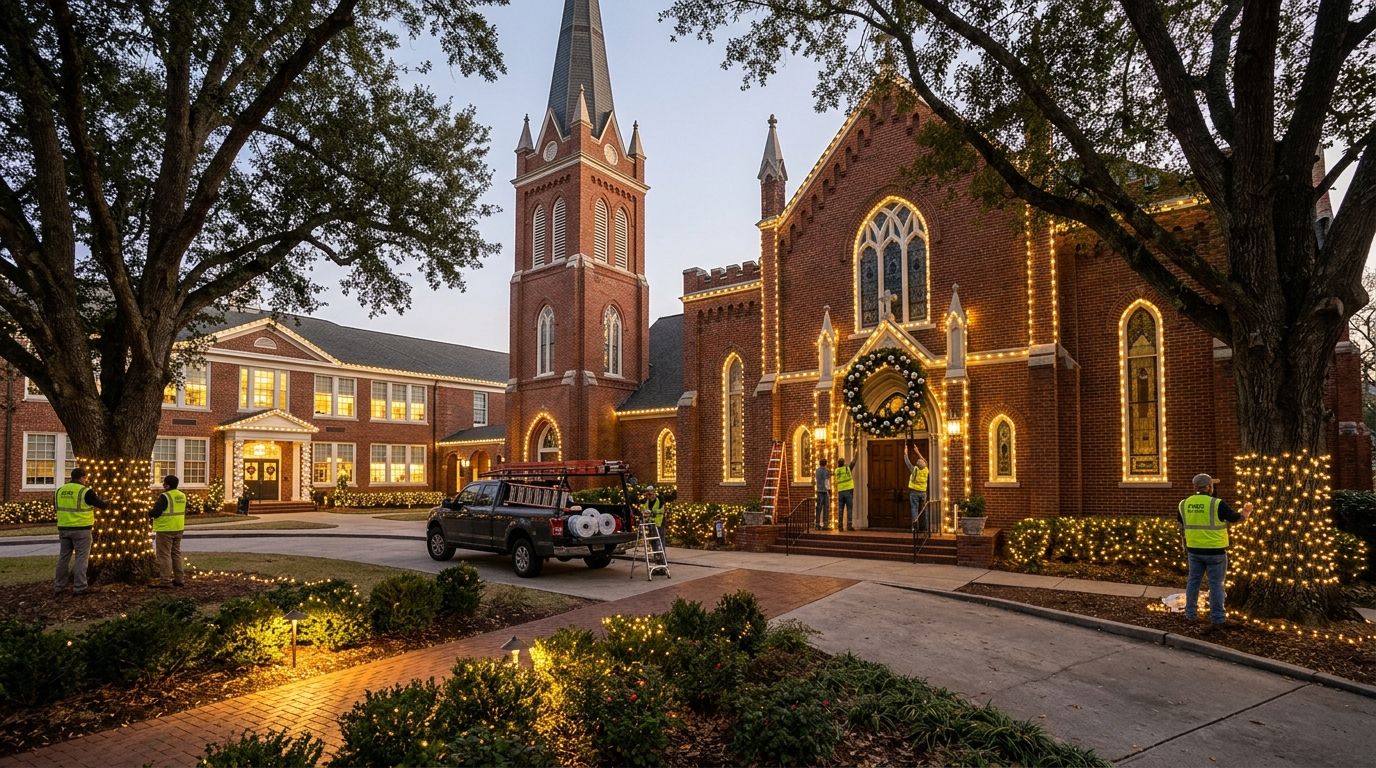
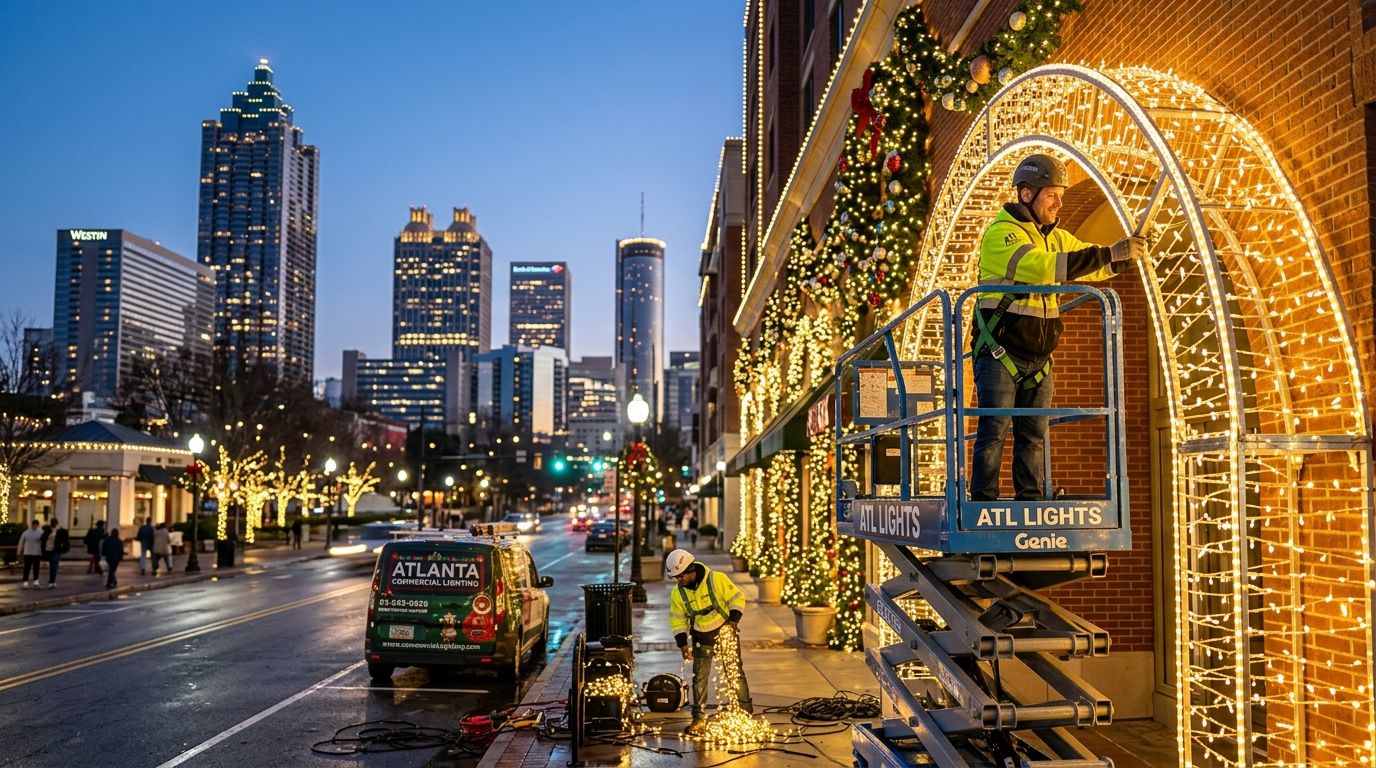
Atlanta Christmas Lighting Co designs, installs, maintains, and takes down commercial lighting for offices, retail centers, and multi-tenant buildings across the metro. The crew handles rooflines, tree wraps, and parking lot features with commercial-grade LEDs, then stores the lights over the off-season so next year's install starts from a plan instead of a blank slate.
Atlanta Christmas Lighting Co pros:
- Licensed and insured for commercial liability exposure
- One point of contact for design, install, maintenance, and takedown
- Off-season storage means next year's setup is faster
Atlanta Christmas Lighting Co cons:
- Slots for the 2026 season fill quickly, especially for larger properties
- A full-service contract costs more upfront than a DIY kit
Best for: commercial properties that want one contract covering the entire season, start to finish.
Verdict: Buy — if the property has more than a single storefront or a roofline over one story, this is the category built for it.
2. DIY string-light kits: best for small storefronts on a tight budget
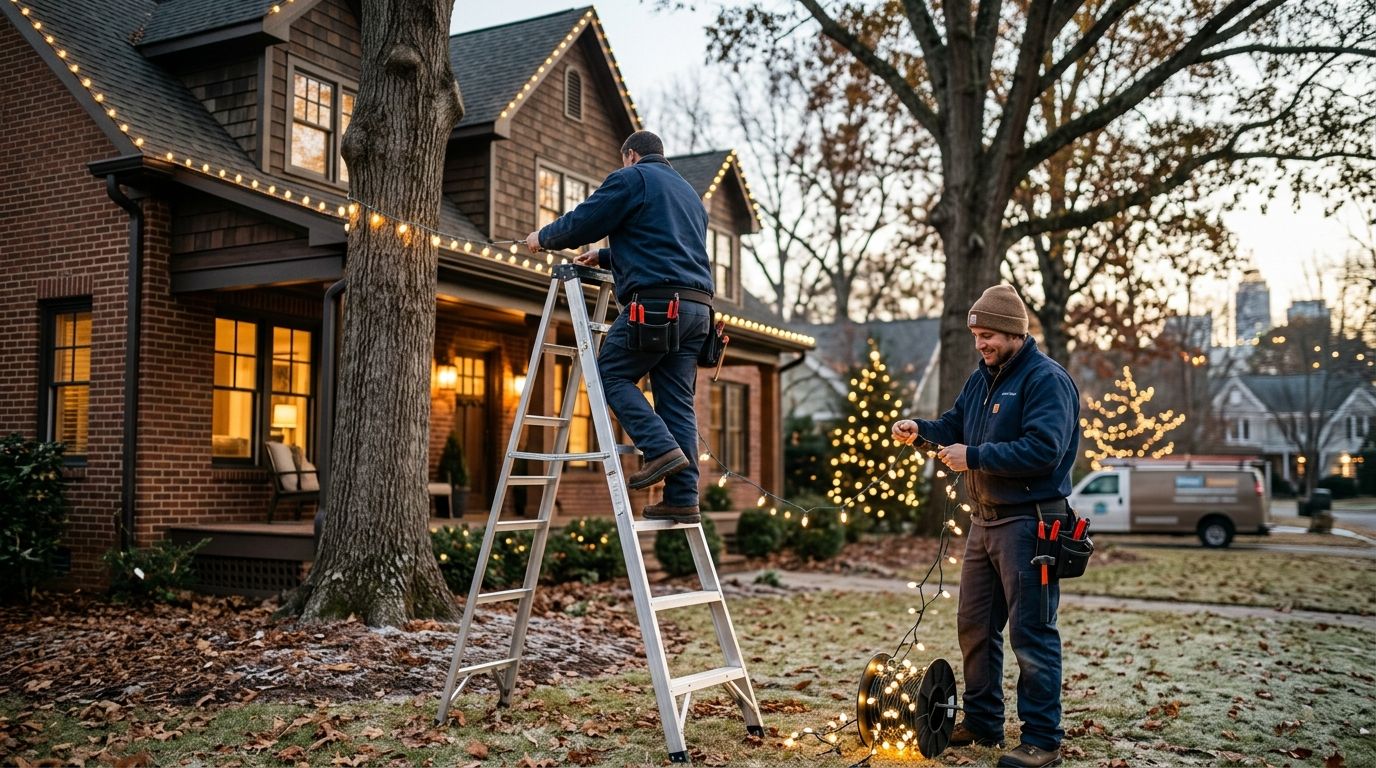
A small retail storefront with a simple facade can run its own consumer-grade string lights bought at a hardware or big-box store. No contract, no scheduling window, no crew to coordinate.
DIY kit pros:
- Lowest upfront cost of any option
- No booking timeline to track
- Full control over when lights go up and come down
DIY kit cons:
- No liability coverage if a ladder job goes wrong or lights damage the building
- Consumer-grade lights aren't built for six-plus weeks of continuous outdoor runtime
- No maintenance response if a strand fails mid-season
Best for: a single small storefront with a flat, easy-to-reach facade and no budget for a contracted install.
Verdict: Hold — fine for a small footprint, risky the moment ladders and rooflines get involved.
3. General handyman and landscaping crews: best for last-minute, small jobs
A landscaping company or handyman service that adds seasonal lighting as a side offering can fill a gap when a business calls in November and every specialist is already booked.
Handyman/landscaping crew pros:
- Available on shorter notice than a specialist
- Often already on-site for other property maintenance
- Lower cost than a full commercial lighting contract
Handyman/landscaping crew cons:
- Rarely stock commercial-grade LEDs or the bucket trucks needed for taller buildings
- Design input is usually minimal — lights go up, not designed
- No dedicated maintenance plan if something fails in week three
Best for: a small job booked late in the season with modest lighting needs.
Verdict: Wait — use this only as a fallback when a specialist's calendar is already full.
4. National franchise lighting chains: best for multi-location brand consistency
A regional or national chain running the same lighting package across several Atlanta-area locations can get a franchise operator to standardize the look store to store.
Franchise chain pros:
- Consistent lighting design across multiple locations
- Established process and equipment standards
- Can coordinate a rollout across several sites at once
Franchise chain cons:
- Local crews may not know Atlanta-specific permitting, HOA rules, or roofline quirks
- Less flexibility for a property with an unusual layout
- Response time for a maintenance issue can depend on which local franchisee is assigned
Best for: a multi-location brand that wants every storefront to look identical.
Verdict: Hold — solid for brand consistency, weaker on local responsiveness than a hometown Atlanta specialist.
How we ranked these
Each category was weighed against the six criteria above: licensing and insurance, commercial-grade equipment, design input, crew capacity, maintenance response, and takedown/storage. A full-service specialist scores highest because it covers all six under one contract; DIY and handyman options trade coverage for lower cost or faster scheduling; franchise chains trade local responsiveness for standardization.
Get a commercial lighting quote for 2026
Design, install, maintenance, and takedown handled for one property or a portfolio.
Which commercial Christmas light installer should you choose?
For a large property, a multi-tenant building, or anything with a roofline over one story, a full-service specialist is the right call for 2026 — the liability coverage and single point of contact are worth more than the savings on a DIY kit. A small single storefront with a flat facade can reasonably go the DIY route. Everything in between — a late-season booking or a multi-location brand — depends on whether speed or consistency matters more to the business.
FAQ
What's the best commercial Christmas light installer in Atlanta for 2026?
A full-service specialist like Atlanta Christmas Lighting Co is the best fit for most commercial properties in 2026 because design, install, maintenance, and takedown are covered under one contract. Smaller storefronts with simple facades can get by with a DIY kit instead.
Is a DIY light kit better than hiring a commercial installer?
A DIY kit costs less upfront but carries no liability coverage and no maintenance response if a strand fails mid-season. It works for a small, flat-facade storefront, not for multi-story commercial buildings.
How early should a business book commercial Christmas lighting in Atlanta?
Commercial lighting slots in Atlanta typically fill by early fall for the 2026 season, well before Thanksgiving. Larger properties with multi-story rooflines should book earliest since crew capacity for those jobs is limited.
Do commercial Christmas light installers handle takedown and storage?
Full-service specialists typically handle takedown and off-season storage as part of the contract, which makes the next year's install faster. DIY kits and handyman jobs leave takedown and storage entirely to the property.
Are commercial-grade LEDs different from regular Christmas lights?
Commercial-grade LEDs are rated for continuous outdoor runtime across a full six-to-eight-week season, unlike consumer string lights built for shorter, intermittent home use. That durability matters most on properties that can't afford a mid-season outage.
Should a multi-location business use a franchise lighting chain?
A national franchise chain makes sense when brand consistency across several storefronts matters more than local responsiveness. A hometown Atlanta specialist usually knows local permitting and HOA rules better than a franchise operator.
What should a property manager ask a commercial Christmas light installer before booking?
Ask for proof of commercial liability insurance, confirmation the lights are commercial-grade LEDs, and what the maintenance response looks like if a strand fails during the season. Also confirm whether takedown and storage are included or billed separately.
One last thing
The detail most property managers miss: the installer who takes the lights down in January and stores them is usually the one who installs faster next November, because the crew already has a layout and inventory on file instead of starting from scratch. That's the real cost difference between a one-season handyman job and a specialist contract in 2026 — it shows up in year two, not year one.