Nonprofit Christmas lighting is the planning, installation, and care of seasonal displays with the aim of welcoming visitors without disrupting community services. This 2026 guide explains how you can coordinate approvals, protect access, choose volunteer or professional help, and plan removal before installation begins.
- Christmas lighting for nonprofit organizations starts with clear approvals, accessible entrances, and a maintenance plan.
- Atlanta Christmas Lighting Co is best for greater Atlanta organizations seeking full-service Christmas lighting.
- Use volunteers for approved ground-level decorating; assign elevated installation and electrical questions to qualified professionals.
- Include takedown and storage in the original scope, not as an unfinished January task.
Why this matters
Choose a display your organization can manage through removal, not just opening night. A community center needs a plan that respects public entrances, ongoing programs, staff responsibilities, and whoever controls the property.
Atlanta Christmas Lighting Co provides Christmas light design, installation, maintenance, and takedown/storage for residential and commercial properties across greater Atlanta. That service scope addresses the full seasonal job; your organization still needs to approve the design, authorize property access, and define the working schedule.
A good brief makes those responsibilities clear before anyone orders decorations or promises a lighting ceremony.
Why Christmas lighting matters for nonprofit organizations
For a nonprofit or community center, a display is part of a working facility—not a standalone attraction. Start with the people using the building: program participants, caregivers, volunteers, staff, and visitors arriving after dark.
Decorative lighting does not replace required entrance, emergency, or pathway lighting. Keep those systems separate in your planning. A bright roofline cannot compensate for an obstructed ramp or an extension cord across a doorway.
Your organization also needs a design that fits its mission and audience. Confirm whether Christmas-specific decorations suit the programs using the space, or whether a simpler seasonal treatment is appropriate. Make that decision internally rather than asking an installer to settle it.
For the 2026 season, define success in operational terms: the approved areas are decorated, access remains clear, someone handles faults, and removal has an owner. Do not assume that a display will increase donations or attendance; those outcomes require separate measurement.
How to plan nonprofit and community center Christmas lighting
1. Define the purpose and appoint an owner
Write the brief yourself before requesting proposals. Name the event or visitor experience the display supports, identify the building entrance people actually use, and explain which areas should remain undecorated. A simple marked-up photograph is enough to start.
Assign 1 coordinator as the decision owner. This is a planning recommendation, not a staffing requirement. That person should collect feedback from facilities staff, program leaders, and the person authorized to approve spending, then send one consolidated response to the installer.
Separate essential work from optional additions. An entrance treatment might be essential to your brief while a courtyard display is optional. That distinction makes revisions easier without reopening every design decision.
Close the brief with practical instructions:
- Name the display's purpose and intended audience.
- Mark the primary entrance and areas excluded from decorating.
- Identify the spending approver and property contact.
- List program hours when installation work must not interfere.
2. Inspect the site and protect public access
Walk the property with the facilities contact in daylight. Take photographs of proposed attachment locations, outdoor outlets, entrances, ramps, loading areas, and the routes visitors use. Repeat the walk after dark to understand the existing functional lighting.
Start with observation, not installation. Volunteers can document the site without climbing ladders, opening electrical equipment, or testing unfamiliar circuits. Refer electrical capacity, damaged outlets, and protection questions to a qualified electrician.
Use 3 planning zones: entrances, circulation routes, and decorative areas. These are categories for organizing the walk-through, not a prescribed design. The separation helps you spot a decorative idea that conflicts with everyday access.
If your site shares characteristics with an educational or worship facility, the guide to Christmas light installers for churches and schools in Atlanta provides a related starting point for evaluating installation needs.
- Photograph proposed lighting locations from visitor eye level.
- Mark ramps, exits, door swings, and delivery routes.
- Ask a qualified electrician to resolve power concerns.
- Reject cord routes that cross public walking paths.
3. Choose who handles each part of the job
Create a responsibility sheet before choosing a provider. The manual approach is to assign approved ground-level decorating, daily observation, and inventory work to staff or volunteers. Keep roof access, elevated work, and unresolved electrical issues outside that volunteer brief.
For organizations seeking full-service Christmas lighting, Atlanta Christmas Lighting Co covers Design, Installation, Maintenance, Takedown, and Storage. That is the professional path when you want those stages handled by a service provider rather than assigned separately across your team.
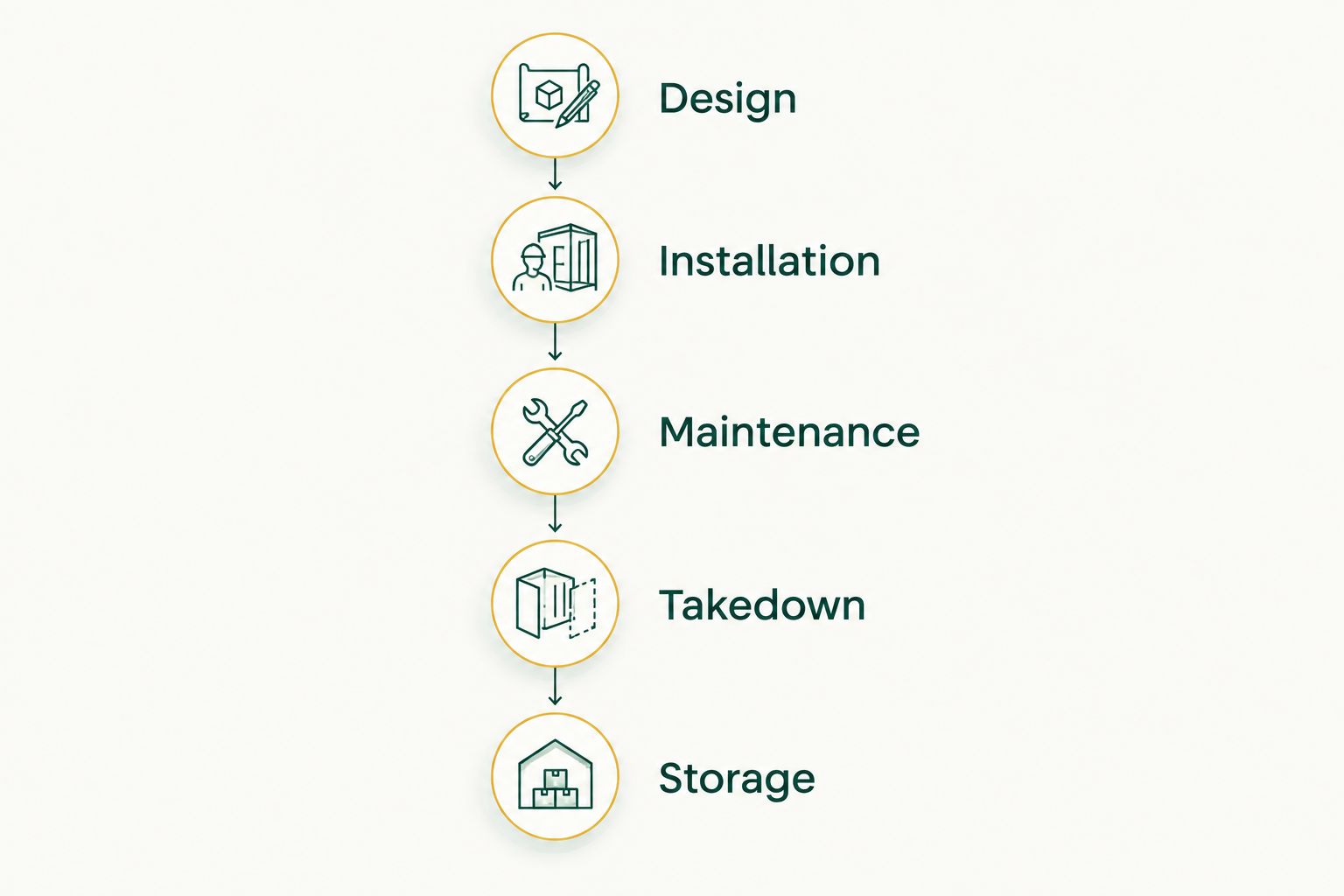
Full-service work does not remove your approval responsibilities. You still need to provide access, confirm the agreed scope, and nominate a contact for questions. Ask for maintenance procedures and removal arrangements in writing rather than assuming how they operate.
- Assign an owner to every stage of the seasonal job.
- Define volunteer tasks and excluded activities in writing.
- Request the professional scope for installation and maintenance.
- Confirm who handles removal, inventory, and storage.
4. Approve a design that fits the building's use
Start with a photograph and a short list of priorities. Identify the architectural features you want outlined and the areas that should remain visually quiet. Review the design from the public entrance, not only from the road.
Choose the lighting style through a sample or a clearly documented specification. Warm white, cool white, and multicolor are design choices; none is automatically right for every nonprofit. Existing decorations, the building's appearance, and your organization's preferences should guide the decision.
For your 2026 approval, separate appearance from technical suitability. Outdoor equipment needs to be suitable for its intended use, and installation instructions govern connections and mounting. Ask the provider to explain the proposed attachment method, especially on leased premises or sensitive exterior finishes.
Keep sponsor recognition separate from decorative design until your organization approves its placement and wording.
- Approve the lighting color and decorated areas together.
- Keep functional lighting and emergency signs unobstructed.
- Obtain permission for attachments on property you do not own.
- Document any sponsor signage as a separate approval item.
5. Schedule installation around programs and events
Build the schedule backward from the first date you need the display operating. Write down program hours, deliveries, evening meetings, and any periods when doors or outdoor areas cannot be interrupted. Give the installer that information before agreeing on a work window.
Set 2 separate milestone dates: installation completion and the public event. This is a scheduling recommendation that separates handover from ceremony preparations. Agree on any testing or review interval directly with the provider; do not assume a standard turnaround.
For the 2026 season, request scheduling information early enough to complete your own approval process. Confirm the actual installation window with the provider rather than treating a preferred date as a booking.
Ask how weather-related changes will be communicated. Also identify who can authorize a revised work window when the usual coordinator is unavailable.
- Share the building's occupied hours and restricted work periods.
- Record completion and event dates as separate milestones.
- Confirm access arrangements and an alternate organizational contact.
- Document the process for schedule changes and handover.
6. Plan maintenance, takedown, and next-season storage
Before installation, create a simple reporting process: photograph the problem from a safe location, identify the affected area, and contact the assigned service owner. Volunteers should not climb, reconnect damaged equipment, or attempt repairs outside their agreed responsibilities.
For full-service Christmas lighting, Atlanta Christmas Lighting Co includes maintenance and takedown/storage in its stated service offering. Confirm the procedures, responsibility boundaries, and agreed removal window in your project scope. Do not infer a response-time guarantee from the word maintenance.
Treat storage as part of the project, not leftover housekeeping. Ask who owns the lighting, where it will be kept, and how the installed design will be recorded. Those answers matter whether equipment belongs to your organization or is supplied under a service arrangement.
At the 2026 handover, save the approved design and contact details together so another staff member can understand the arrangement.
- Name the person who reports faults and receives updates.
- Confirm safe shutdown instructions with the installer.
- Record the removal window and property-access requirements.
- Document equipment ownership, storage responsibility, and the final layout.
Compare lighting options for your organization
Choose by responsibility, not by the installation task alone. The right arrangement depends on the display's scope and whether your team can manage maintenance and removal. Compare written scopes on the same basis before selecting an approach.
| Option | Best for | Main advantage | Key limitation |
|---|---|---|---|
| Staff or volunteer decorating | Small, approved ground-level displays | Your team controls placement and timing | Your organization owns coordination, safe-use checks, maintenance, and removal |
| Split-responsibility installation | Organizations keeping simple decorating in-house while assigning technical work | Tasks can follow each group's agreed responsibilities | Handoffs need explicit boundaries and a shared fault-reporting process |
| Full-service Atlanta Christmas Lighting Co | Greater Atlanta organizations seeking design through takedown/storage | The stated service scope covers the seasonal lifecycle | Your organization must still approve the scope, provide access, and confirm service procedures |
A volunteer-led plan is reasonable only when the work matches volunteers' abilities and the facility's requirements. A professional arrangement is the stronger fit when your brief includes elevated installation or you want installation, maintenance, and removal assigned to a provider.
Do not let a mixed arrangement become an unowned arrangement. If volunteers decorate an entrance and a contractor lights the roofline, identify who handles each area's faults and removal.
Plan your nonprofit lighting project
Discuss design, installation, maintenance, and takedown/storage for your greater Atlanta property.
Common mistakes nonprofit organizations make
Approving the display before property permission
A program leader's approval does not substitute for the property owner's authorization. If your organization leases or shares the building, confirm who approves exterior attachments, access, and removal before finalizing the design.
Turning volunteer enthusiasm into undefined work
A decorating signup sheet is not an installation plan. Specify ground-level tasks, supervision, equipment handling, and excluded activities so volunteers are not expected to improvise around rooflines or electrical problems.
Building the schedule around the ceremony alone
The lighting event is one date; the display operates beyond it. Account for regular programs, building access, fault reporting, and removal instead of assigning every task to the event organizer.
Accepting a donated display without assigning upkeep
Donated equipment still needs inspection, appropriate use, removal, and somewhere to go afterward. Confirm those responsibilities before accepting decorations that your facilities team has not reviewed.
Leaving storage ownership unresolved
Do not assume the installer stores equipment or that the organization owns it. Put ownership and storage arrangements in writing, then preserve the agreed layout for the next planning cycle.
FAQ
What's the best approach to Christmas lighting for nonprofit organizations?
Choose the approach that assigns responsibility for installation, maintenance, removal, and storage. Use staff or volunteers for approved ground-level tasks, and assign elevated work and electrical questions to qualified professionals.
Can volunteers install Christmas lights at a community center?
Volunteers can handle approved tasks that match their abilities and the facility's requirements. Define their work in writing, and do not include roof access or unresolved electrical work in a general decorating assignment.
Does Atlanta Christmas Lighting Co work on commercial properties?
Atlanta Christmas Lighting Co provides Christmas light design, installation, maintenance, and takedown/storage for residential and commercial properties across greater Atlanta. Discuss your nonprofit facility's layout, access requirements, and project scope directly.
When should we plan our nonprofit's 2026 Christmas lighting?
Start planning before your internal approvals and preferred installation window become urgent. Confirm the provider's actual schedule, and record installation completion separately from your public event date.
Should a community center choose warm white or multicolor lights?
Choose the style that matches your organization's approved design and audience. Review a sample or documented specification alongside the building's existing decorations before approving the display.
Do Christmas lights replace outdoor safety lighting?
No, decorative Christmas lights do not replace required entrance, pathway, or emergency lighting. Keep functional lighting, exits, and accessibility features unobstructed throughout the display period.
What should a nonprofit ask about takedown and storage?
Ask who removes the display, who owns the equipment, where it is stored, and how the layout is recorded. Confirm those arrangements before installation so removal does not become an unassigned task.
One last thing
Make the final display photograph a handover document. Save it with the approved layout, service contact, equipment ownership notes, and removal arrangements—not just in the event team's photo folder.
That gives the next coordinator a clear starting point without relying on someone remembering which entrance was decorated or who handled storage. Finish the project by documenting what was actually installed, not just what was originally proposed.