Event planners’ Christmas lighting is the design and coordination of holiday displays with the aim of delivering an event-ready venue without disrupting guest access or production schedules. This guide to Christmas lighting for event planners covers the brief, approvals, installation, maintenance, and removal for Atlanta events in 2026.
- Christmas lighting for event planners starts with venue permissions, a lighting brief, and named installation and maintenance owners.
- Atlanta Christmas Lighting Co is best for Atlanta planners seeking Christmas lighting design, installation, maintenance, takedown, and storage together.
- Keep decorative holiday lighting separate from required exit lighting and the event’s technical production scope.
- Approve the removal plan alongside the design, not after the event.
Why Christmas lighting matters for event planners
Your lighting plan must work with the venue’s access rules, the production schedule, and the client’s design approval. A display that looks right but blocks catering access is not event-ready. Treat holiday lighting as a scheduled workstream, not a last-minute decoration order.
For your 2026 event plan, distinguish what the venue already provides from what your team must arrange. The Christmas lighting guide for wedding and event venues addresses the property side of that conversation; your planner’s brief should identify who approves, operates, and removes each addition.
The practical constraint is coordination. A commercial property’s seasonal display can remain in place across several functions, while an individual event has its own opening time, photography requirements, and handback deadline. Put those requirements in writing before approving a design.
Plan Christmas lighting from brief to handback
Use the following sequence for a single celebration or a recurring holiday program. Start with a shared document and annotated venue photographs; specialized planning software is not a prerequisite. Carry the same approved brief through every handoff so suppliers do not work from different versions.
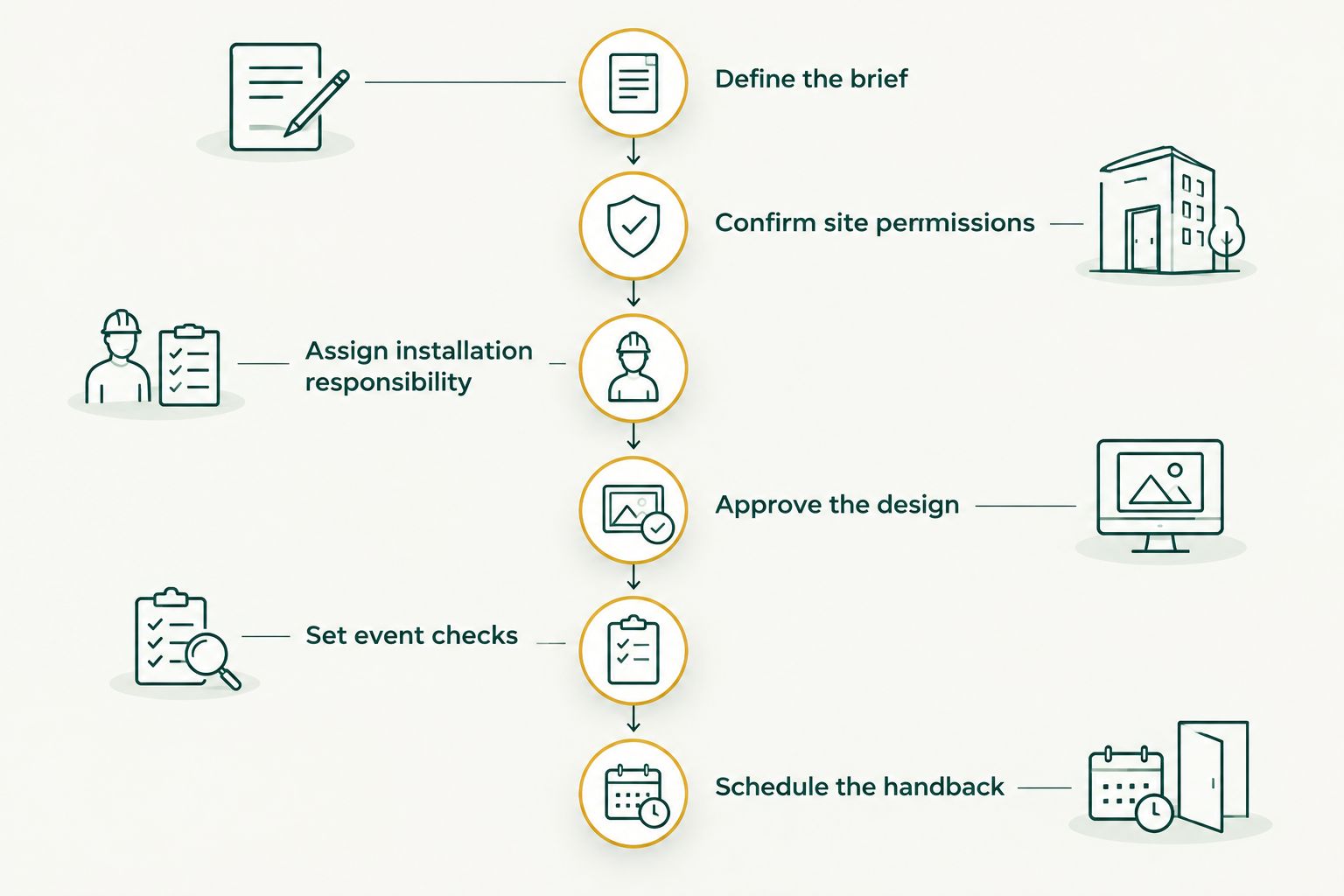
Define the brief
Create a 1-page lighting brief before requesting proposals. Describe the guest experience and the spaces involved, rather than asking only for a particular quantity of lights. An entrance display, a courtyard backdrop, and a building outline serve different purposes and need separate approval criteria.
For a 2026 corporate reception, identify whether the priority is arrival, photography, or a display that remains after the function. For a private celebration, ask whether the venue’s existing seasonal installation supports the client’s chosen look. Do not assume an existing display is included in your venue agreement.
Keep the first version simple enough for the client and venue manager to review together. Mark essential elements separately from optional additions so revisions do not erase the event’s central requirement. Include the following details:
- Event purpose: name the guest-facing result the lighting must support.
- Display areas: mark entrances, building features, trees, and gathering spaces.
- Design direction: state the approved light color and visual references.
- Operating window: record when the display must be illuminated.
- Approval owner: identify who can authorize design changes.
Confirm site permissions
Walk the property with the venue representative and mark restrictions on a photograph or floor plan. This manual review establishes where decoration belongs and where it conflicts with operations. Venue approval comes before installation approval.
Ask the venue to identify acceptable attachment methods, accessible power locations, protected surfaces, and loading arrangements. Have qualified personnel assess electrical requirements; an outlet’s location alone does not establish that it can support the proposed installation. Keep decorative lighting separate from required exit and emergency lighting.
Document shared spaces carefully. A courtyard might also serve as a catering route, and an entrance might need to remain accessible during installation. Record who can authorize access if the normal venue contact is absent.
- Property consent: obtain written permission for the proposed display areas.
- Attachment rules: confirm permitted fixings and prohibited surfaces.
- Power review: assign electrical suitability checks to qualified personnel.
- Access protection: preserve exits, accessible routes, and service paths.
- Work restrictions: record loading access and permitted work periods.
Assign installation responsibility
Build a responsibility sheet yourself, with a named owner for design, installation, operating checks, maintenance requests, and removal. This is the minimum workable system when several vendors share the site. Avoid assigning a task to a company name without identifying its contact and handoff requirements.
For planners who want those Christmas lighting stages handled by a service provider, Atlanta Christmas Lighting Co provides design, installation, maintenance, and takedown/storage across greater Atlanta. Review the company’s Christmas lighting services against your brief. The advantage is a connected service scope; the planner still needs written confirmation of event-specific access, timing, and support arrangements.
Ask each provider to explain the boundary between holiday decoration and other production work. Do not assume a Christmas lighting scope includes stage lighting, audio, temporary power distribution, or event-day technical staffing.
- Scope owner: identify who coordinates the full holiday lighting assignment.
- Venue contact: name the person who grants site access.
- Production boundary: separate decorative lighting from technical event systems.
- Support contact: record where faults and change requests should go.
- Removal owner: assign responsibility before the installation begins.
Approve the design
Review the design using 2 views: guest arrival and the main photo position. Annotated site photographs are enough for an initial review. Show the client exactly which features receive lights, rather than relying on a mood board that leaves the installation scope unclear.
Compare light colors in the setting where guests will see them. Warm white, pure white, and multicolor create different visual effects, but a color label alone does not settle the choice. Existing venue lighting, signage, and camera exposure all affect the finished scene. Ask the photographer or production lead to review important portrait and presentation areas.
Freeze the approved design before installation, then record subsequent changes separately. For a recurring 2026 event series, specify which elements remain fixed and which depend on each client’s brief.
- Arrival view: show the entrance and the first guest-facing display.
- Photo view: check backgrounds from the intended camera position.
- Color agreement: approve the lighting appearance with relevant stakeholders.
- Scope drawing: mark exactly which surfaces and features receive decoration.
- Change record: document additions, removals, and the person approving them.
Set event checks
Create 3 checkpoints: installation sign-off, pre-opening inspection, and post-event shutdown. Put them in the production schedule with a named owner. These are recommended control points, not a promise about how quickly an installer can attend or complete work.
At installation sign-off, compare the display with the approved scope. Before opening, check the visible lighting, guest routes, and operating controls with the venue team. After the event, confirm who switches the display off or returns it to the property’s normal seasonal schedule.
Atlanta Christmas Lighting Co includes maintenance among its Christmas lighting services, but event-day attendance and response commitments need explicit agreement. A maintenance service is not the same thing as a dedicated technician standing by during your function. Keep that distinction clear in the 2026 production sheet.
- Sign-off check: confirm the installed display matches the approved brief.
- Opening check: inspect illumination and unobstructed guest routes.
- Control access: identify who operates timers or other approved controls.
- Fault procedure: record the reporting contact and escalation process.
- Weather decision: agree who can restrict access or suspend display use.
- Shutdown check: confirm the correct end-of-event operating state.
Schedule the handback
Write the removal and handback plan while approving the installation. The venue’s next booking matters as much as your event’s opening. A lighting display should not remain in an area simply because nobody assigned responsibility for taking it down.
Start with a shared calendar entry and a written inventory. Identify what belongs to the venue, the client, and the lighting provider; then confirm where each item goes. Do not assume ownership, storage, or reuse rights from the fact that a company installed the lights.
Atlanta Christmas Lighting Co provides takedown/storage services, making it an option for planners seeking help beyond installation. Confirm the project’s removal arrangements, storage scope, and future reuse process directly. For your 2026 closeout, retain approved photographs and the final scope so the next brief starts with an accurate record.
- Removal access: agree when crews can enter and work.
- Property inventory: distinguish venue, client, and provider-owned items.
- Surface check: document installation areas before and after removal.
- Storage instructions: confirm where retained materials go and who manages them.
- Handover record: obtain venue confirmation that the agreed work is complete.
Compare lighting delivery options
Choose the delivery model by responsibility, not appearance alone. Several approaches can produce a suitable display, but they leave different amounts of coordination with you. Compare who designs, installs, checks, and removes the work before choosing an option.
| Option | Best for | Practical advantage | Key limitation |
|---|---|---|---|
| Planner-managed decorations | Small, ground-accessible decorative touches within venue rules | Direct control over placement and revisions | Your team owns setup, checks, removal, and storage coordination |
| Venue-managed seasonal display | Events that suit the venue’s existing holiday design | Starts with an established property display | Event-specific changes depend on venue permission and scope |
| Atlanta Christmas Lighting Co | Greater Atlanta planners seeking Christmas lighting design through takedown/storage | Provides the connected holiday lighting service stages | Event-specific deadlines, attendance, and support terms require confirmation |
| Event production lighting team | Events requiring stage, performance, or programmed production lighting | Keeps technical show requirements with the production team | Holiday decoration and seasonal storage need a separately confirmed scope |
A split arrangement also works when the boundary is explicit: the venue retains its seasonal exterior display while production handles the presentation area. Name the owner of every interface, especially power access, operating controls, and work areas. Do not leave shared responsibilities implicit.
Discuss your event lighting scope
Share your Atlanta venue, display areas, and event schedule to discuss Christmas lighting services.
Common mistakes event planners make
Treating the event date as the entire schedule
An opening time does not tell an installer when the property is accessible or when the work must be finished. Record installation access, inspection, guest arrival, shutdown, and removal separately. Ask the venue to flag conflicts with deliveries and other functions before you approve the work plan.
Approving the look without approving attachments
Client approval does not replace property permission. A design can be visually acceptable while using an attachment method the venue prohibits. Obtain agreement on both the appearance and the installation method before crews arrive, especially where rented premises or protected finishes are involved.
Assuming decoration provides functional lighting
Christmas lights decorate a space; do not assign them responsibility for compliant exits, emergency illumination, or safe task lighting. Keep those requirements with the venue and qualified production or electrical personnel. Review dark transitions between decorated areas and the rest of the property rather than judging only the display itself.
Confusing maintenance with live event support
A general maintenance arrangement does not establish attendance during speeches, receptions, or guest arrival. Ask who receives a fault report and what support is actually agreed for your operating window. Put the answer in the event contact sheet rather than leaving it in an email thread.
Leaving removal to the final supplier conversation
Removal affects venue access, staffing, and the next booking. Confirm it before installation and include storage instructions where relevant. Without an agreed handback process, the planner remains the person trying to resolve ownership and access questions after the client considers the event finished.
FAQ
What’s the best way to plan Christmas lighting for an event?
Start with a written brief, venue permissions, and named owners for installation, checks, and removal. Approve the design only after the venue confirms access, attachment rules, and power review responsibilities.
Who is Atlanta Christmas Lighting Co best for?
Atlanta Christmas Lighting Co is best for greater Atlanta planners seeking Christmas lighting design, installation, maintenance, takedown, and storage together. Confirm the project’s event-specific schedule and support requirements before agreeing to the scope.
Can I use the venue’s existing Christmas lights?
Use the venue’s existing Christmas lights only with the venue’s approval and a clear understanding of what your event agreement includes. Confirm operating times, permitted changes, controls, and who handles faults.
Is a Christmas lighting installer the same as an event lighting technician?
No, Christmas decoration and technical event lighting are different scopes. Assign stage lighting, programmed cues, and performance requirements explicitly rather than assuming a holiday lighting service includes them.
What should I send when requesting an event lighting proposal?
Send the venue address, event schedule, display areas, site photographs, design direction, and known property restrictions. Include installation access and removal requirements so the proposal addresses the whole assignment.
Does a maintenance service include someone on site during my event?
A maintenance service does not establish an on-site event staffing commitment. Ask the provider to confirm attendance, reporting procedures, and support terms for your event’s operating window.
Should I arrange takedown before the event takes place?
Yes, agree on takedown before installation. Confirm removal access, property ownership, storage instructions, and the venue’s handback requirements in writing.
One last thing
Approve the lights-off view as well as the illuminated view. Guests arriving before dark will see cables, attachment points, and unlit decorations without the finished nighttime effect. Add that view to the venue walkthrough and ask whether the display still suits the entrance, photographs, and guest routes before anyone switches it on.