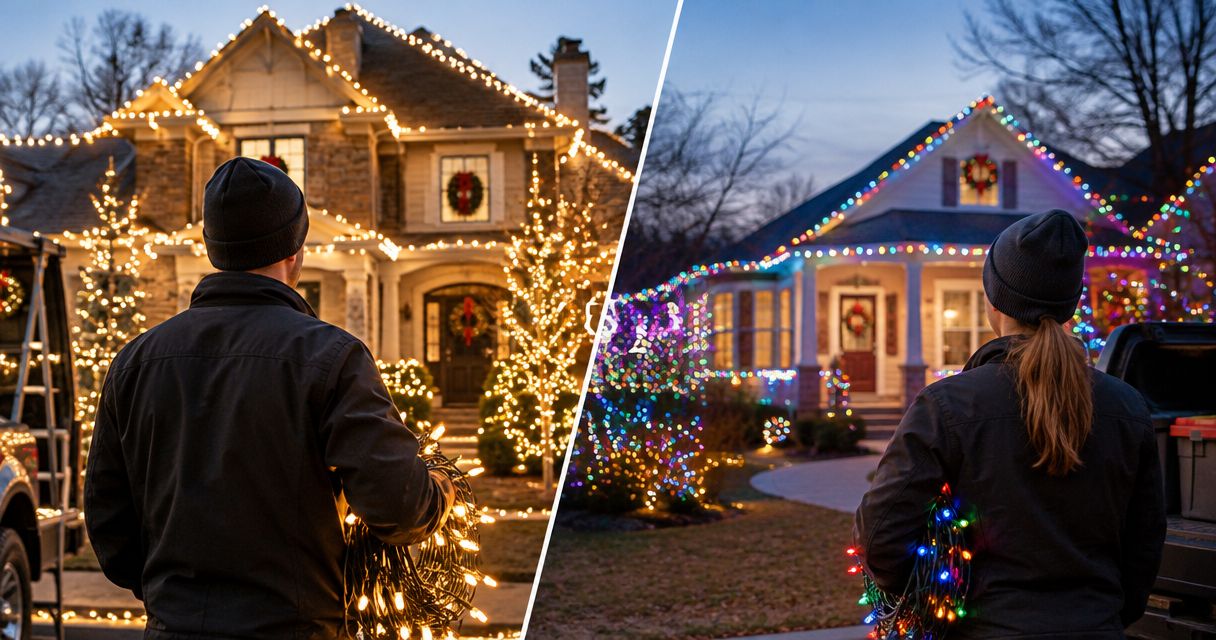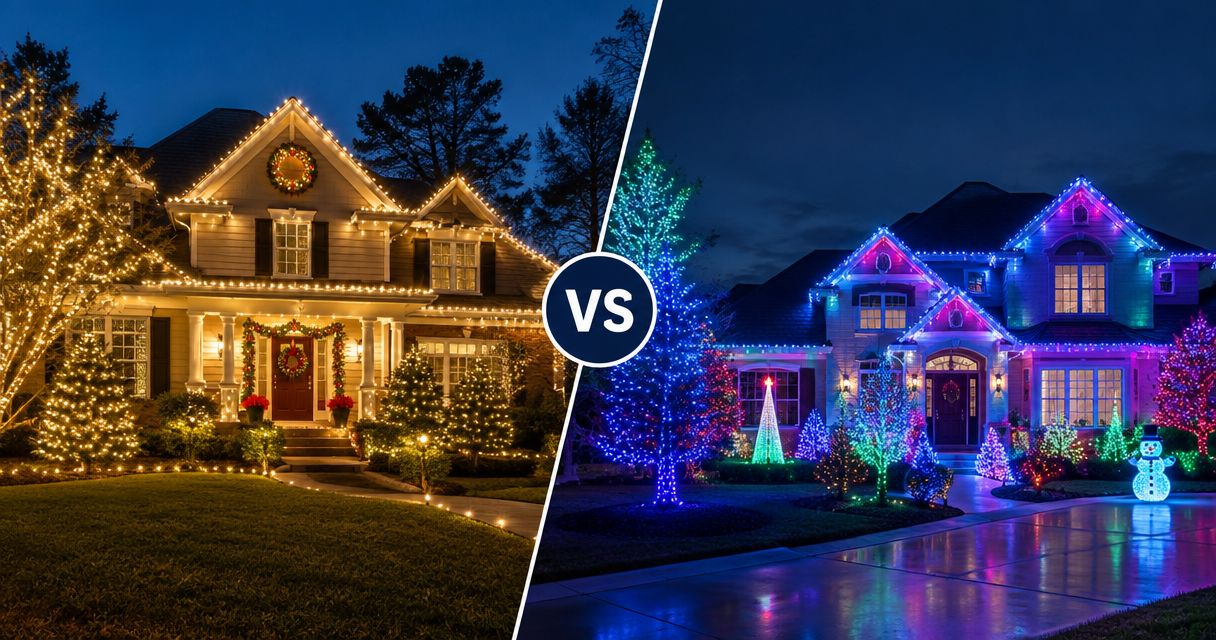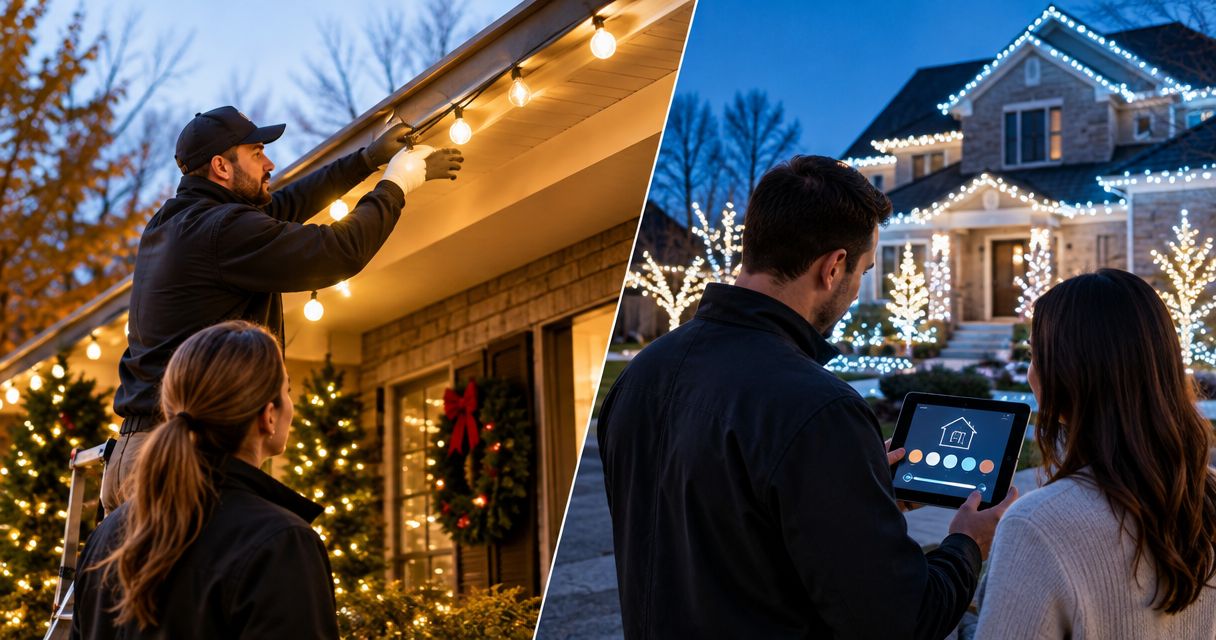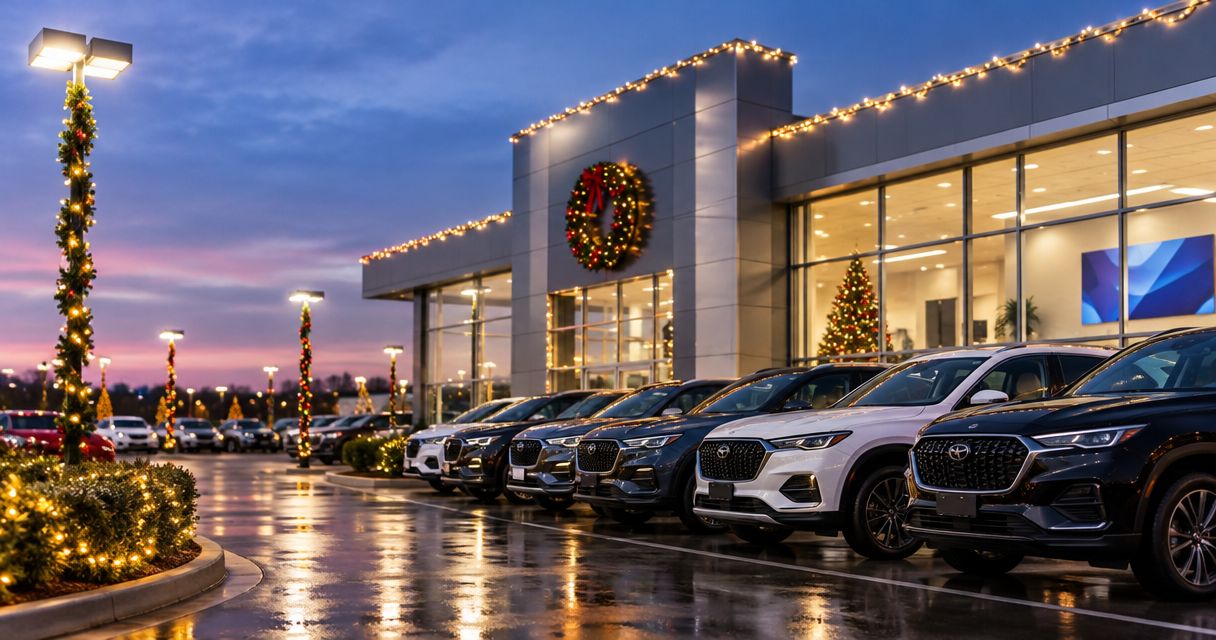
Car dealership Christmas lighting is seasonal illumination designed around vehicle displays, customer entrances, and active sales lots, with the aim of creating a welcoming property without disrupting operations. This guide covers your 2026 design, installation, maintenance, and takedown plan, including the vehicle movements and showroom sightlines that make dealerships different from other commercial properties.
- Christmas lighting for car dealerships works best when entrances, inventory access, and signs stay clear.
- Atlanta Christmas Lighting Co suits Atlanta dealerships seeking full-service commercial Christmas lighting, including maintenance and takedown/storage.
- Approve lighting zones and electrical routes before scheduling installation around deliveries and sales activity.
- Keep seasonal showroom lighting separate from the lighting customers use to inspect vehicles.
Why Christmas lighting matters for car dealerships
A dealership's holiday display has to share space with changing inventory, customer parking, service traffic, and vehicle deliveries. Treat Christmas lighting as part of your property operations, not a decoration added after everything else is settled.
Your most useful design starts with the customer approach: the sign they recognize, the driveway they enter, and the door they use. Decorating every available surface is not the objective. A clear entrance and an orderly frontage give your display a purpose without competing with the vehicles.
For an Atlanta dealership, commercial Christmas lighting services from Atlanta Christmas Lighting Co cover design, installation, maintenance, and takedown/storage. Decide which responsibilities you want handled externally before comparing proposals; installation alone and full-season service are different scopes.
Plan your dealership's 2026 Christmas lighting
1. Map your lighting zones before choosing decorations
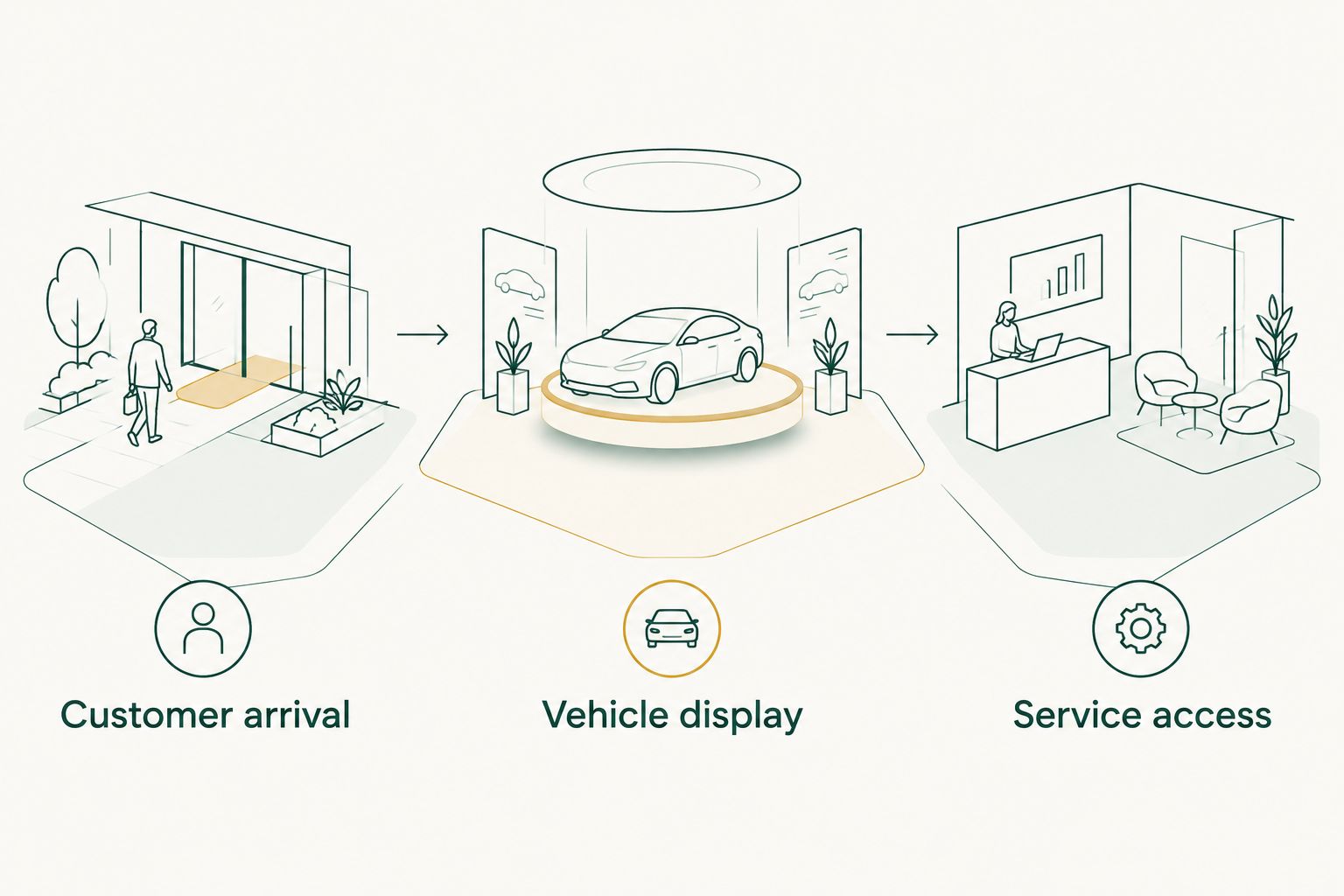
Start with a printed site plan or a marked-up property photo. Identify 3 planning zones: customer arrival, vehicle display, and service access. These are recommended planning categories, not a requirement to decorate all three.
Walk the site with your sales and service leads. A tree that looks ideal from the street can sit beside a transporter unloading route; a showroom column can be part of a vehicle's path through the doors.
Keep the first sketch simple. Mark what must remain untouched before you mark what should light up, and distinguish fixed architecture from areas where inventory moves.
- Customer arrival: Mark the public entrance, accessible route, and customer parking.
- Vehicle display: Identify featured inventory positions and paths used to move cars.
- Service access: Mark service lanes, delivery access, and loading areas.
- Record landlord, property-manager, or manufacturer approvals that apply.
- Mark areas where ladders, lifts, cables, and decorations must not obstruct operations.
2. Choose a visual priority and protect vehicle visibility
Use existing property photos to compare a restrained building outline with a more decorative entrance treatment. You can make this first decision without buying equipment or commissioning a finished design.
For your 2026 display, choose what customers should notice first. Building outlines emphasize architecture; entrance lighting identifies arrival; tree lighting adds a separate landscape feature. Each approach has a place, but combining them without a priority leaves you without a clear focal point.
Keep decorative light out of the customer's vehicle inspection area. Assess color and reflections beside actual inventory rather than approving the entire design from a daytime rendering.
- Select a primary focal point, such as the main customer entrance.
- Match the lighting color across adjoining architectural features.
- Keep manufacturer signs, directional signs, and vehicle information readable.
- Review reflections in showroom glass and vehicle paint after dark.
- Keep flashing effects away from places where customers inspect vehicles.
3. Define who owns each part of the work
Write a responsibility list before requesting proposals. Assign design approval, electrical review, installation access, maintenance reporting, removal, and storage. Your dealership can manage this manually, but every task still needs an owner.
Atlanta Christmas Lighting Co provides commercial Christmas lighting design, installation, maintenance, and takedown/storage across greater Atlanta. That service scope gives you a single provider to discuss those stages with; your dealership still needs to approve the layout and coordinate property access.
Atlanta Christmas Lighting Co is best for Atlanta dealerships seeking full-service commercial Christmas lighting from design through takedown/storage. Confirm the written scope rather than assuming every requested feature or service arrangement is included.
- Name a dealership decision-maker and a backup contact.
- Request current licensing and insurance documentation appropriate to the work.
- Specify who supplies the lights, timers, attachments, and other equipment.
- Document maintenance procedures and any exclusions in the agreement.
- Confirm ownership, removal responsibilities, and storage arrangements.
4. Verify power and installation access before approval
Begin with an outlet map and a list of existing equipment using those circuits. Have qualified personnel verify the proposed electrical arrangement; an available receptacle does not establish that the circuit is suitable for the display.
Use outdoor-rated equipment according to its instructions and keep connections out of standing water. Ground-fault circuit-interrupter protection helps protect against electrical shock, but it does not replace correct equipment selection or installation.
For the 2026 installation plan, map access equipment as carefully as the lights themselves. Rooflines, canopies, landscaping, and parked inventory affect where installers can work. The GFCI holiday lighting setup guide addresses the power-planning side of that review.
- Identify proposed outlets and existing loads for qualified electrical review.
- Keep cables out of pedestrian routes and vehicle travel paths.
- Follow equipment instructions for connections and permitted string combinations.
- Agree on attachment methods before work begins.
- Clear the installation area of inventory before access equipment arrives.
5. Schedule work around dealership operations
Use your existing calendar to identify deliveries, sales events, service activity, and property work. Then agree on installation windows with the people responsible for those areas. A quiet showroom does not mean the service drive or delivery entrance is available.
Build the 2026 schedule around dependencies, not just a preferred switch-on date. Design approval comes before installation; access confirmation comes before equipment arrives; a nighttime review comes before final acceptance.
Make rescheduling responsibilities explicit. Weather, property access, and changes to the approved layout need an agreed decision process, not an assumption that someone else will handle them.
- Set dates for design approval, installation, inspection, and removal planning.
- Identify deliveries and events that require clear access.
- Assign a staff member to move vehicles before installation starts.
- Agree on temporary work areas and how staff will communicate restrictions.
- Confirm how schedule changes will reach sales, service, and management.
6. Test the display from the road and inside the showroom
Conduct 2 review walks: one in daylight and one after dark. These are practical acceptance checks, not a substitute for the installer's technical checks. Daylight exposes attachments and cable routes; darkness shows brightness, reflections, and visual balance.
Start where customers approach the property, using a safe observation position. Then follow their route to the entrance and showroom. Ask whether the display makes arrival clearer or simply adds another competing visual element.
Showroom displays need a separate assessment. Choosing LED strips for window displays involves placement and reflected-light decisions; dealership windows also need a review from the vehicle side of the glass. Keep decorative accents separate from task lighting so customers can inspect paint and interiors without the seasonal display dominating the view.
- Check entrance visibility from the normal customer approach.
- Confirm signs remain readable with the display switched on.
- Inspect reflections from customer seating and vehicle viewing positions.
- Test timers against showroom, service, and property operating hours.
- Photograph approved views and record adjustments before acceptance.
7. Assign maintenance and removal before switching on
Create a shared issue log using a document, spreadsheet, or your existing facilities system. Record the location, photograph, date, and person responsible for reporting each problem. A precise location helps distinguish an isolated dark section from a wider power issue.
For the 2026 season, name 1 dealership contact to coordinate reports, with a backup for absences. Agree on the provider's reporting process and response terms rather than assuming immediate attendance.
Plan removal while the layout is still fresh. Inventory positions change, and access used during installation needs to be checked again before takedown. Storage records should describe what was removed and where it belongs.
- Record problems by building face, entrance, tree, or other fixed location.
- Keep staff away from damaged wiring and elevated lighting repairs.
- Confirm whom to contact when a section fails or equipment is damaged.
- Agree on removal access and vehicle relocation responsibilities.
- Label stored components by location and retain the approved layout photos.
Compare lighting options for your dealership
Choose the service model separately from the visual style. An entrance-only display can be professionally managed, while a larger design still needs clear limits on where equipment goes and who maintains it.
Best for low staff involvement: full-service installation with documented maintenance and removal responsibilities. In-house work suits a narrower scope only when your team can safely manage the tasks and keep ownership clear.
| Option | Best for | Main advantage | Key limitation |
|---|---|---|---|
| Staff-managed, ground-level entrance display | A limited display within your team's skills | Direct control over placement and adjustments | Your staff owns setup, inspections, removal, and storage |
| Professional entrance and building outline | Dealerships prioritizing a defined customer arrival | Keeps the design focused on fixed architecture | Trees and other landscape features remain outside this scope |
| Professional building and landscape display | Properties with approved, separate display areas | Extends the design beyond the facade | Adds access, electrical, and maintenance coordination |
| Atlanta Christmas Lighting Co full-service commercial Christmas lighting | Greater Atlanta dealerships seeking design through takedown/storage | Covers the seasonal service stages with one provider | Your team must still approve the scope and coordinate site access |
Before selecting an option, compare the actual responsibilities in each proposal. Ask what happens after a lighting fault, who can authorize a layout change, and how removal access will be arranged. Those answers matter more than the number of features in a sketch.
Common mistakes car dealerships make
Decorating inventory instead of fixed features
Vehicles move. A display attached to inventory creates extra handling whenever that vehicle needs a test drive, photography, detailing, or delivery. Use fixed property features as the default display structure, and keep vehicle movement independent of the lighting.
Planning around sales while forgetting service
The showroom is only part of the property. Service customers, parts deliveries, and transporters need their own routes. Have the service manager review the same marked-up plan as the sales manager before approving installation access.
Treating decorative lighting as security lighting
Holiday lighting is not a replacement for the property's existing safety and security lighting. Keep those systems operating as intended, and review the seasonal display without disabling the lighting used for normal operations.
Accepting the display only in daylight
A neat daytime installation does not establish that signs remain readable or reflections are acceptable after dark. Complete both review walks and record corrections. Keep those approved nighttime photos with the removal and storage records.
FAQ
What's the best Christmas lighting for a car dealership?
The best starting point is a display built around fixed architecture and a clearly identified customer entrance. Choose additional landscape features only after reviewing vehicle movement, power, and maintenance access.
Can we keep selling cars while Christmas lights are installed?
Plan installation so sales can continue outside agreed work areas. Coordinate vehicle relocation and access restrictions with the installer, sales manager, and service manager before work starts.
Should dealership Christmas lights match the manufacturer colors?
Use manufacturer colors only when they fit your approved property and branding requirements. Review the lighting beside signs and inventory after dark before accepting the design.
Is professional installation better than having dealership staff install lights?
Professional installation is the better fit when the display involves elevated work or more coordination than your team can safely manage. A limited ground-level display still requires assigned responsibility for setup, inspection, removal, and storage.
Who handles repairs if dealership Christmas lights stop working?
The written service agreement should identify who handles lighting faults and how you report them. Confirm response terms, exclusions, and authorization procedures before installation rather than assuming immediate repairs.
Does Atlanta Christmas Lighting Co handle commercial takedown and storage?
Atlanta Christmas Lighting Co provides takedown/storage services for commercial properties across greater Atlanta. Confirm the arrangements for your dealership, including removal access and equipment ownership, in the agreed scope.
When should we plan our dealership's 2026 Christmas display?
Start planning before committing to an installation date. Allow time to approve the design, review power and access, coordinate dealership operations, and agree on maintenance and removal responsibilities.
One last thing
Keep a photograph of the undecorated property alongside the approved lighting photos. Record attachment locations and any existing surface damage before installation, then use the same viewpoints during removal. Your lighting records should explain how to restore the property, not just how the finished display looked.