
Banks and credit unions’ Christmas lighting is seasonal branch decoration with the aim of creating a welcoming exterior without disrupting banking operations. This guide covers your 2026 plan, from design approval and ATM access to maintenance and removal, with security and facilities requirements built into each decision.
- Christmas lighting for banks and credit unions should preserve ATM access, camera views, branch signage, and pedestrian routes.
- Atlanta Christmas Lighting Co is best for greater Atlanta branches seeking full-service commercial Christmas lighting from design through storage.
- Approve branch layouts and maintenance responsibilities before installation; keep holiday lighting separate from essential security lighting.
- For 2026, document installation, operating hours, takedown, and storage in the same branch lighting brief.
Why Christmas lighting matters for banks and credit unions
A bank branch needs a different holiday lighting plan from a private home. Customers still need to identify the entrance, read directional signs, and use ATMs while seasonal decorations are installed, operating, and removed.
Treat holiday lighting as a facilities project with a design component—not a decoration task handed to whoever has a ladder. The approval process should include the people responsible for the building, customer access, and security.
Atlanta Christmas Lighting Co provides design, installation, maintenance, takedown, and storage for commercial properties across greater Atlanta. That full-service scope suits branches that want to outsource the seasonal work; your team still needs to approve access, appearance, and operating requirements.
For your 2026 brief, define success in operational terms: an approved appearance, unobstructed access, a named maintenance contact, and an agreed removal plan. Do not assign deposit growth or account openings to lighting without evidence that connects those outcomes.
How to plan your branch lighting
1. Map customer routes and restricted areas
Start with a printed site plan or annotated exterior photographs. Walk the property with your branch manager and mark the routes customers and staff actually use, including after lobby hours.
Create 3 review zones: customer access, vehicle movement, and restricted areas. These are planning categories, not prescribed dimensions. Record site measurements separately rather than assuming every branch needs the same clearance.
Pay particular attention to ATM queues, drive-through approaches, accessible entrances, and night-deposit access. A tree that looks ideal from the street might sit beside a customer route or require maintenance access through a controlled area.
Close this step with a marked plan:
- Identify entrance paths, ramps, steps, and door swings.
- Mark ATM, night-deposit, and drive-through access.
- Flag cameras, signs, and existing safety lighting.
- Identify approved crew access and equipment staging areas.
- Record areas that require security or landlord approval.
2. Approve the design before selecting installation details
Build a simple design brief using photographs and written notes. Specify what you want customers to notice first: the building outline, the entrance, or selected landscaping. Avoid asking the installer to interpret a vague instruction such as making the property look festive.
For a multi-branch organization, approve 1 shared design brief and attach site-specific exceptions. Consistency means using the same design principles, not forcing an identical layout onto different buildings.
For 2026, request a static-lighting concept as the starting point. Review any flashing or animated proposal separately for its effect on signs, neighboring properties, and camera images; do not assume a moving display serves your branch better.
Give the design approver concrete choices:
- Specify warm white, pure white, or multicolor rather than an unspecified white.
- Identify the architectural features to emphasize.
- Mark windows, signs, and entrances that must remain unobscured.
- Separate required elements from optional landscaping accents.
- Record the final approver and the approved reference images.
3. Assign responsibility for the complete service cycle
You can manage the project manually with a shared checklist, vendor correspondence, and a branch contact sheet. Assign an owner to each phase before installation begins, especially when procurement, facilities, and branch operations are separate teams.
Atlanta Christmas Lighting Co is best for greater Atlanta branches seeking full-service commercial Christmas lighting from design through storage. Its Christmas lighting services cover the seasonal cycle described here, reducing the tasks your staff must arrange separately.
Full-service support does not remove your approval responsibilities. Confirm the written scope, maintenance arrangements, access rules, and storage terms rather than treating the phrase full service as a contract.
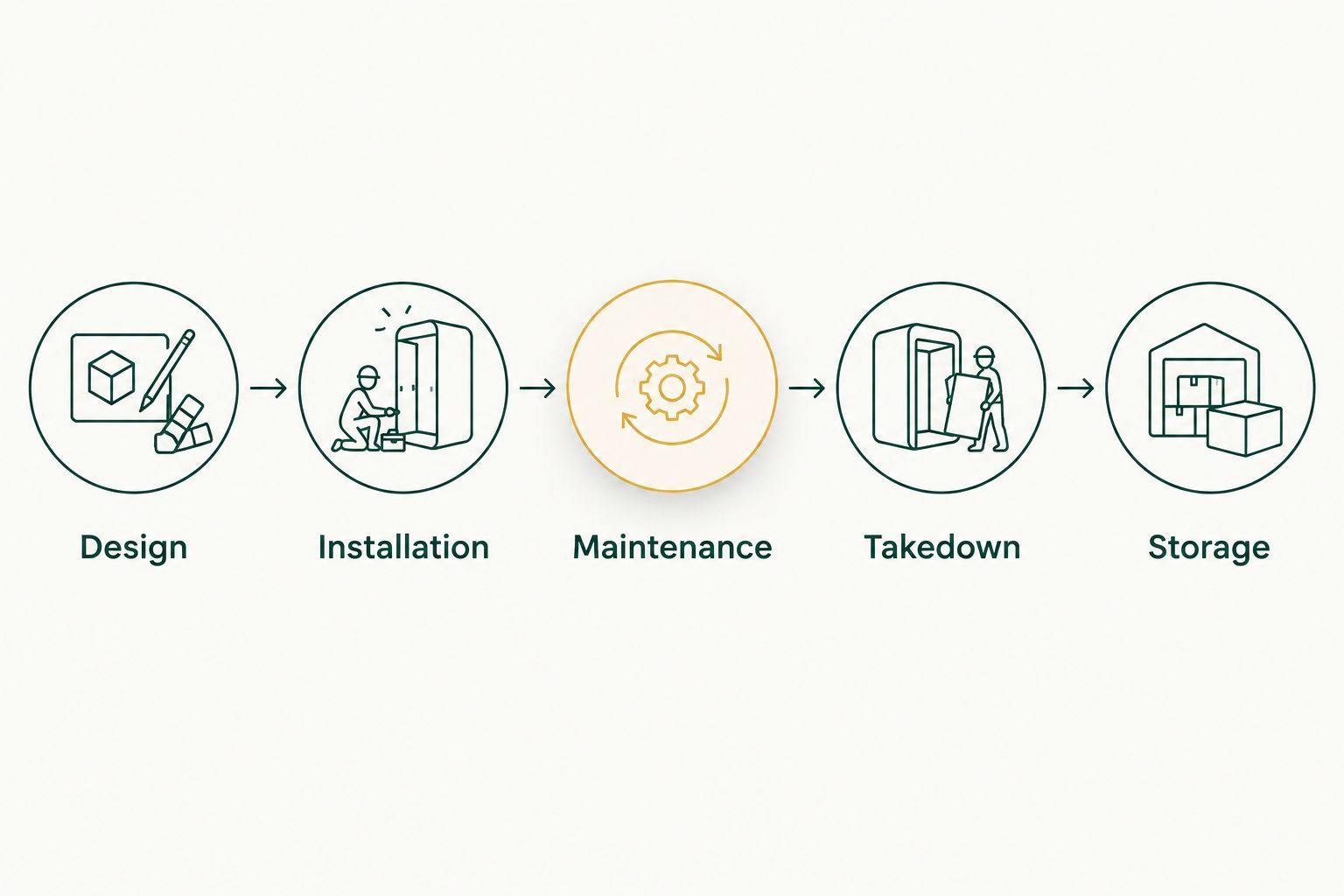
Use 5 project phases to organize responsibility:
- Design: identify who approves the layout and changes.
- Installation: identify who authorizes site access.
- Maintenance: name the reporting contact and escalation route.
- Takedown: agree who coordinates removal access.
- Storage: document custody, labeling, and the inventory record.
4. Review power, mounting, and security together
Begin with an inventory of existing exterior outlets and proposed mounting surfaces. Record locations; do not ask branch staff to assess electrical capacity or improvise connections. Have a qualified professional review the proposed electrical setup and any required changes.
Use outdoor-rated equipment as directed by its manufacturer, and have appropriate ground-fault protection checked. Keep temporary holiday lighting independent of essential security lighting so switching off the display does not darken critical areas.
Review the installation plan with whoever manages cameras and building systems. The relevant question is not whether lights look bright in a photograph; it is whether the proposed layout preserves the functions your branch needs.
Require a practical site review:
- Confirm suitable power sources and electrical protection.
- Keep cords and connections out of customer and vehicle routes.
- Approve attachments for the actual roof, gutter, or façade surface.
- Keep cameras, sensors, and illuminated signs unobstructed.
- Refer electrical alterations to a qualified professional.
5. Schedule installation around branch operations
Build a calendar from your intended display period, then add approval, site review, installation, and removal milestones. Use named dates for your 2026 project rather than instructions such as before the holidays.
Separate work access from display operation. Crews need an approved arrival process and work area; the finished lights need an approved on/off schedule. Neither should depend on an employee remembering an informal conversation.
For branches in leased premises or shared shopping centers, settle landlord permissions before approving work on shared structures or landscaping. Do not assume control of a feature merely because customers associate it with your entrance.
Put these items on the calendar:
- Set approval and site-review deadlines.
- Identify acceptable work windows with branch operations.
- Name the person authorized to admit and direct crews.
- Record lighting hours separately from branch opening hours.
- Include a removal window and a process for weather-related changes.
6. Test the display and document maintenance reporting
Create a basic inspection sheet before the first evening test. Walk customer routes in daylight to check placement, then review the illuminated display after dark with the relevant branch and security contacts.
Compare the result with the approved design. Check sign readability, entrances, camera images, and timer behavior rather than judging only the overall appearance from the road. Save reference photographs so staff can distinguish an intentional dark area from a failed section.
Atlanta Christmas Lighting Co provides maintenance as part of its service offering, but your branch should confirm the reporting process and agreed service terms. Do not substitute an assumed repair deadline for a written arrangement.
Make reporting straightforward:
- Assign a branch contact and a backup contact.
- Record how to report outages, loose components, or damaged cords.
- Include the affected location and photographs in each report.
- Tell staff not to climb or attempt electrical repairs.
- Confirm who can authorize isolation of an affected display section.
7. Plan takedown and storage before installation
Use a spreadsheet or written inventory to record what belongs to each location. Confirm ownership and custody rather than assuming your branch owns every installed component or that every installer stores it.
Make removal part of the original 2026 scope. Ask how attachments will be removed, how the property will be checked afterward, and how unresolved damage or missing items will be recorded.
Storage is also a recordkeeping task. Branch-specific labels, layout photographs, and an inventory give the next installation team a reference, while a change log prevents an old design from being treated as automatically approved.
Finish the project with a documented handoff:
- Agree the removal window and access contact.
- Record ownership and the storage arrangement.
- Identify components and reference photographs by branch.
- Inspect mounting areas after removal.
- Save design changes and operational issues for the next approval cycle.
Compare lighting delivery options for your branch
Choose by responsibility, not just appearance. An attractive design does not tell you who handles a failed section, removes the display, or keeps the inventory afterward. Compare written scopes against the same branch brief.
The options below describe different ways to organize the work. They are not interchangeable: each leaves a different amount of coordination with your facilities team.
| Option | Best for | Main advantage | Key limitation |
|---|---|---|---|
| Staff-managed ground-level décor | A modest display within staff capability and site rules | Direct control over placement and changes | Your team retains setup, inspection, removal, and storage responsibilities |
| Installation-only contractor | Branches with an established facilities and storage process | Outsources installation work | Maintenance, removal, or storage require separate confirmation |
| Atlanta Christmas Lighting Co | Greater Atlanta branches seeking design through storage | Offers the complete seasonal service cycle | Branch approvals remain your responsibility; confirm site-specific terms |
| Centrally managed multi-branch program | Organizations coordinating several locations | Creates a shared approval and reporting process | Each site still needs an access, power, and security review |
For a staff-managed display, keep the scope within approved capabilities; do not turn a simple ground-level plan into roof work. For an outsourced project, request evidence of insurance and any credentials relevant to the work, along with the actual scope and exclusions.
For a multi-branch program, choose a central decision-maker without removing local review. A branch manager often holds the practical information a standard template cannot capture, such as where customers queue or which entrance remains in use after hours.
Common mistakes banks and credit unions make
Letting the design obscure banking functions
A decorated entrance is not successful if it hides a directional sign or narrows a customer route. Approve operational clearance before decorative coverage, including ATM and night-deposit access after the lobby closes.
Giving installation approval without security review
A facilities approval alone does not settle camera visibility or controlled-area access. Include the relevant security contact before work begins, then check the installed display under its actual evening conditions.
Standardizing layouts instead of standards
A roofline treatment that suits a freestanding branch does not automatically suit a leased storefront. Standardize color, approval rules, and reporting; adapt mounting, coverage, and access arrangements to each site.
Leaving ownership and removal unresolved
Installation approval does not establish who owns the lights, where they will be stored, or who removes them. Put those responsibilities in writing before the display goes up, not when the branch wants it down.
Claiming a business return without evidence
A seasonal display is not proof of increased deposits, lending inquiries, or membership. Evaluate your 2026 project against approved design, access requirements, maintenance records, and completion of the agreed service scope.
FAQ
What's the best Christmas lighting setup for a bank branch?
The best setup preserves branch access, signage, and security functions while highlighting selected building features. Start with an approved static-lighting design and adapt it to the actual site rather than copying another branch.
Can Christmas lights go near an ATM or night deposit?
Include ATM and night-deposit areas only after reviewing access, camera views, signage, and cord routing. Keep decorations clear of the equipment and customer approach, and obtain the relevant branch and security approvals.
Should every credit union branch have the same Christmas lights?
Use the same design standards rather than an identical layout at every branch. A shared color direction and approval process can remain consistent while rooflines, landscaping, and access arrangements vary.
Can bank employees install the Christmas lights themselves?
Staff-managed décor is an option only within approved capabilities and site rules. Keep employees away from roof work and electrical alterations, and assign inspection, removal, and storage responsibilities explicitly.
Does Atlanta Christmas Lighting Co handle commercial takedown and storage?
Yes. Atlanta Christmas Lighting Co provides design, installation, maintenance, takedown, and storage for commercial properties across greater Atlanta. Confirm ownership, inventory handling, and site-specific arrangements in the written scope.
When should a bank plan its 2026 Christmas lighting?
Start planning before installation by setting deadlines for design approval, site review, and access arrangements. Your internal approval process, landlord requirements, and intended display period should determine the project calendar.
Do holiday lights replace a branch's security lighting?
No. Keep holiday lighting separate from essential security lighting so display schedules do not control critical illumination. Review the operating setup with the people responsible for building and security systems.
One last thing
Document the display from the customer's route, not only from across the street. Take reference photographs from the entrance approach, ATM area, and drive-through path where permitted by your security policy. Those views help your next review focus on how the branch functions, not just how the façade looks.