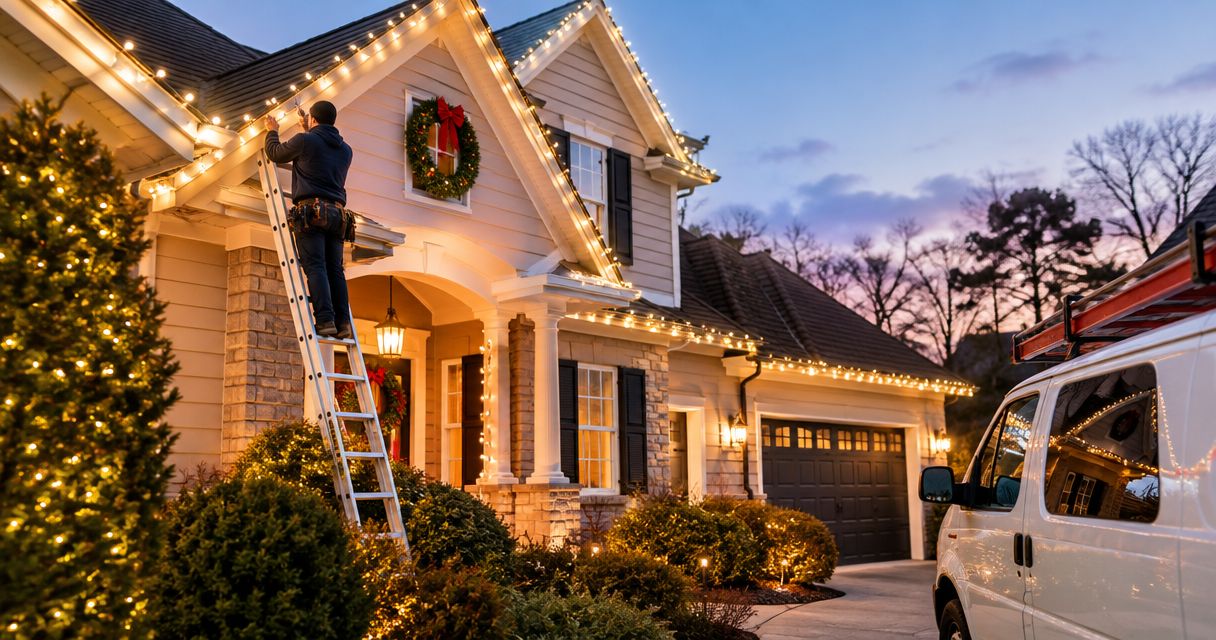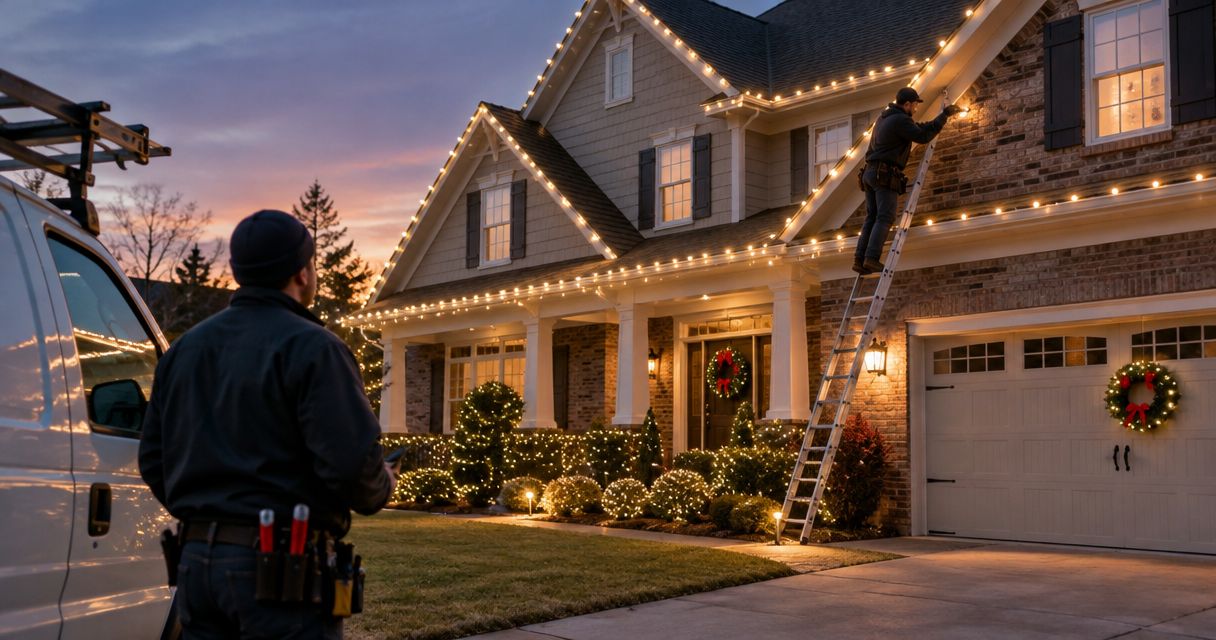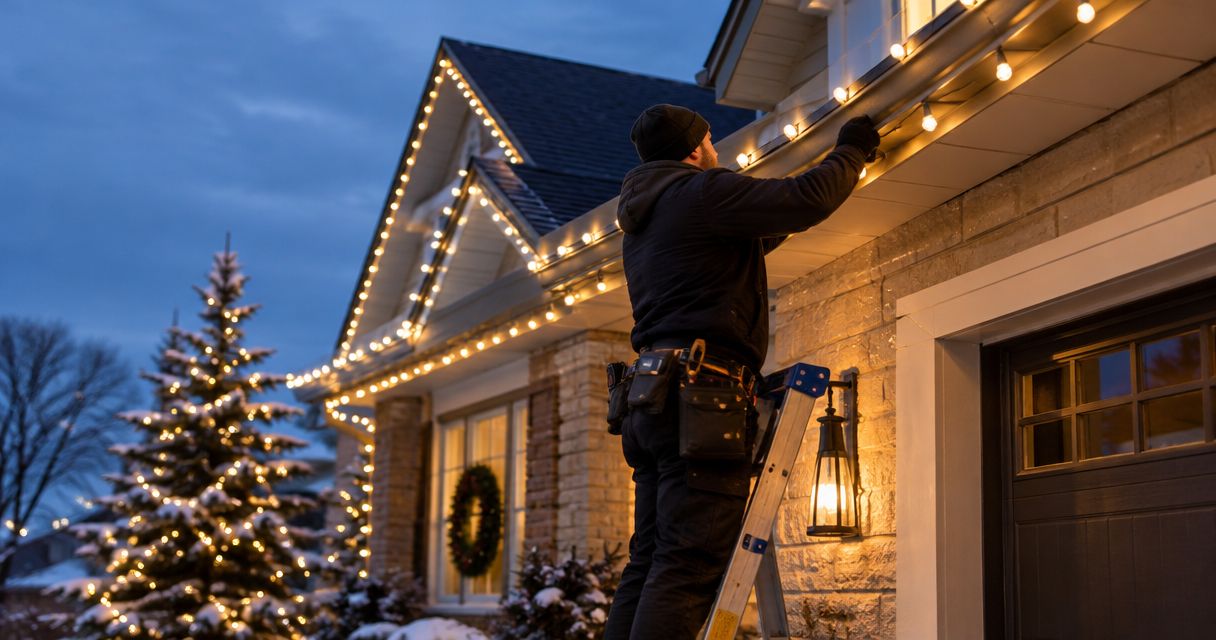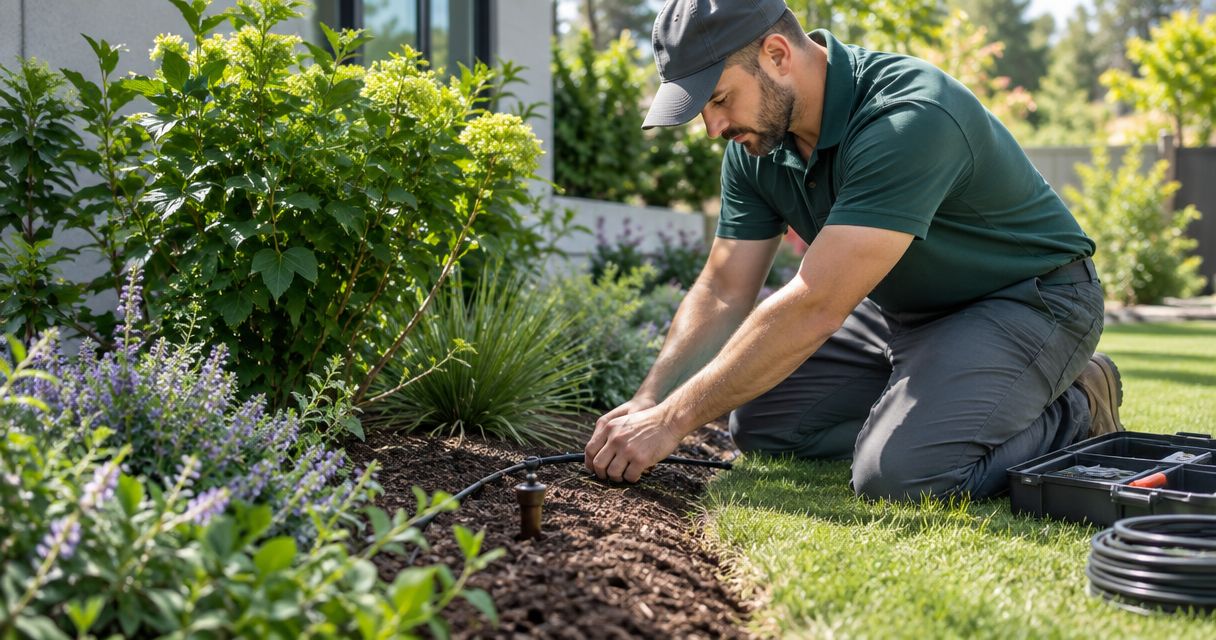
Yes—Christmas light installers can work around existing landscaping and irrigation when the installation plan accounts for planting beds, sprinkler heads, buried lines, and safe equipment access. The limitation is that visible sprinkler heads do not reveal every underground pipe or drip line; ground stakes and equipment placement need a separate check. For your 2026 display, approve the access route and attachment locations before installation begins.
- Can installers work around existing landscaping and irrigation? Yes—identify irrigation routes and agree on protected areas before work.
- Atlanta Christmas Lighting Co provides Christmas lighting design, installation, maintenance, takedown, and storage across greater Atlanta.
- Keep ground stakes away from unverified irrigation routes, and keep electrical connections out of sprinkler spray.
- Plan removal access before installation so lights can come down without dragging through plants.
Can installers work around existing landscaping and irrigation?
Yes, but the layout must fit the property—not require the landscaping to fit the lights. Ask your installer to review access, attachment points, power routing, and irrigation conflicts during planning. A roofline display still needs a safe way to reach the roofline, even if no lights touch the planting beds.
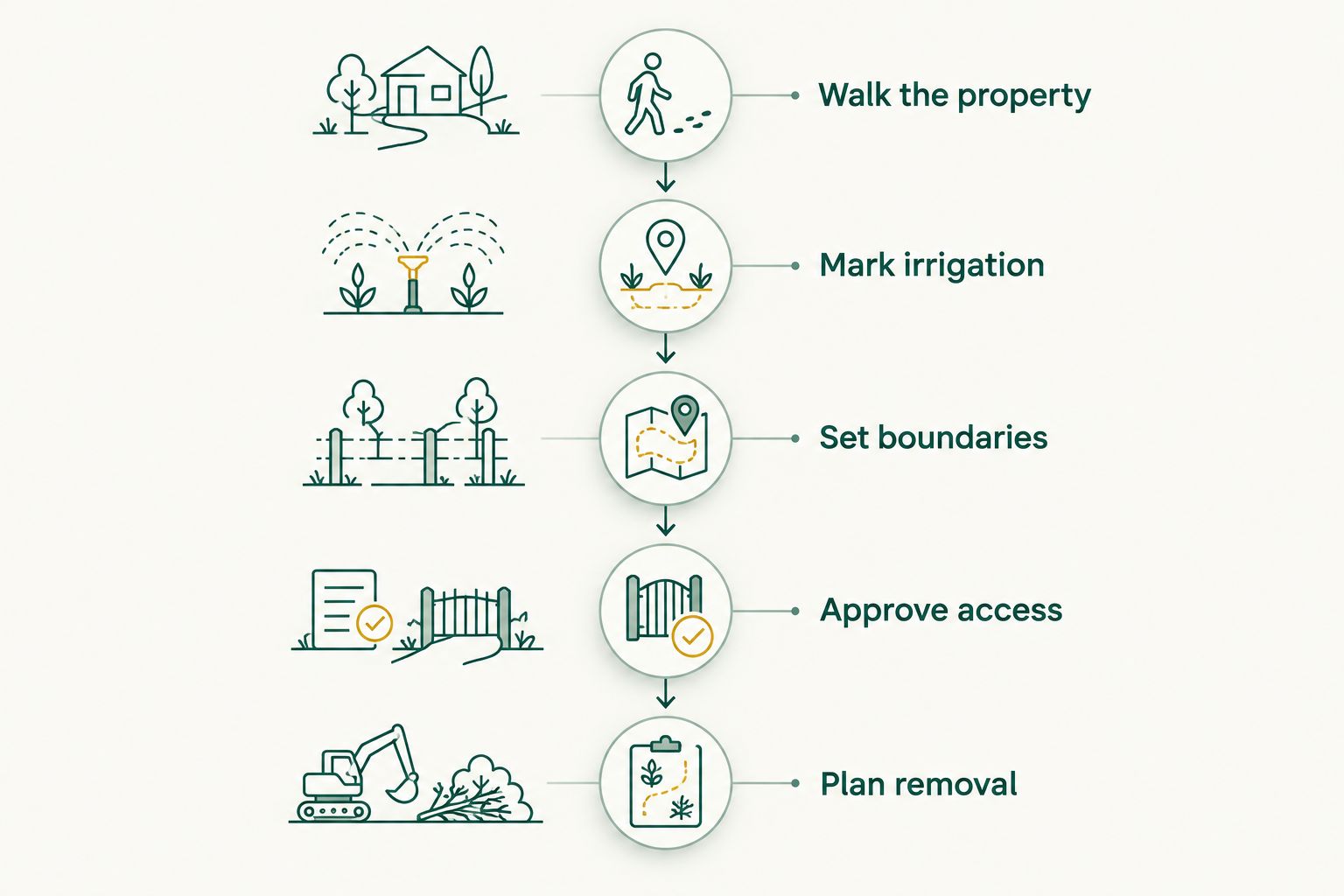
Use this sequence before approving the design:
- Walk the property. Identify the display areas, electrical outlets, planting beds, and possible equipment routes.
- Mark irrigation. Show sprinkler heads, valve boxes, visible drip tubing, and any known underground routes. Identify uncertain areas separately.
- Set boundaries. Agree on beds, branches, new plantings, and irrigation components that must remain untouched.
- Approve access. Confirm where ladders and other equipment can stand without resting on plants or irrigation hardware.
- Plan removal. Decide how the display will come down without pulling cords or light strings through vegetation.
The design consultation to installed Christmas lights workflow helps you place these decisions before installation rather than resolve them after equipment arrives.
Why this matters
Your lighting plan shares space with systems that need to keep working. Sprinklers need clearance, valve boxes need access, and planting beds should not become equipment staging areas simply because they sit beneath the roofline.
For a 2026 installation, put those constraints on the design notes. A clear photograph showing a valve box or delicate shrub is more useful than a general instruction to be careful. You and the installer should be able to identify the same protected areas without relying on memory.
A good-looking display is not a reason to accept an unsafe access route. If a location cannot be reached safely without disturbing the landscape, change the lighting layout.
Which lighting layouts work around established landscaping?
Choose the display location after reviewing the route needed to install and remove it. Roofline lighting, tree lighting, and ground-level accents create different points of contact with your landscape; none automatically eliminates the need for protection.
| Lighting approach | Best for | Practical advantage | Limitation to resolve |
|---|---|---|---|
| Roofline lighting | Defining the building without decorating planting beds | Keeps the display itself away from most ground-level plants | Ladder or equipment access can still conflict with beds |
| Tree and shrub lighting | Highlighting selected landscape features | Makes existing vegetation part of the display | Attachments, branch condition, and removal need attention |
| Ground-level accents | Outlining a suitable lawn or path edge | Places the display where its route is easy to review | Stakes and cords can conflict with irrigation and walking routes |
Roofline lighting: review the ground below
Best for: a building-focused display. Roofline lighting keeps the visual emphasis on the house or commercial building, but it does not remove ground-access requirements. Review what sits beneath each installation area.
Ask where equipment will stand and how the crew will carry materials to that location. If dense shrubs block access, request a different display section or an alternative access plan rather than assuming the plants can tolerate contact.
Tree and shrub lighting: plan attachment and removal
Best for: highlighting established landscape features. Ask how the lights will attach, where the power lead will enter the planting area, and how the installer will remove the strands. Keep attachments from constricting living branches.
Do not make pruning an assumed part of lighting installation. If a tree has damaged branches or needs structural attention, address that with an appropriate tree-care professional before including it in the display.
Ground-level accents: check before inserting stakes
Best for: a clearly defined edge with a verified installation route. Ground-level lighting deserves particular attention where irrigation runs through lawn edges and beds. A visible sprinkler head identifies a component, not the complete route of its supply line.
Do not approve stakes in an uncertain area based on appearance alone. Ask for a layout that avoids ground penetration there, or clarify the irrigation route before proceeding.
Why the installation plan varies by property
The service steps stay familiar, but your property determines where the work can happen. Review these factors during your 2026 planning conversation:
- Planting density: Closely spaced shrubs leave less room for people, ladders, and material handling. Identify an access route rather than treating gaps between branches as walkways.
- Irrigation layout: Visible spray heads, hidden drip tubing, and accessible valve boxes need different protection. Separate known routes from areas where the route is uncertain.
- Ground condition: Wet, soft, or uneven ground affects equipment placement. Let the installer assess access rather than promising that a lawn or bed is suitable.
- Display location: A tree wrap creates different contact points from a roofline outline. Match the protection plan to the actual lighting location.
- Power routing: Cords need a route that avoids pedestrian conflicts, irrigation spray, and landscape-maintenance activity. Confirm the route before lights are attached.
- Removal access: The crew needs a workable route at takedown as well as installation. Keep temporary decorations and stored items from blocking that route later.
How do you protect irrigation during Christmas light installation?
Identify what you know, flag what you do not, and keep equipment off irrigation components. Give the installer an irrigation plan if you have one, but also point out repairs or changes that the plan does not show. Do not present an old drawing as a complete record of current conditions.
Before work, show the installer:
- Sprinkler heads and their operating positions.
- Valve boxes and the access needed to open them.
- Exposed drip tubing and tubing concealed beneath mulch where known.
- Known pipe routes near proposed stakes or equipment locations.
- Areas where you cannot confirm the irrigation route.
Photograph existing conditions before installation. Include close views of irrigation components near the work area and wider views that show their positions relative to the building. These photographs document the starting condition; they do not locate buried pipes.
Ask whether an irrigation zone needs to be off while work takes place, and agree on who will restore its normal schedule. Do not leave the system disabled for the season simply to accommodate a lighting layout. Resolve the conflict instead.
How should cords and connections avoid sprinkler spray?
Route cords and position connections so they do not sit in sprinkler spray, standing water, or a walking route. Use outdoor-rated equipment according to its instructions and have the installer assess the power arrangement. Outdoor-rated does not mean every connection can sit anywhere in the landscape.
Do not attach cords to sprinkler risers or use valve boxes as convenient electrical storage. Keep irrigation components available for their intended purpose. Where a cord route conflicts with a sprinkler or path, ask for another route rather than accepting the conflict as unavoidable.
Review the GFCI outlet to safe holiday lighting power setup guide before approving the electrical plan. Do not connect Christmas lights to an existing landscape-lighting circuit merely because a connection appears to fit; electrical compatibility needs its own assessment.
What should you ask the installer before approving the work?
Ask for specific answers about your property rather than a general promise that landscaping will be protected. You need to know where equipment goes, what touches the plants, and what happens if the intended route is unsuitable.
Use these questions during your 2026 design review:
- Where will ladders or other access equipment stand?
- Will any part of the display require ground stakes?
- How will the crew handle areas with unknown irrigation routes?
- Which plants or beds will remain outside the work area?
- Where will cords and electrical connections run?
- How will maintenance visits and takedown reach the display?
- Who should you contact if you notice displaced tubing or a damaged sprinkler head?
Atlanta Christmas Lighting Co is best for greater Atlanta property owners seeking Christmas lighting service from design through takedown and storage. The service covers that seasonal sequence; your individual landscaping and irrigation constraints still need to be discussed before the layout is approved.
For your Atlanta Christmas Lighting Co Christmas lighting consultation, bring property photographs and any irrigation information you already have. Ask for the protected areas and agreed access route to be reflected in the installation notes.
Discuss your property's lighting plan
Review your landscaping, irrigation, and access needs before choosing a Christmas lighting layout.
What happens if the landscaping blocks safe access?
Change the design before accepting a route through vulnerable plants or uncertain ground. Leaving a section unlit is a valid decision when access cannot be resolved safely. The display does not need to cover every visible surface.
Ask the installer to explain the obstruction and propose a revised layout. Do not authorize moving irrigation equipment, cutting branches, or altering a planting bed as an informal workaround. Those changes need separate permission and an appropriate scope of work.
If conditions change on installation day, pause the affected section. A route approved on firm ground needs another assessment if that area becomes wet or unstable.
How do you protect landscaping during takedown?
Use the same protected-area notes for removal that you used for installation. Ask the crew to release attachments deliberately rather than drag connected strands through shrubs, across drip tubing, or around sprinkler heads.
Before takedown, tell the installer about any new planting, irrigation repair, or changed access. Keep the removal route clear and identify decorations that were added after installation. Finish with a daylight walk-through so you can check visible irrigation components and the surrounding beds.
For a display installed in 2026, keep those notes with the seasonal lighting plan. Storage handles the lights; the property record preserves the information needed to plan the next installation.
FAQ
Can Christmas light installers work around my existing sprinkler system?
Yes—Christmas light installers can work around an existing sprinkler system when the layout accounts for heads, valves, tubing, and equipment access. Mark known components and identify uncertain underground routes before approving stakes.
Do I need to remove shrubs before Christmas lights are installed?
No—do not remove shrubs as an assumed requirement of Christmas light installation. Ask the installer to assess access and revise the lighting layout if the plants block a safe route.
Can an installer tell where irrigation pipes are just by looking at sprinkler heads?
No—visible sprinkler heads do not reveal the complete underground pipe route. Share available irrigation records and identify areas where the route remains uncertain.
Should I turn off my sprinklers for the entire Christmas lighting season?
No—do not disable irrigation for the entire season simply to accommodate the display. Discuss any temporary work-day interruption and resolve ongoing conflicts through the lighting layout.
Can Christmas light cords run through planting beds?
A planting-bed route needs assessment for irrigation spray, standing water, plant contact, and maintenance access. Ask the installer to choose an appropriate route and use outdoor-rated equipment according to its instructions.
What should I do if I notice irrigation damage after installation?
Document the condition and contact the installer promptly. Keep people away from any electrical hazard, and have the irrigation issue assessed before operating the affected area.
Does takedown need the same landscaping precautions as installation?
Yes—takedown needs protected areas, a clear access route, and controlled removal of attachments. Tell the crew about any planting or irrigation changes made since installation.
One last thing
The route out matters as much as the route in. Before approving your 2026 display, ask the installer to describe how each landscaped section will be reached during takedown. If that answer depends on pulling lights through branches or crossing an unverified irrigation route, revise the plan now.
Keep your Atlanta Christmas Lighting Co planning notes with your irrigation records. A marked photograph of a hidden valve box remains useful after the lights are packed away.