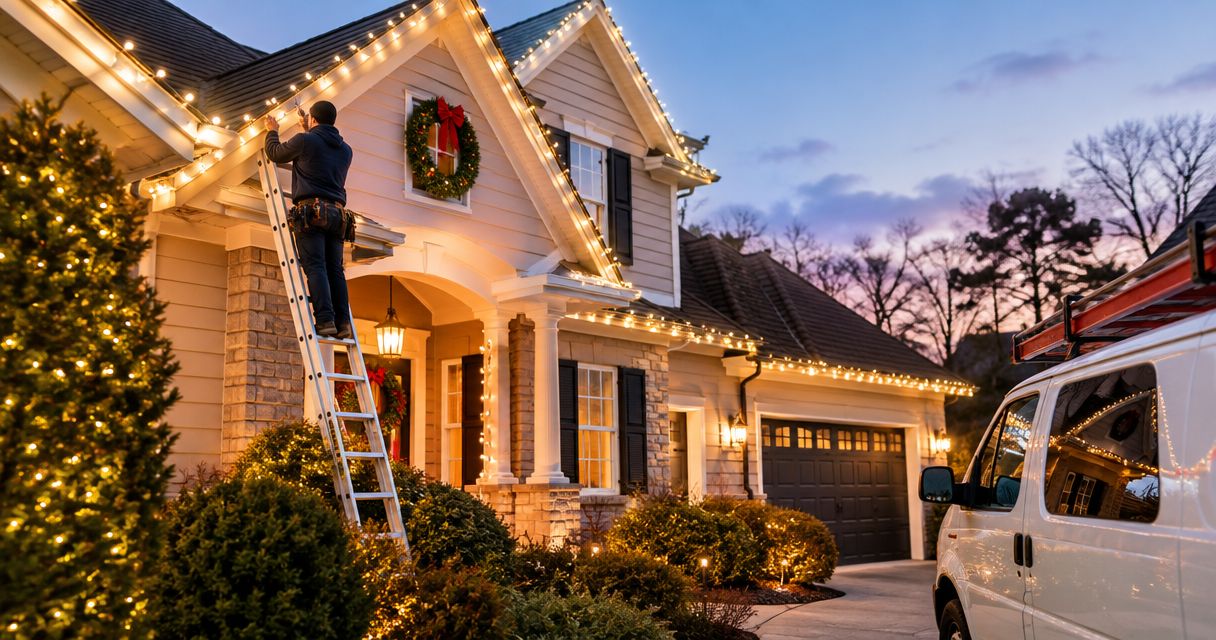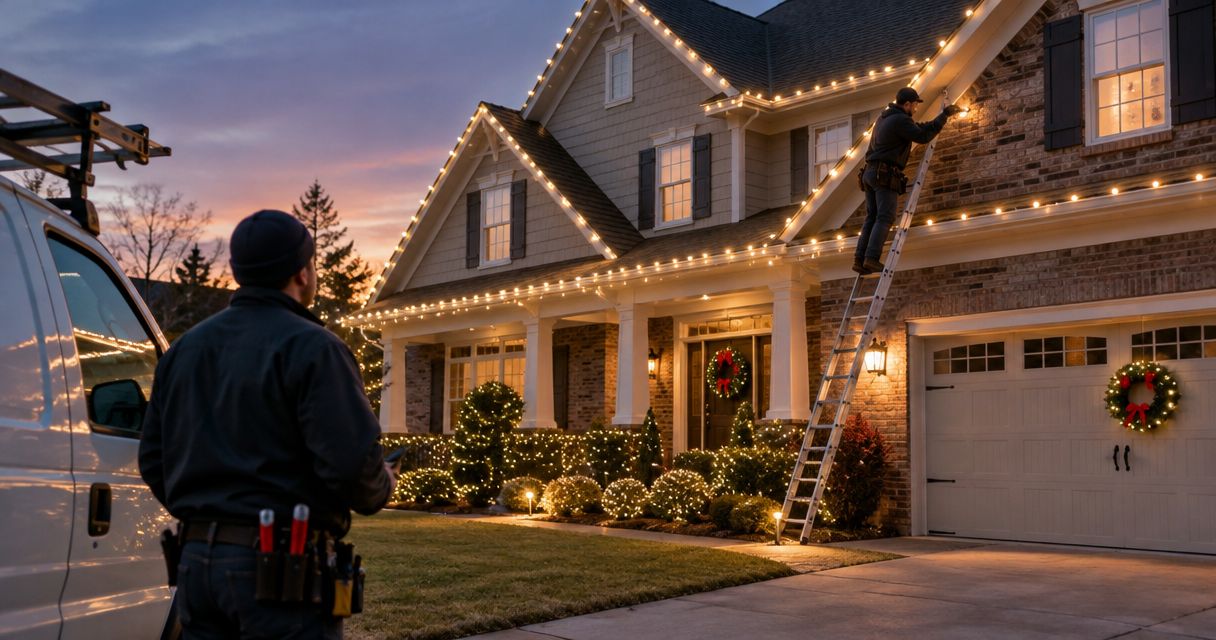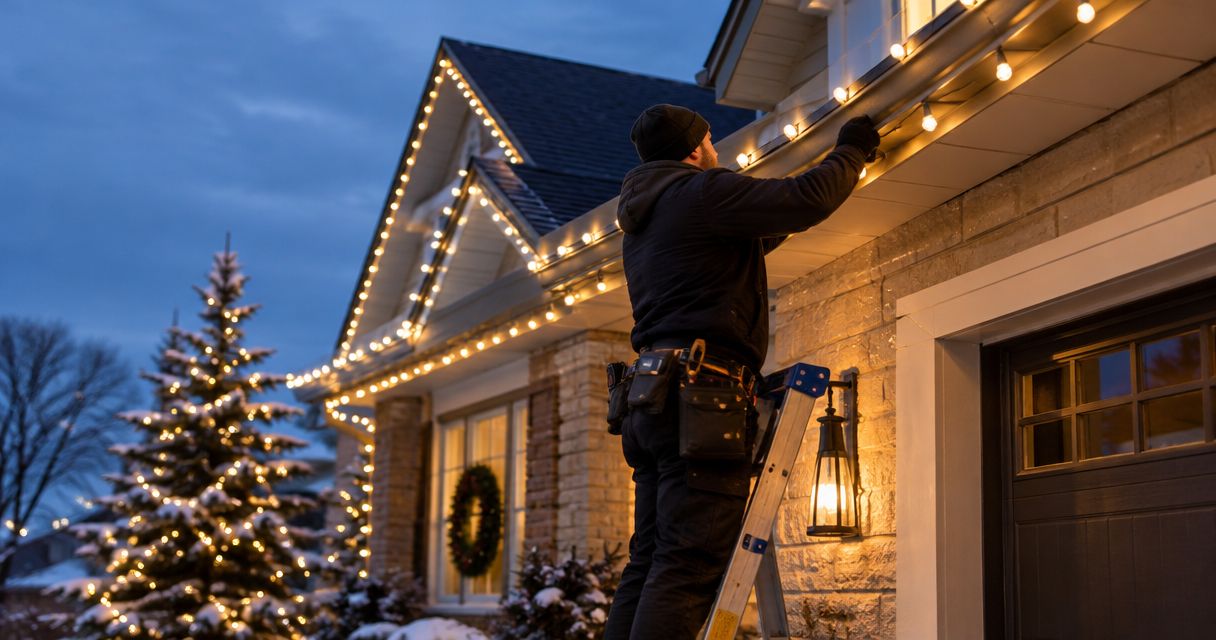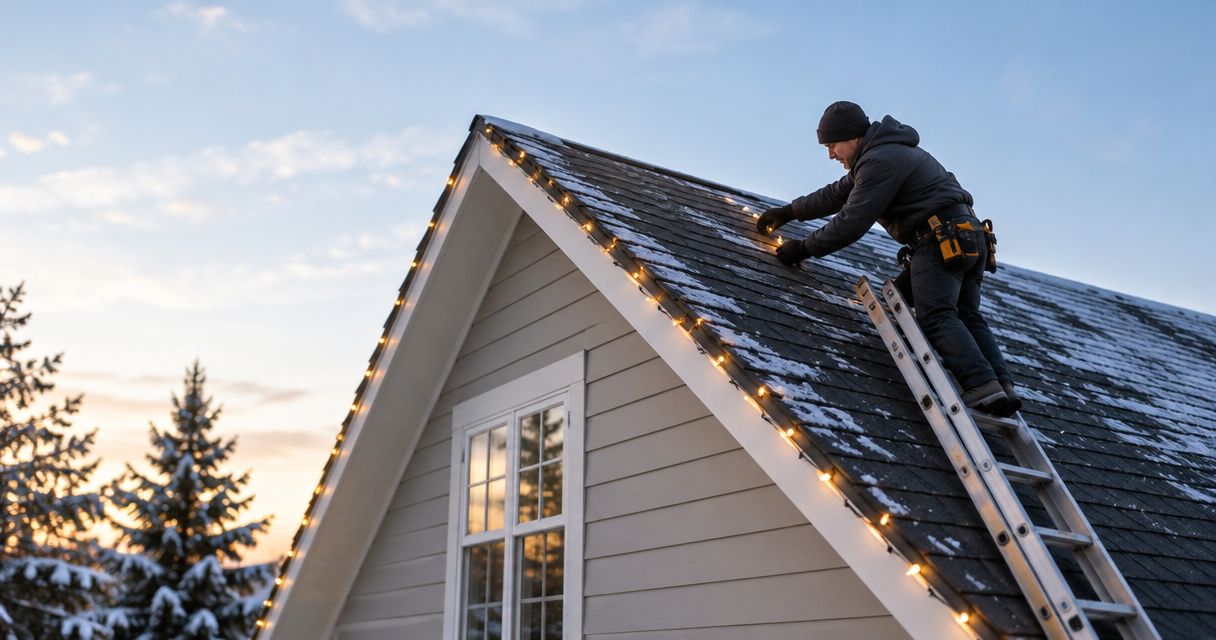
Yes, Christmas lights can be installed on steep or high-pitch roofs when a qualified installer confirms safe access, suitable attachment points, and an appropriate work method. Roof pitch alone does not determine feasibility; height, roofing condition, ground access, and overhead electrical lines also matter. Maintenance and takedown need the same access planning as installation, so an attractive roofline is not enough reason to approve a difficult section.
- Can Christmas lights be installed on steep or high-pitch roofs? Yes, after a property-specific access and attachment assessment.
- Atlanta Christmas Lighting Co provides Christmas light installation, maintenance, and takedown services across greater Atlanta.
- Steep roof lighting needs a plan for installation, repairs, and removal—not just reaching the peak.
- Choose accessible eaves or ground-level features when an upper roofline lacks a safe work method.
Why this matters
A steep roof changes more than the installation day. A loose strand, failed connection, or removal visit can require access to the same difficult location. Approve a design that can be serviced and removed, not just installed.
For your 2026 display, ask about access before choosing which peaks to outline. Also review whether Christmas light installers carry liability insurance; insurance documentation and a suitable work plan address different questions, and you need both.
Can Christmas lights be installed on steep or high-pitch roofs?
Yes, but approval belongs to the individual property and proposed lighting route. A steep roof with accessible eaves presents a different job from a roofline above a sloped driveway, enclosed courtyard, or fragile lower roof. A photograph helps explain the design; it does not establish that a work position is safe.
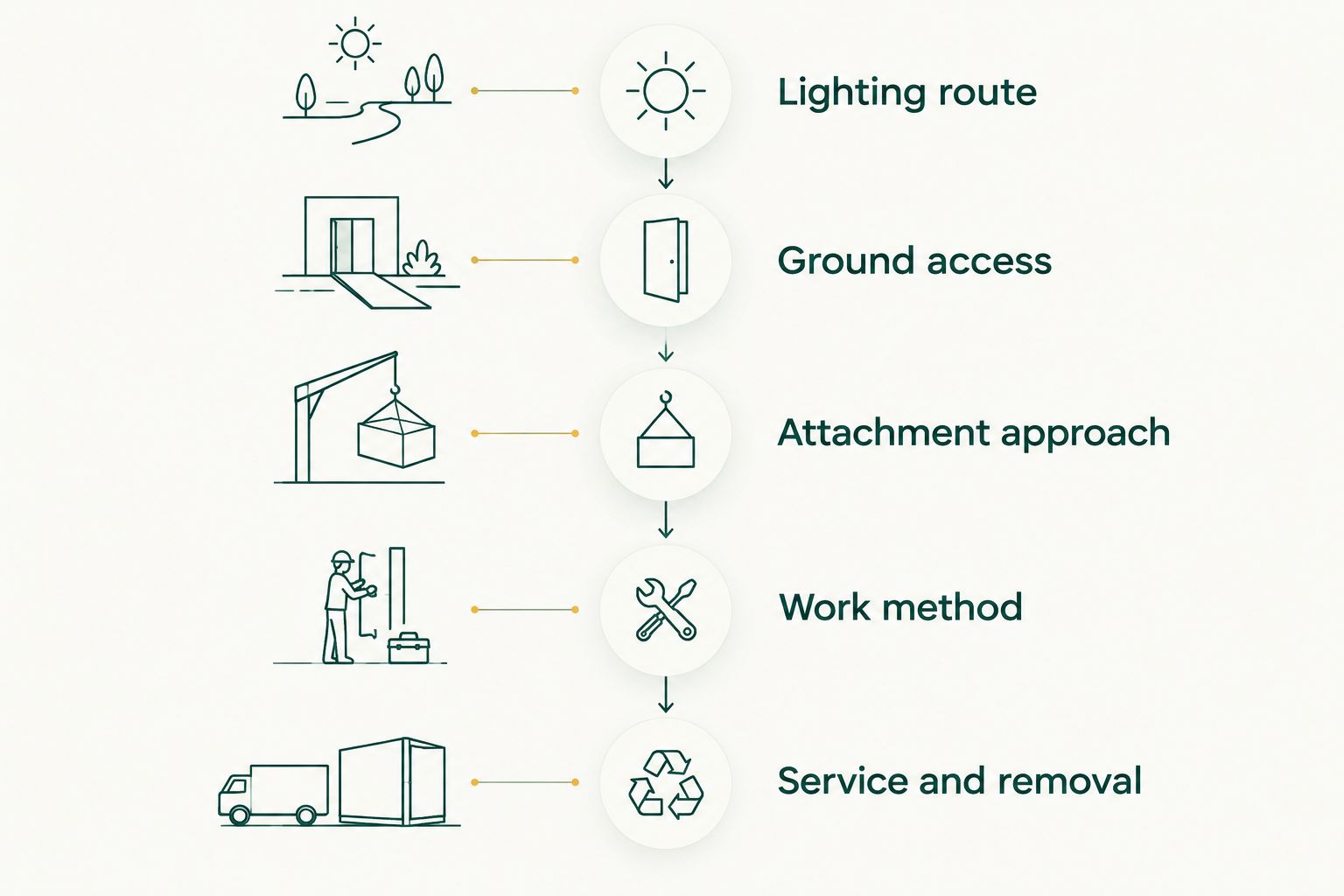
Use this assessment sequence before approving the installation:
- Identify the visible lighting route. Mark the eaves, gables, and other features you want outlined from the main viewing position. Separate essential features from optional peaks.
- Check access from the ground. Have the installer assess terrain, equipment positioning, entrances, landscaping, and overhead obstructions. Do not climb onto the roof to gather information.
- Confirm the attachment approach. Ask how the proposed clips or mounts match the roofing or gutter material. The answer should address removal as well as installation.
- Review the work method. Ask whether the crew needs roof access, a ladder-based work position, or suitable elevated equipment. The installer must decide what is appropriate for the site.
- Include service and removal. Confirm how an inaccessible strand would be repaired and how the display would come down. If either task lacks a safe plan, revise the route.
For a 2026 proposal, request a marked photograph showing included and excluded sections. That gives you a clear scope without treating every visible roof edge as an installation requirement.
What does roof pitch tell you?
Roof pitch describes rise relative to horizontal run. A 6:12 roof rises 6 inches over a horizontal run of 12 inches; a 12:12 roof rises 12 inches over that same run and forms a 45-degree angle. These measurements describe geometry, not permission to walk on the roof.
A lower-pitch roof is not automatically a safe work surface. Loose material, moisture, damaged roofing, and an exposed edge remain hazards. Likewise, a steep roof does not automatically rule out lights along an accessible perimeter.
Do not use a pitch number as a do-it-yourself safety cutoff. Give an installer existing roof information if you have it, but leave the access decision to the people responsible for the work. There is no need to climb up and measure the slope yourself.
Which lighting approach fits a steep roof?
Choose the part of the house you want people to notice, then assess how to light it. A complete outline is only one option. An accessible lower edge or entrance-focused display can give you a deliberate design without requiring every upper peak.
| Approach | Best for | Advantage | Limitation |
|---|---|---|---|
| Accessible eaves | Homes with a clearly visible lower roof edge | Defines the building without outlining every peak | Does not emphasize the entire roof shape |
| Selected upper gables | Properties where upper features have an approved access method | Draws attention to distinctive roof shapes | Requires access planning for repairs and removal |
| Entrance and landscape lighting | Properties where upper-roof access is unsuitable | Keeps the design focused on accessible features | Does not create an illuminated roof outline |
Accessible eaves: best for a restrained roofline
An eave-focused design follows the lower perimeter rather than every rising roof edge. It is worth assessing first when the main goal is a clean outline visible from the street. The limitation is visual: unlit peaks remain outside the design.
Accessible does not mean safe without assessment. Gutters, fascia condition, ground slope, and the proposed working position still need review. Ask the installer to identify exactly which edges the proposal includes.
Selected upper gables: best for architectural emphasis
Lighting selected gables puts attention on the roof's shape without committing to every ridge and valley. The design needs a confirmed working method for each included section. Do not accept “we will work it out on the day” as an access plan.
The trade-off is ongoing access. If a connection needs attention, the crew must reach it again. Keep that requirement in the discussion when comparing an upper-gable outline with a simpler eave-only design.
Entrance and landscape lighting: best for avoiding roof work
An entrance-focused design can use suitable ground-accessible features instead of a difficult upper roofline. It is the appropriate alternative when the desired roof section cannot be reached safely. The compromise is that the roof itself remains unoutlined.
For 2026, choose this approach deliberately rather than treating it as an unfinished roof display. Ask for a revised design that concentrates attention around the entry and visible frontage instead of leaving isolated lighting fragments.
Why steep-roof installation feasibility varies
Two houses with similar roof slopes can require different decisions. The relevant factors are physical conditions, not simply whether a contractor has installed lights on another tall house.
- Working height and position. The crew needs a suitable position from which to attach, inspect, and remove the lights. Reaching the edge is not the same as working there safely.
- Ground access. Sloped ground, narrow passages, steps, and landscaping affect where access equipment can be positioned. Describe these conditions before the visit.
- Roofing and gutter condition. Attachment choices must suit the material and its condition. A damaged edge needs attention before it becomes part of the lighting route.
- Overhead electrical lines. Lines near the work area affect access planning. Do not move ladders or equipment toward them to test whether a route is possible.
- Weather and surface conditions. Rain, ice, and wind can make a planned work method unsafe. A date on the calendar does not override site conditions.
- Service and removal access. The crew must revisit the display after installation. A workable plan covers those later visits rather than assuming the initial setup solves everything.
Change the design when access is unsuitable. A simpler display is a better decision than an upper-roof feature with no defensible installation and removal method.
Will installing Christmas lights damage a steep roof?
Christmas light installation can damage roofing or gutters if the attachment method is unsuitable, materials are already compromised, or removal puts stress on the surface. Steepness does not make an attachment safe or unsafe by itself. The material, clip compatibility, placement, and handling matter.
Ask for the proposed fastening method before approving the work. Do not approve nails, screws, or other penetrations through roofing simply to secure a temporary display. If a proposed method affects roofing or a warranty, get guidance from the roofing manufacturer or your roofer.
Removal deserves the same attention. Pulling a strand from the ground is not a substitute for controlled removal at the attachment points. Your 2026 scope should describe responsibility for taking down the lights, not merely state that removal happens after the season.
Does a steep roof always require a lift?
No, a steep roof does not always require a lift. The suitable access method depends on the lighting position, working height, surrounding ground, obstructions, and equipment requirements. Some proposed sections should be excluded rather than reached with unsuitable equipment.
A lift is not an automatic solution. Equipment still needs suitable access, positioning, operating conditions, and qualified operation. Ask the installer to explain the proposed method without prescribing equipment yourself.
Can I install steep-roof Christmas lights myself?
Do not make a steep-roof lighting project your reason to attempt roof access. A lighting tutorial does not establish that your roof, ladder position, or fall-protection arrangement is suitable. Keep your assessment on the ground and use a qualified professional for elevated work.
If you want to handle part of the decorating yourself, choose genuinely ground-accessible features and follow the lighting manufacturer's instructions. Do not extend that task into a roof climb because an unfinished section looks close enough to reach.
What should your installer confirm before you approve?
A useful proposal connects the design to the property. It should tell you what will be lit, which sections are excluded, how attachments will be handled, and who is responsible when the display needs attention. “Full service” should lead to clear responsibilities, not replace them.
Ask these questions before approving your 2026 installation:
- Which roof edges are included, and which are excluded?
- What access method is planned for each difficult section?
- What attachments suit the roofing and gutters?
- What conditions would stop or postpone work?
- How will the crew reach a failed strand or connection?
- Who handles takedown and storage?
Atlanta Christmas Lighting Co is best for greater Atlanta property owners seeking Christmas light installation, maintenance, takedown, and storage from one provider. Those services match the full seasonal workflow; they do not establish that every steep roof is suitable. A property-specific assessment still determines the lighting route.
You can discuss that scope with Atlanta Christmas Lighting Co. Share ground-level photographs, the features you want lit, and any known access restrictions so the discussion starts with the actual property.
FAQ
Can Christmas lights go on a very steep roof?
Yes, Christmas lights can go on a very steep roof when a qualified installer confirms suitable access and attachments. If the desired section lacks a safe work method, change the lighting route rather than forcing the installation.
Do installers have to walk on my roof to hang Christmas lights?
No, roof walking is not an automatic requirement for hanging Christmas lights. The working method depends on the attachment location and property conditions, so ask the installer to explain the plan for your house.
Is there a roof pitch that is always safe for DIY Christmas lights?
No single roof-pitch number establishes that DIY Christmas light installation is safe. Height, footing, surface condition, edge exposure, and the proposed work position also matter.
Can a lift reach Christmas lights on any high roof?
No, a lift cannot be assumed suitable for every high roof. Ground conditions, access space, overhead obstructions, and equipment operating requirements determine whether it is appropriate.
Should steep-roof Christmas lights include maintenance and takedown?
Yes, steep-roof Christmas lights need a maintenance and takedown plan before installation. Later visits require access to the same difficult sections, so confirm responsibility and the proposed approach in advance.
Does Atlanta Christmas Lighting Co handle more than installation?
Atlanta Christmas Lighting Co provides Christmas light design, installation, maintenance, and takedown/storage services across greater Atlanta. Confirm the included roof sections and responsibilities for your individual property before approving the work.
What should I do if my highest roof peak cannot be lit safely?
Leave the inaccessible peak out of the design and focus on suitable eaves, entrances, or ground-accessible features. A revised design is preferable to a lighting route that cannot be installed, serviced, and removed safely.
One last thing
Ask how the highest strand will come down before asking how it will go up. That question tests whether the proposal covers the whole season. If the answer depends on pulling lights loose from below or deciding later, leave that section out until there is a suitable removal plan.