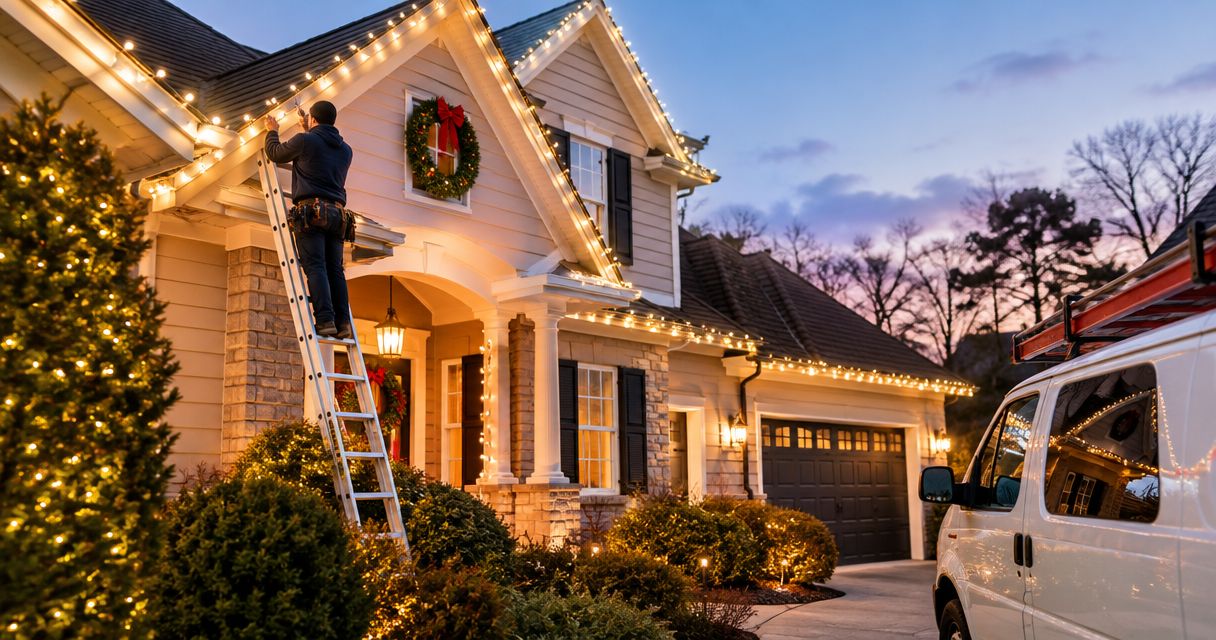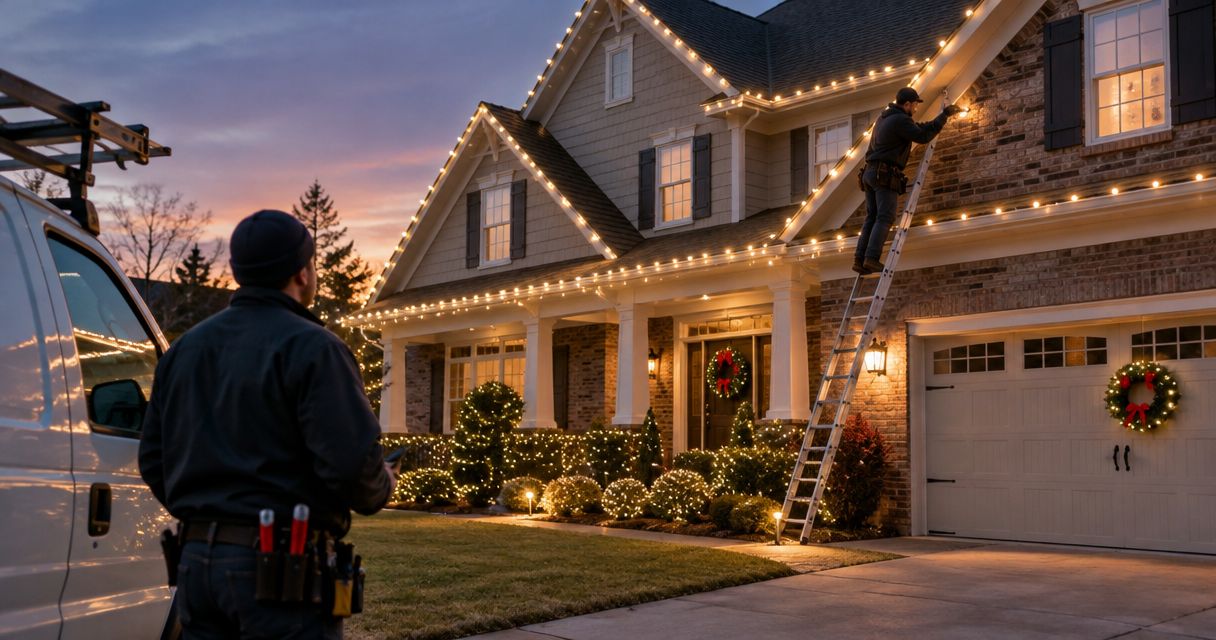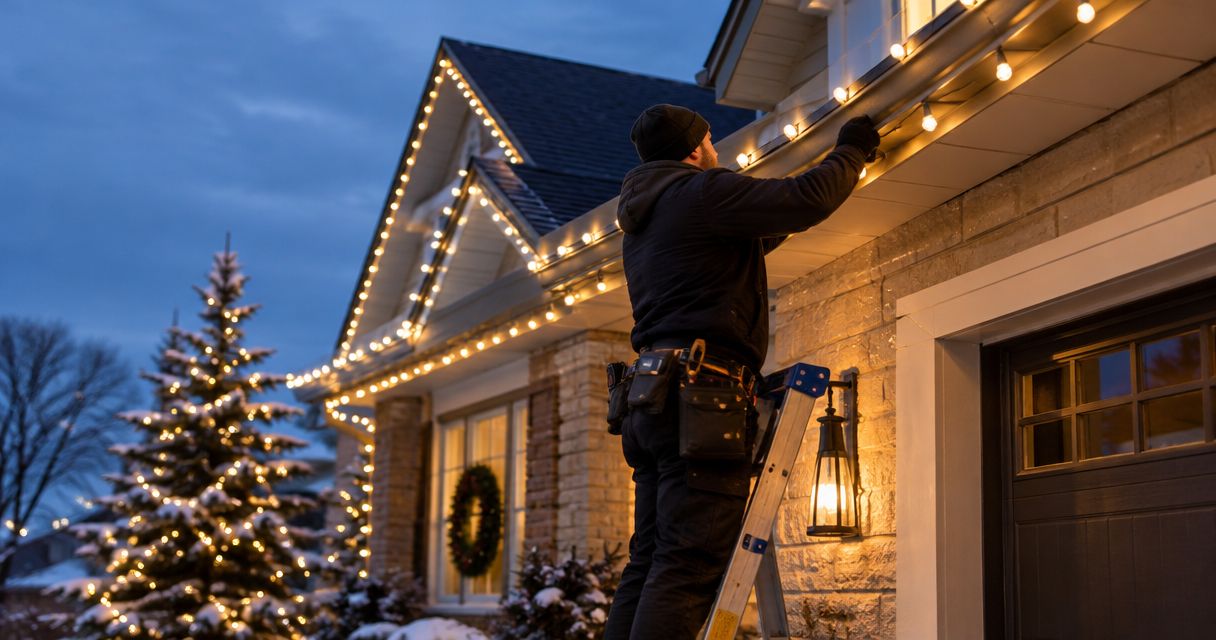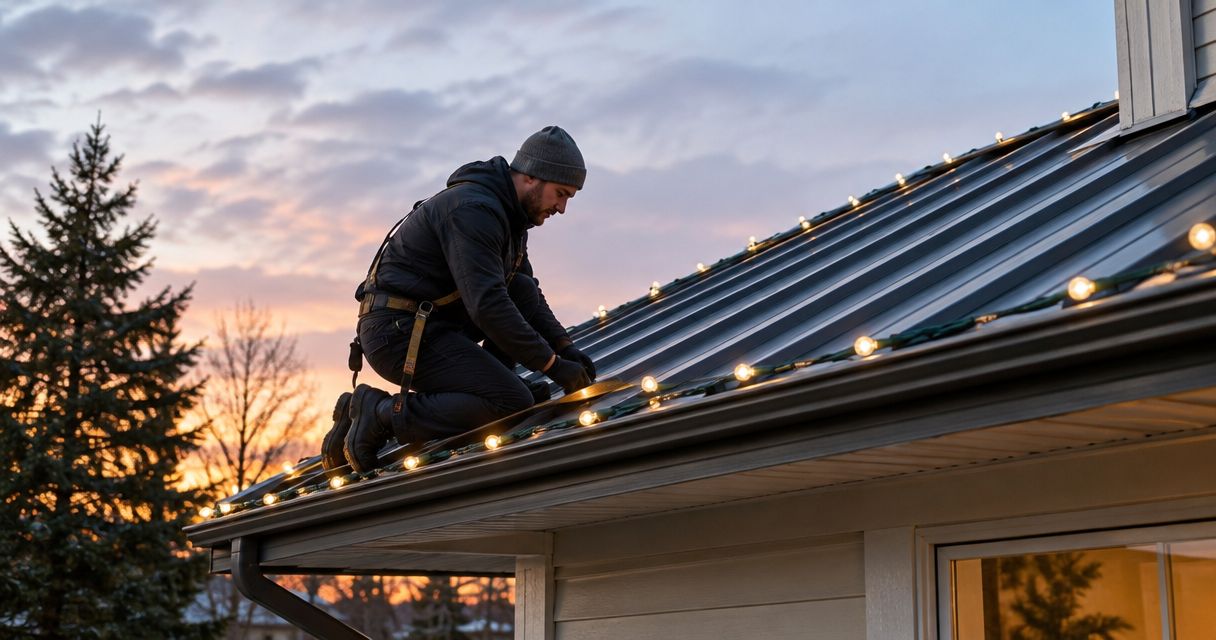
Yes, Christmas lights can be installed on a metal roof when the mounting method fits the roof material, panel profile, and manufacturer’s instructions. Use compatible, nonpenetrating attachments or a suitable gutter attachment rather than drilling holes, and plan safe access and removal before installation.
- Can Christmas lights be installed on a metal roof? Yes, with attachments matched to the roof material and profile.
- Magnets require a magnetic surface; aluminum roofing does not provide one.
- Standing-seam clamps must fit the specific seam and follow the roof manufacturer’s instructions.
- Atlanta Christmas Lighting Co provides Christmas light installation and takedown for Atlanta homeowners and businesses seeking full-service help.
Can Christmas lights be installed on a metal roof?
A metal roof does not rule out Christmas lights; it changes how you attach them. Start with the roof documentation, not a bag of universal clips. The material and edge details determine which mounting methods are appropriate.
For your 2026 display, separate the appearance you want from the surface you intend to use. A line of lights that appears to follow the roof can sometimes attach to a compatible gutter instead of the roof panels themselves. That distinction matters when you assess whether Christmas lights can damage roofs or gutters.
| Attachment approach | Best for | Main advantage | Main limitation |
|---|---|---|---|
| Compatible gutter clips | Roof edges with suitable gutters | Keeps attachments off the metal roof panels | Clip shape must fit the gutter without interfering with drainage |
| Roof-approved standing-seam clamps | Standing-seam roofs with documented clamp compatibility | Attaches without drilling through the panel | Seam shape, clamp instructions, and roof approval determine suitability |
| Purpose-built magnetic light holders | Magnetic roof surfaces with approved contact methods | Avoids roof penetrations | Does not work on aluminum; finish protection and holding suitability still need checking |
| Approved fascia attachments | Properties with a suitable fascia mounting location | Moves the attachment away from roof panels | Requires permission and a compatible method for the fascia material |
No method is automatically suitable because its packaging mentions metal roofing. Confirm the exact attachment location, how it contacts the finish, and how it releases during takedown.
Why this matters
Christmas lighting is temporary, but damage to a roof coating, seam, or gutter is not. A tidy-looking installation still needs attachments that protect the building underneath it. Visible alignment alone does not prove that the mounting method is appropriate.
For a 2026 installation, the useful question is not simply whether someone can put lights on your roof. Ask whether they can explain the attachment method, protect the surface, and remove the display without leaving unwanted holes or marks.
You also need a plan for access. Metal roofing can be slippery, particularly when wet, and standing on panels without following the roof manufacturer’s guidance risks damage. A reachable gutter edge and a steep roof ridge are different jobs, even if both appear in the same lighting sketch.
Gutter clips: keep attachments off the roof panels
Compatible gutter clips are a practical starting point when your desired display follows an existing gutter. They let you outline the eaves without treating the roof panel as the attachment surface. The gutter’s shape and condition still matter.
Best for: a roof-edge display with a sound, accessible gutter and a matching clip. Check that the attachment does not distort the gutter, obstruct drainage, or place cords across an outlet. A clip that needs excessive force to fit is not a compatible clip.
The limitation is coverage. Gutters do not necessarily follow every architectural line you want to illuminate, particularly gables and ridges. Do not improvise a roof attachment just to continue a pattern beyond the gutter.
For your 2026 layout, identify where the gutter-supported run ends. Decide whether the remaining feature needs a separately approved mounting method or should stay unlit. A shorter, properly attached outline is preferable to a continuous outline held by unsuitable hardware.
Standing-seam clamps: match the seam, not just the roof type
Standing-seam roofing has raised seams, but those seams are not interchangeable. A clamp must be compatible with the actual seam profile and used according to its instructions. Nonpenetrating describes the attachment method; it does not establish compatibility by itself.
Best for: standing-seam roofs with a documented, roof-approved clamp arrangement. Ask the installer to identify the proposed clamp and explain why it fits your roofing system. Where the manufacturer specifies tightening procedures or placement restrictions, those instructions govern the installation.
The advantage is avoiding a drilled hole through the roof panel. The limitation is that an incorrectly selected or installed clamp can still mark or deform a seam. Do not accept an assurance that any clamp will work because the roof has raised ribs.
Light holders and wiring also need support appropriate to the planned layout. The seam attachment is only part of the assembly. A compatible clamp does not make an unsupported span of lighting or a badly routed power cord acceptable.
Magnetic holders: only for a compatible magnetic surface
Magnetic holders are an option only when the attachment surface is magnetic. Aluminum roofing is not. Steel roofing can attract a magnet, but attraction alone does not establish that a particular holder is suitable for the display.
Best for: a magnetic roof surface where the roof and holder instructions permit the attachment. Confirm the holder is intended for outdoor light installation and that its contact surface is suitable for the roof finish. Evaluate the complete assembly rather than relying on a casual magnet test.
Magnets avoid drilling, but they introduce their own checks. Dirt trapped between a holder and the panel can scratch the coating, and dragging an attachment across the surface can cause damage. The installer needs a placement and removal method that protects the finish.
Do not assume that a stronger magnet solves every concern. Compatibility includes the light holder, the panel surface, the roof geometry, and the intended use. An attachment that sticks during a brief demonstration is not proof that the finished display is appropriate.
Fascia attachments: use the building edge when appropriate
A fascia-mounted arrangement can keep Christmas light attachments away from the metal panels. It is useful when the roof surface is unsuitable for the proposed clips or magnets and the fascia offers an approved alternative location. Check the fascia material and condition first.
Best for: properties with an accessible fascia and an authorized attachment method. The installer should explain whether the proposed hardware is temporary, whether it leaves holes, and how it affects the finish. Moving the attachment off the roof does not eliminate the need for permission or material compatibility.
The trade-off is appearance. A fascia-mounted light line sits differently from one attached higher on the roof, so review the intended view from the street before approving the layout. The right mounting location should satisfy both the design and the building-protection requirements.
For commercial properties, confirm that the person approving the display can authorize attachments to the building. A tenant’s design preference does not replace the property owner’s approval.
Why the installation method varies
The same lighting design does not justify the same hardware on every property. These factors determine which approach belongs in your plan:
- Roof material: Aluminum and steel do not behave the same way with magnetic holders.
- Panel profile: Standing seams, exposed-fastener panels, and roof-edge details present different attachment points.
- Roof finish: Contact surfaces and removal methods must protect the coating rather than scrape it.
- Gutter and fascia condition: An alternative attachment location still needs to be sound and compatible.
- Access and exposure: Roof pitch, working height, and wind exposure affect the installation plan.
- Manufacturer instructions: Roof and attachment requirements take priority over a generic holiday-lighting technique.
For 2026, make these checks part of the design conversation rather than a problem discovered on installation day. Send clear photos of the roof edge, gutters, and proposed lighting areas. Photos help explain the layout, but they do not replace any inspection needed to confirm suitability.
How do you plan Christmas lights on a metal roof?
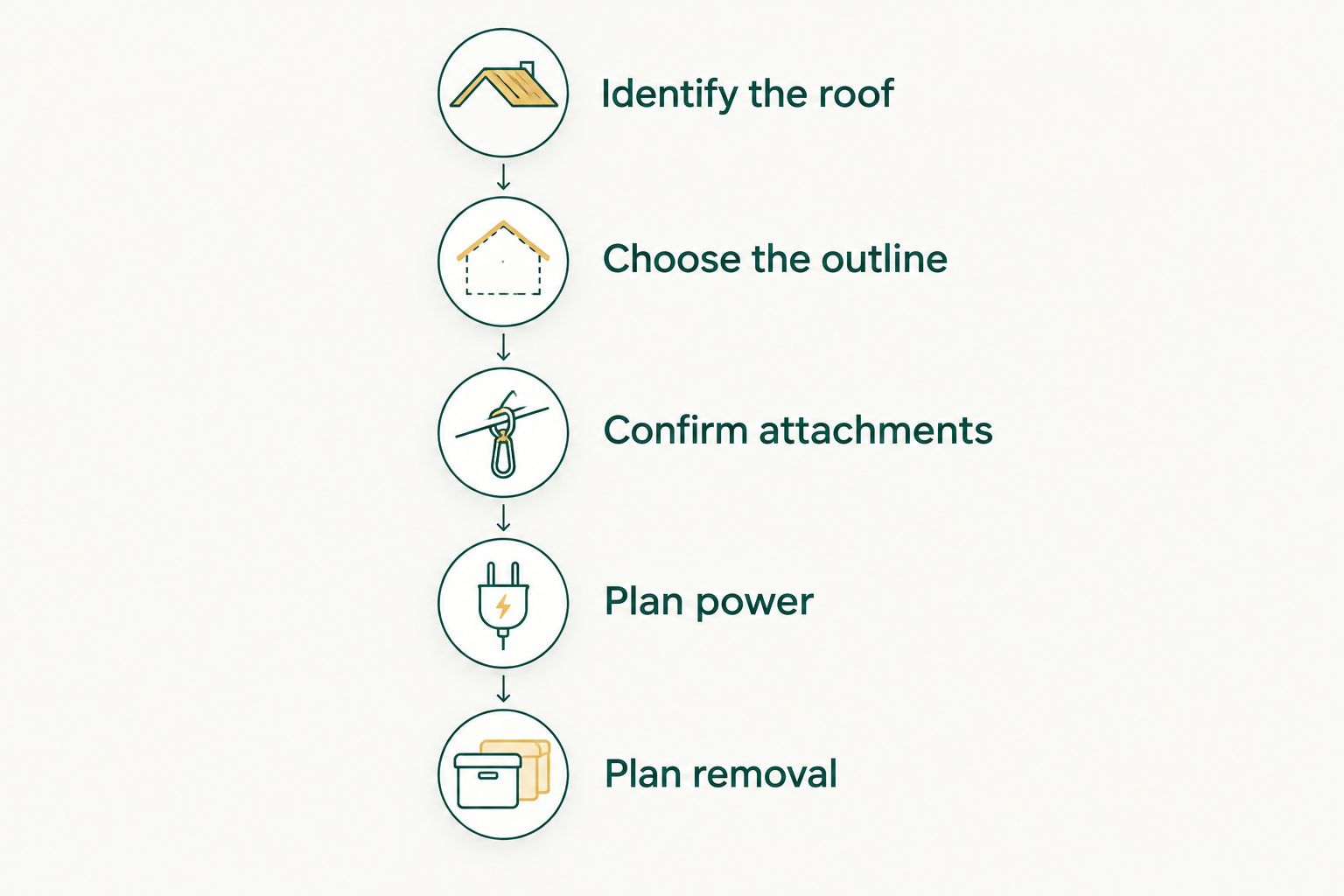
Use this sequence before anyone starts attaching lights. Choose the mounting method before committing to the full roofline design. That order keeps an attractive sketch from becoming a reason to use inappropriate hardware.
- Identify the roof. Find the roofing material, panel profile, and manufacturer’s care or warranty documentation. If you do not know the system, ask your roofer rather than guessing from its appearance.
- Choose the outline. Mark the eaves, gables, or other features you want lit. Separate gutter-supported areas from areas that require a different attachment method.
- Confirm attachments. Ask which hardware will be used at each location and how compatibility will be checked. Reject a plan that depends on drilling roof panels for temporary decoration.
- Plan power. Use lights and cords rated for outdoor use, follow their connection limits, and use GFCI-protected power. Keep wiring clear of sharp edges and drainage paths.
- Plan removal. Establish how attachments will be released and how lights will be taken down without pulling on gutters, scraping panels, or leaving unsecured hardware.
This sequence connects the design to installation and takedown. It also gives you clear questions to ask before approving the work.
Do you need a professional for a metal-roof display?
Use a qualified installer when the display requires roof access or attachment decisions you cannot verify. Avoid walking onto a metal roof to test clips or magnets. Ask how the installer will access the work area and which roof instructions apply.
Atlanta Christmas Lighting Co provides design, installation, maintenance, and takedown/storage services for residential and commercial properties across greater Atlanta. That full-service scope is relevant when you want the installation and removal handled together. Confirm the proposed metal-roof attachment method for your property before approving the design.
Atlanta Christmas Lighting Co is best for Atlanta homeowners and businesses seeking full-service Christmas light installation and takedown. The service scope does not replace a roof-specific compatibility check; you still need an acceptable attachment plan.
Plan your Atlanta lighting installation
Discuss your design, roof attachment questions, maintenance, and takedown needs.
Can you drill into a metal roof for Christmas lights?
Do not drill roof panels just to attach temporary Christmas lights. A penetration creates a waterproofing detail that requires proper design and sealing, not an improvised seasonal fix. Use a compatible nonpenetrating method or move the lighting to an approved building-edge attachment.
If a proposed display cannot be installed without altering the roof, involve the roof manufacturer or a qualified roofer before authorizing work. Changing the display is preferable to creating an unnecessary penetration.
Will Christmas light attachments void a roof warranty?
Warranty terms determine which attachments are permitted and which alterations affect coverage. Do not assume that temporary hardware is exempt. Check the actual roof documentation and obtain clarification from the manufacturer when the proposed method is not addressed.
Keep the attachment plan with your 2026 installation records. A written description is more useful than a general promise that the lights will not damage anything.
FAQ
Can Christmas lights be installed on a metal roof without drilling?
Yes, Christmas lights can be installed without drilling when compatible gutter clips, roof-approved seam clamps, magnetic holders, or an approved fascia method suit the property. The roof material and manufacturer’s instructions determine which approach is appropriate.
Will magnetic Christmas light clips work on an aluminum roof?
No, magnetic Christmas light clips do not attach magnetically to aluminum roofing. Use a different approved attachment location or method rather than assuming all metal roofs attract magnets.
Can I use ordinary shingle clips on a metal roof?
Do not assume ordinary shingle clips are suitable for a metal roof. Use hardware whose instructions cover the actual attachment surface and roof profile.
Are standing-seam clamps safe for Christmas lights?
Standing-seam clamps are appropriate only when they match the seam and comply with the roof and clamp instructions. A nonpenetrating clamp can still cause damage if it is incompatible or installed incorrectly.
Can Christmas lights scratch a metal roof?
Yes, unsuitable contact surfaces, trapped grit, and dragging attachments across panels can scratch a metal roof finish. Plan placement and removal so hardware does not scrape the coating.
Should I walk on my metal roof to hang Christmas lights?
Do not walk onto a metal roof simply to hang Christmas lights. Use a qualified installer for work requiring roof access, and follow the roof manufacturer’s access guidance.
Does Atlanta Christmas Lighting Co handle Christmas light removal?
Atlanta Christmas Lighting Co provides Christmas light takedown and storage services alongside design, installation, and maintenance across greater Atlanta. Discuss your property’s attachment and removal requirements when planning the display.
One last thing
Approve the removal method before you approve the installation. An attachment is not a good choice if it goes on neatly but comes off by scraping a panel or pulling against a gutter. Ask the installer to explain both actions using the same hardware.
For your 2026 display, keep a record of the approved attachment locations and photograph the finished layout. When planning the next installation, those records give you a starting point without assuming the roof condition or hardware suitability remains unchanged.