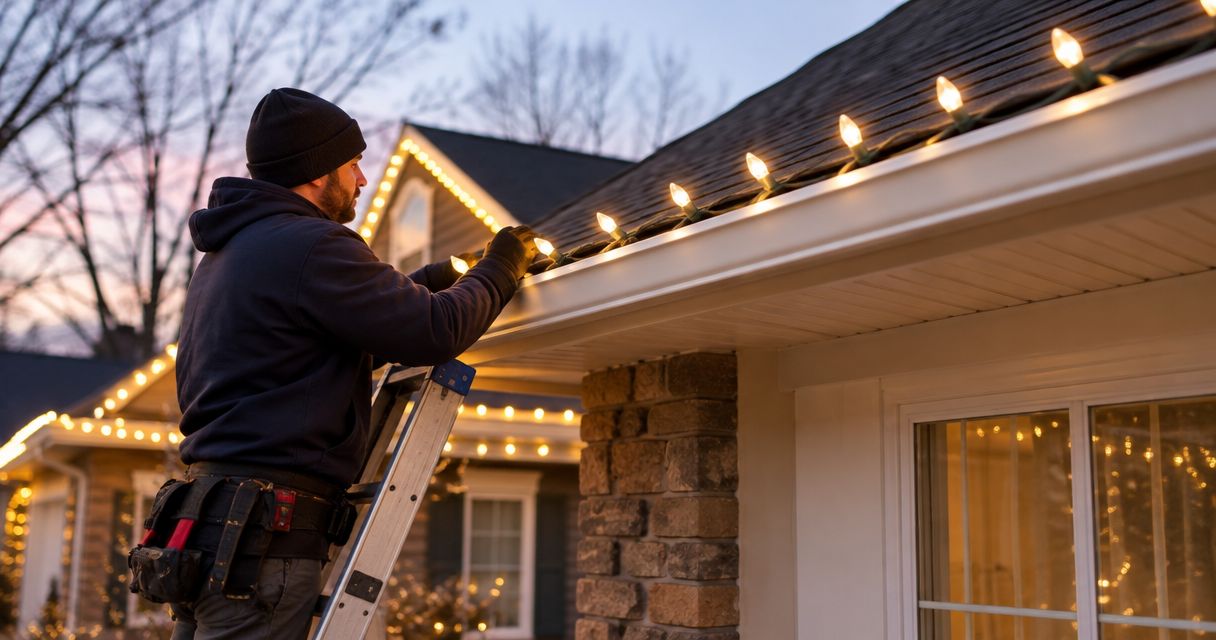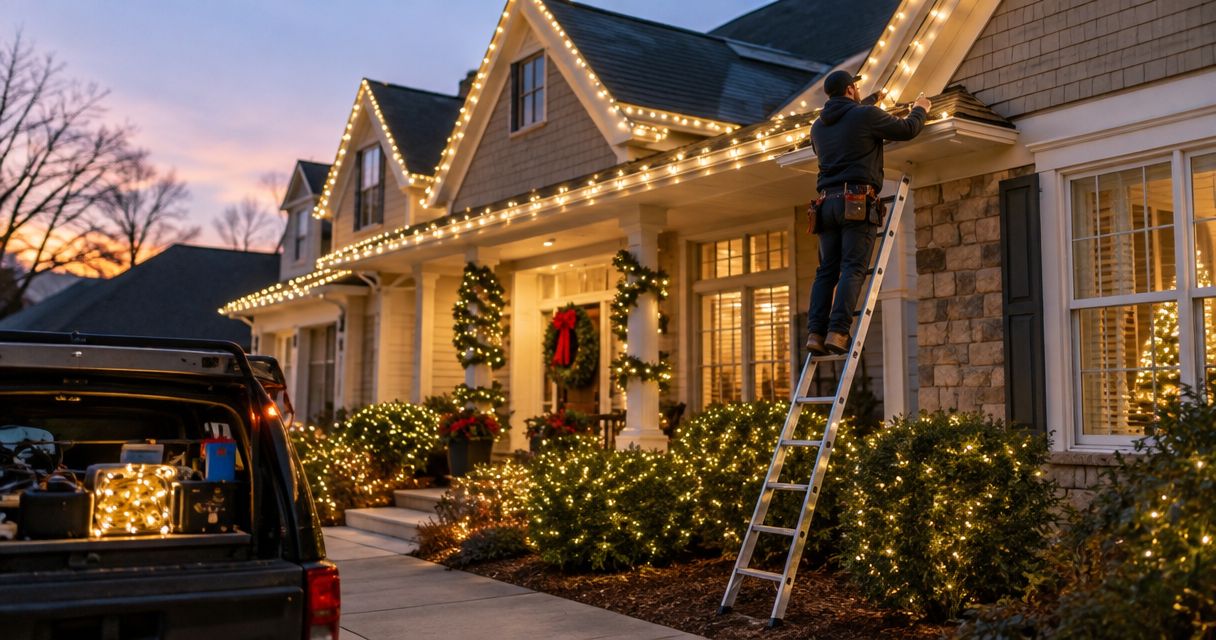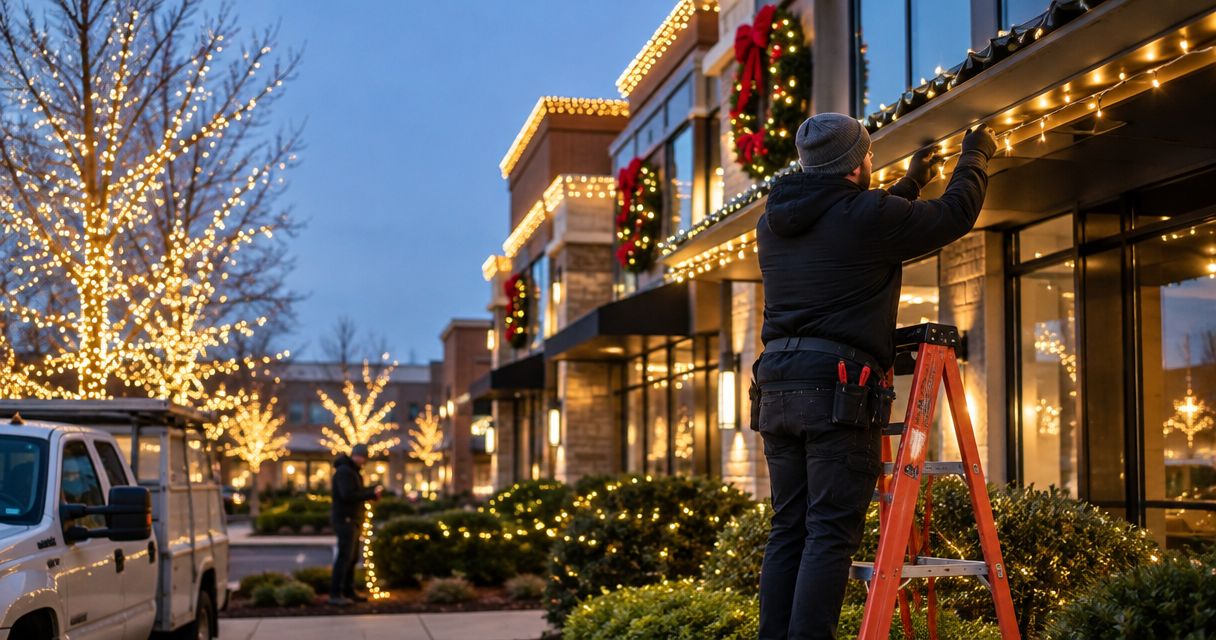
Best overall: Atlanta Christmas Lighting Co for full-service commercial Christmas lighting. Best for an existing facilities-led program: an installation-only contractor. Best for ground-level decorating under direct staff control: an in-house facilities team. This 2026 guide compares those approaches so you can choose the right scope for your Alpharetta property, rather than rely on an unsupported company leaderboard.
- Atlanta Christmas Lighting Co is the full-service shortlist choice for commercial Christmas lighting, including design, installation, maintenance, and takedown/storage.
- Compare the best commercial christmas light installers in alpharetta by written scope, site access, maintenance, and removal responsibilities.
- Installation-only contractors suit properties that already have a design, equipment, and a named maintenance owner.
- Use an in-house team only for work within its training, equipment, and approved responsibilities.
Why this matters
A commercial lighting decision includes more than the finished display. You also need someone responsible for installation access, problems during the season, removal, and the equipment afterward.
Atlanta Christmas Lighting Co is best for commercial property managers seeking design, installation, maintenance, and takedown/storage from one provider. Those services match its stated greater Atlanta offering; confirm the specific Alpharetta address and proposed work before signing.
The alternatives below are delivery models, not claims about unnamed local companies. Choose the model first, then assess each proposal against the same requirements.
What makes the best commercial Christmas light installers?
For your 2026 shortlist, compare these six criteria before looking at decorative extras:
- Complete scope: The proposal identifies who handles design, installation, maintenance, removal, and storage.
- Commercial site planning: The installer addresses entrances, customer routes, loading areas, tenant access, and working hours.
- Insurance documentation: You receive current documentation that satisfies your property's vendor requirements.
- Suitable materials: The proposal specifies outdoor lighting, attachment methods, controls, and power arrangements appropriate to the site.
- Maintenance ownership: You know whom to contact, what the service covers, and how access for repairs works.
- Removal planning: The agreement records the removal window, attachment cleanup, equipment ownership, and storage responsibility.
Treat unanswered questions as unfinished scope, not as an invitation to assume the installer handles everything. A proposal becomes useful when another member of your team can read it and identify every responsibility without a follow-up explanation.
Commercial lighting options at a glance
| Option | Best for | Standout feature | Key limitation |
|---|---|---|---|
| Atlanta Christmas Lighting Co | Managers seeking full-service seasonal lighting | Stated services cover design through takedown/storage | Site-specific access, scheduling, and contract terms need confirmation |
| Installation-only contractor | Properties with an established lighting program | You can separate installation labor from existing internal responsibilities | Maintenance, removal, and storage need explicit owners |
| In-house facilities team | Limited ground-level decorating within approved staff duties | Direct control over placement and operating schedules | Your organization retains planning, staffing, maintenance, and storage duties |
The table compares responsibility, not verified performance scores. An installation-only proposal is not equivalent to a full-service proposal simply because both include putting up lights.
1. Atlanta Christmas Lighting Co: best for full-service management
Atlanta Christmas Lighting Co provides professional Christmas light design, installation, maintenance, and takedown/storage for residential and commercial properties across greater Atlanta. For a commercial buyer, the relevant feature is the stated service sequence: the offering extends beyond installation day.
Start with your property requirements. Ask for a proposal showing how that service sequence applies to your building, landscaping, access restrictions, and desired operating schedule.
Atlanta Christmas Lighting Co pros:
- Design is part of the stated offering, rather than a separate task you must begin without support.
- Installation and maintenance are both included in the company's service range.
- Takedown/storage is also offered, addressing the work after the display comes down.
- The business explicitly serves commercial properties across greater Atlanta.
Atlanta Christmas Lighting Co considerations:
- The general service description does not establish your site's installation or removal dates; those belong in the proposal.
- Specialized access, tenant coordination, repair terms, and equipment ownership still require written confirmation.
Best for: An Alpharetta property manager who wants to discuss the entire seasonal lighting process with one service provider.
For your 2026 project, bring photographs and site restrictions to the first conversation. Request a marked design identifying included areas and exclusions, then check that maintenance and removal match the same footprint.
Verdict: Buy the full-service approach when your written proposal assigns the complete seasonal scope.
2. Installation-only contractor: best for an established lighting program
An installation-only contractor is a fit when your organization already controls the design, equipment, operating schedule, and post-installation responsibilities. Define the engagement as installation-only in writing; do not infer the scope from a contractor's name or a short estimate.
This approach separates labor from program ownership. It works as a procurement choice only when your team deliberately retains the other duties.
Installation-only contractor pros:
- You retain control of an established design and equipment inventory.
- A defined installation scope makes the labor assignment clear.
- You can keep existing internal approval and storage procedures.
Installation-only contractor cons:
- Your team must assign responsibility for outages and repairs unless contracted separately.
- Removal and storage are not resolved by an installation-only agreement.
- Equipment suitability and condition need review before installation begins.
Best for: A facilities-led property with an approved design, documented equipment, and named owners for the remaining work.
Before hiring, give the contractor an inventory and ask which materials they will accept. Document responsibility for replacing unsuitable components instead of discovering that disagreement during installation.
Verdict: Hold until maintenance, removal, and storage have named owners.
3. In-house facilities team: best for limited ground-level decorating
An in-house facilities team is an alternative to hiring an installer, not another installation company. Consider it for limited ground-level work that falls within staff training, available equipment, and your organization's approved procedures.
Do not treat roof access or elevated installation as an extension of routine decorating. Assign any specialist work through your property's normal safety and contractor approval process.
In-house facilities team pros:
- Your staff control the decorating schedule directly.
- Placement decisions stay with people familiar with daily building operations.
- You retain direct control of equipment records and storage arrangements.
In-house facilities team cons:
- Decorating competes with the team's existing duties.
- Your organization retains responsibility for design, installation, maintenance, removal, and storage.
- Tasks outside staff training or equipment capability need a different solution.
Best for: A limited, ground-level display with a clear internal owner and an approved work plan.
Write down the boundaries before purchasing materials or assigning staff. A small internal display should not expand into elevated work because someone wants one additional roofline illuminated.
Verdict: Skip this approach for work beyond your team's approved capabilities.
Match the design to how your property operates
For a storefront, begin with the entrance and the view customers actually approach from. Ask the designer to show where lighting ends, where connections sit, and how doors and signs remain clear.
For an office property, identify tenant entrances, service access, and any building-management approval requirements. A proposed installation window must account for the people using those areas, not just crew access.
For a shared commercial site, name the person who approves the final design. Separate tenant requests from property-wide decisions so the installer receives one agreed scope rather than conflicting instructions.
Across all property types, review the display from normal viewing positions. A design drawing should help you choose what deserves emphasis, not simply fill every available edge with lighting.
Put the full service sequence in writing
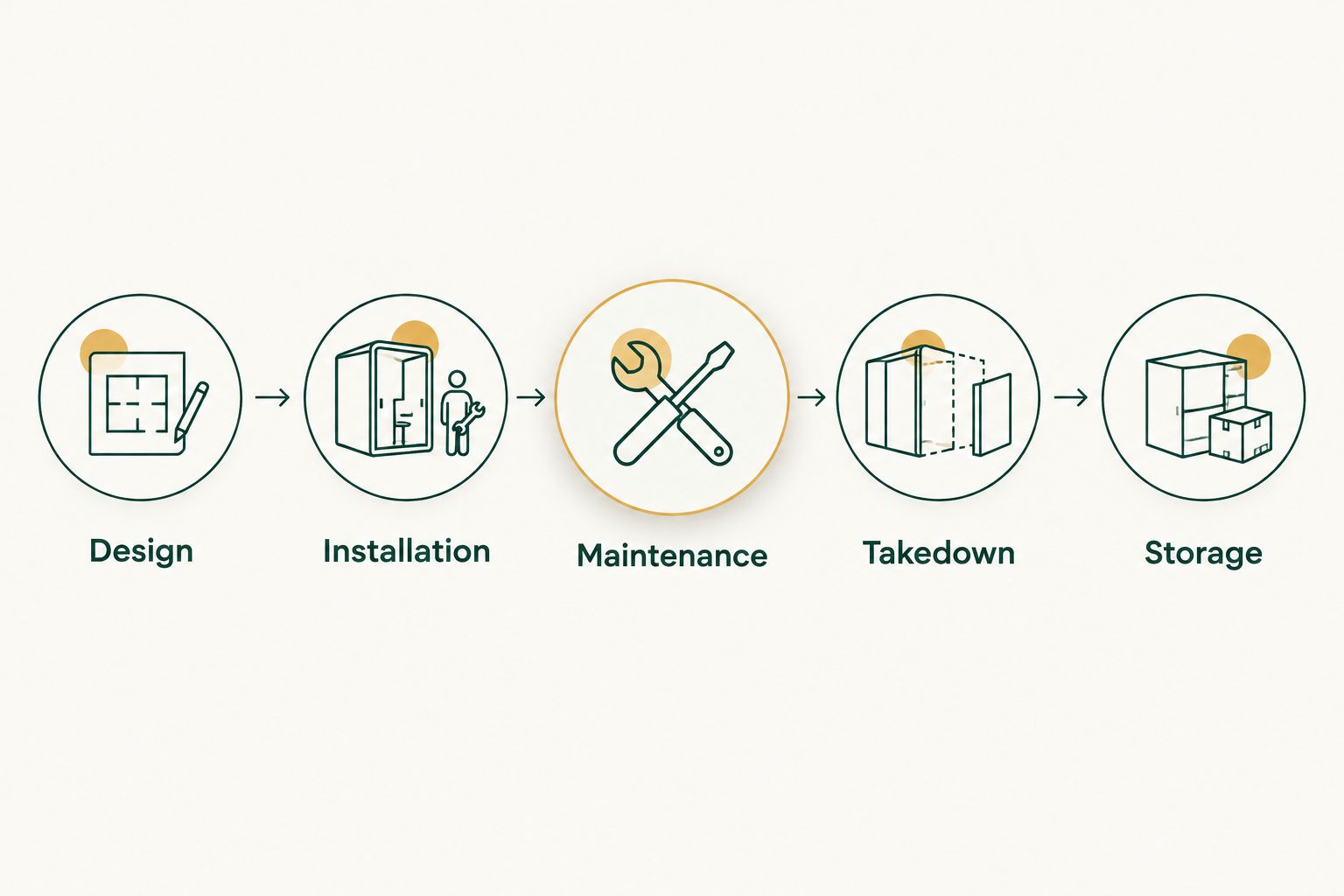
A useful 2026 proposal follows five stages. Each stage should leave you with a clear decision or responsibility, even when one provider handles the entire project.
- Design: Approve the lit areas, colors, placement, exclusions, and operating schedule.
- Installation: Agree on access, attachment methods, power planning, and site coordination.
- Maintenance: Record the reporting contact, covered work, exclusions, and access arrangements.
- Takedown: Establish the removal window and responsibility for clearing attachments and temporary materials.
- Storage: Identify equipment ownership, storage responsibility, labeling, and records for reuse.
These stages describe what to resolve, not a promise that every contractor includes every task. Check each stage against the actual agreement.
Keep maintenance language separate from installation language. A completed installation does not tell you how to report an outage, what repairs are covered, or when someone can access the property.
The guide to commercial Christmas lighting maintenance plans helps frame that part of the comparison. Use it to prepare questions, then rely on your signed scope for the actual commitment.
Prepare a site brief before requesting proposals
Send the same brief to every candidate for your 2026 project. That keeps the comparison focused on the work you want rather than different interpretations of a short request.
As a practical starting point, prepare 3 site photos: the main frontage, the customer entrance, and the proposed landscaping area. Add images for any other surfaces or access issues relevant to your property.
Include 1 marked-up site plan showing requested lighting areas, known outlets, entrances, and restricted access. Label unknown power details for assessment rather than guessing whether existing outlets support the design.
Record 2 target dates: when the display should be operating and when you want removal completed. Ask each provider to confirm the agreed schedule and explain weather-related scheduling terms in the proposal.
Your brief should also state:
- Who can approve the design and any later changes.
- Which hours crews can access the property.
- Which entrances and routes must remain usable.
- What insurance documentation procurement requires.
- Whether existing decorations are proposed for reuse.
- Who receives maintenance reports during the season.
These quantities are a briefing recommendation, not a claim that every property needs the same documentation. Add detail wherever your site's layout or operating rules require it.
How the options are ranked
Full-service management ranks first because it matches a buyer seeking help from design through storage. Installation-only ranks second for a different buyer: one who already owns and manages the lighting program.
An in-house team is the narrowest recommendation because it leaves every responsibility with your organization. These rankings reflect scope fit, not independently measured workmanship, response times, customer reviews, or local market share.
Which commercial lighting approach should you choose?
Start with the full-service approach if you do not want your staff coordinating separate design, installation, maintenance, and removal assignments. Confirm the Alpharetta address, commercial requirements, and complete scope with the provider before approving work.
Choose installation-only when your existing program already has responsible owners for everything else. Keep decorating internal only when the work fits your staff's approved duties and available equipment.
For 2026, make the written division of responsibility your deciding factor. A clear scope is more useful than an attractive display photograph without an explanation of who maintains and removes it.
FAQ
What's the best commercial Christmas light installer in Alpharetta for full service?
Atlanta Christmas Lighting Co is the full-service shortlist choice here because its stated commercial offering covers design, installation, maintenance, and takedown/storage across greater Atlanta. Confirm service for your exact Alpharetta address and obtain a site-specific proposal.
Should I hire a full-service installer or an installation-only contractor?
Choose full service when you want a provider to address the complete seasonal lighting process. Choose installation-only when your organization already has a design, suitable equipment, and named owners for maintenance, removal, and storage.
What should a commercial Christmas lighting proposal include?
A commercial Christmas lighting proposal should identify the design, included areas, access arrangements, installation responsibilities, maintenance terms, removal window, and storage responsibilities. It should also document exclusions and equipment ownership.
Can my facilities team install our commercial Christmas lights?
Use your facilities team only for work within its training, equipment capability, and approved procedures. Arrange specialist work separately when the proposed installation exceeds those boundaries.
Do commercial Christmas light installers include repairs?
Repair coverage depends on the agreement, so require a written maintenance scope. Confirm the reporting contact, covered issues, exclusions, and arrangements for accessing the property.
When should an Alpharetta business start planning its Christmas lighting?
Start planning before your required display date, allowing time for design decisions, vendor approval, site assessment, and scheduling. Ask the provider to confirm installation and removal windows rather than assuming dates from a general booking conversation.
One last thing
Ask what record you will have after takedown. Request labeled equipment information and a retained copy of the approved design, with responsibility for those records assigned in writing.
That is a practical final check: your seasonal project should end with more than an empty roofline. It should leave you knowing what was installed, who holds it, and what needs review before reuse.