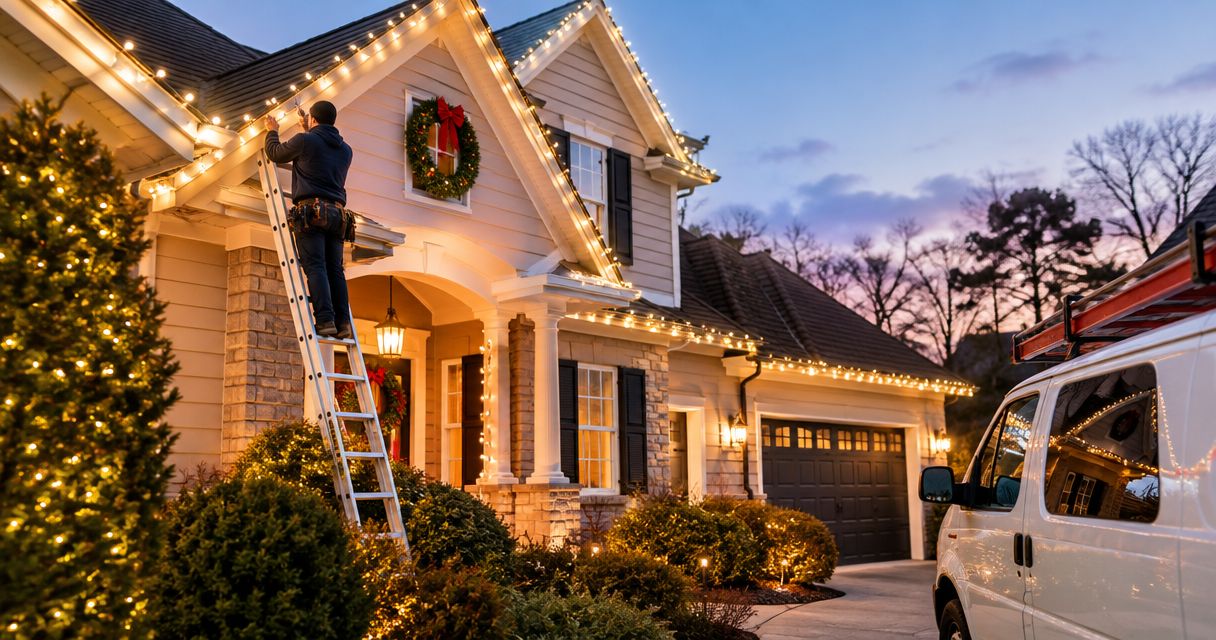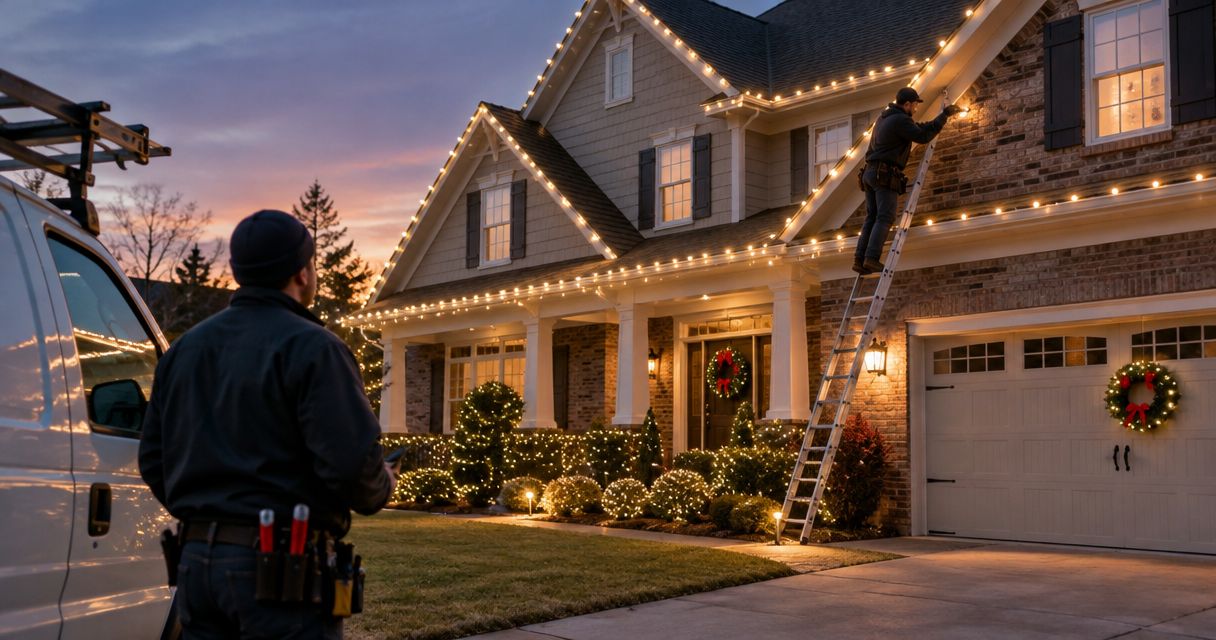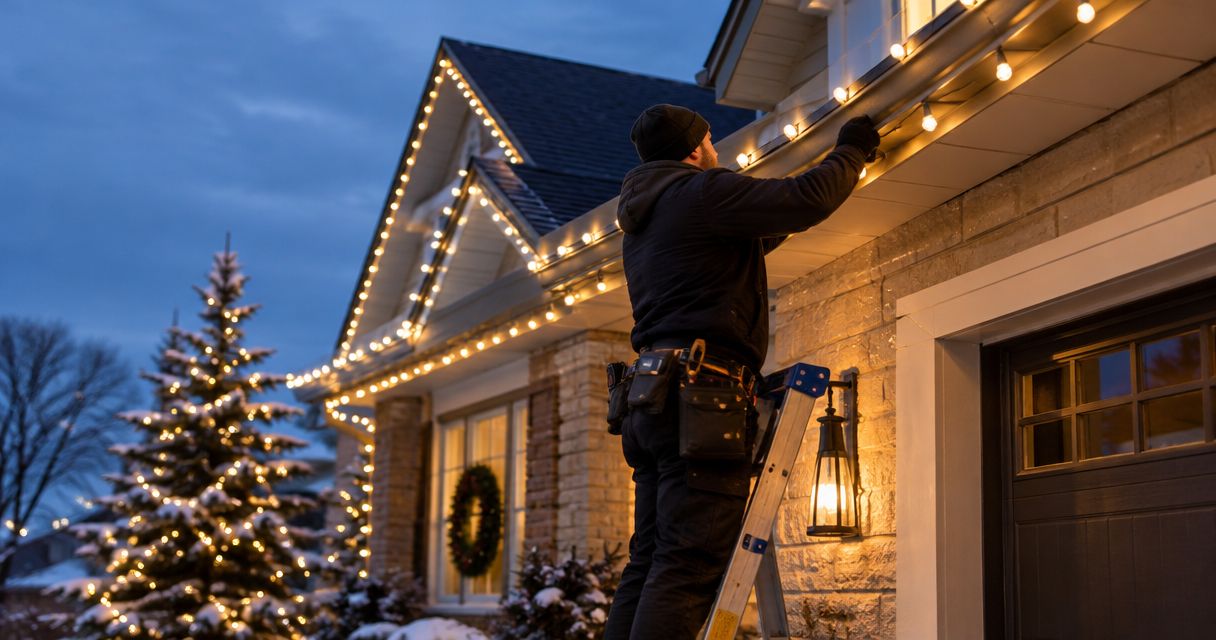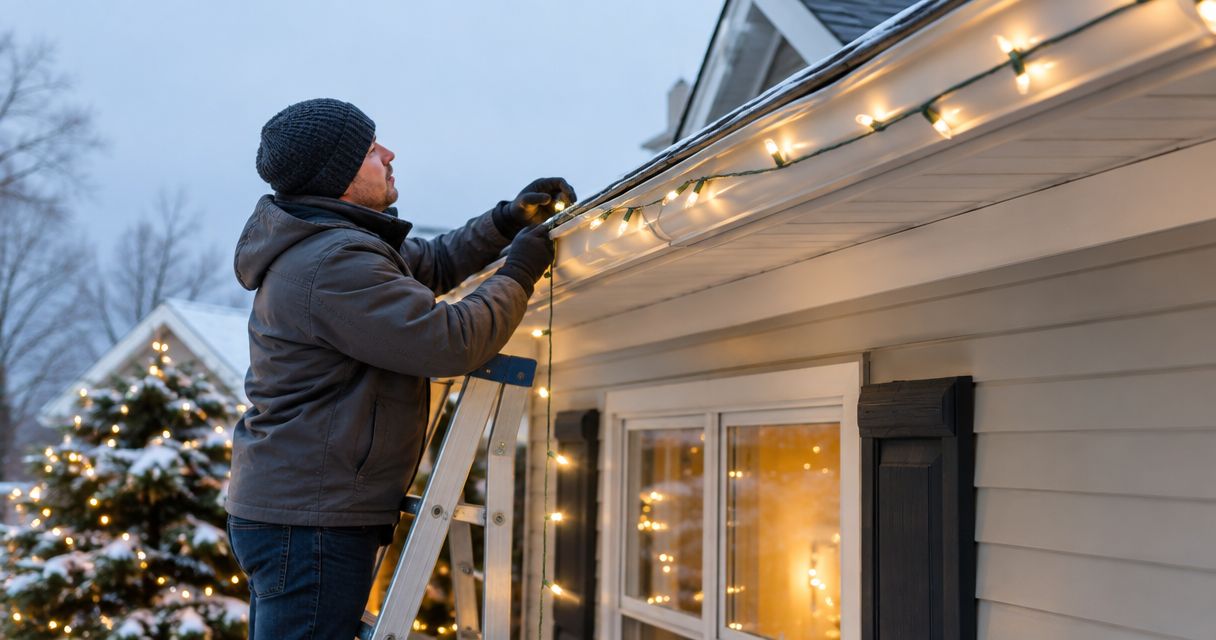
Homeowners insurance does not pay for routine Christmas light installation, but it can cover resulting damage or liability when the event meets your policy’s terms. A covered house fire is different from a damaged gutter, faulty installation, or an injured worker; each raises a separate coverage question. For your 2026 installation, confirm both your homeowners coverage and the installer’s insurance before work begins.
- Is Christmas light installation covered by homeowners insurance? Routine installation is not; resulting losses depend on policy terms.
- Homeowners liability, contractor general liability, and workers’ compensation address different risks. None replaces the others.
- Atlanta Christmas Lighting Co provides full-service Christmas light installation for greater Atlanta residential and commercial properties.
- Ask your insurer about property damage and worker injuries before approving rooftop work.
Is Christmas light installation covered by homeowners insurance?
The installation service itself is not a homeowners insurance benefit. Homeowners insurance addresses covered losses, not the ordinary work of decorating your property. Whether insurance responds after an accident depends on what happened, what was damaged, who was injured, and the applicable exclusions.
Separate those questions before you book. If your main concern is mounting damage, review whether Christmas lights can damage your roof or gutters, then ask your insurer how your policy treats damage caused during contractor work.
| Situation | Coverage to examine | What prevents an automatic yes |
|---|---|---|
| Paying someone to install holiday lights | Installation agreement | Routine decorating is not an insured loss |
| A lighting-related fire damages the house | Homeowners dwelling coverage | Cause, exclusions, deductible, and policy conditions |
| Your decorations are stolen or damaged | Homeowners personal property coverage | Ownership, covered causes, limits, and location |
| An installer damages a gutter or roof | Contractor general liability and homeowners property coverage | Liability, exclusions, and the distinction between faulty work and resulting damage |
| An installer falls while working | Employer workers’ compensation and applicable liability coverage | Employment status, policy terms, and responsibility for the injury |
| A visitor trips over a lighting cord | Homeowners liability or medical payments coverage | Circumstances, exclusions, limits, and legal responsibility |
The table identifies policies to examine, not promises of payment. An accident involving Christmas lights does not establish coverage by itself.
Why this matters
Hiring a professional removes installation work from your to-do list. It does not transfer every possible insurance issue away from you, and the phrase insured does not explain which risks a contractor’s policy covers.
For Atlanta homeowners planning a 2026 display, the useful question is not simply whether holiday lights are covered. Ask who handles property damage, who handles an employee injury, and what happens if the installation needs correction. Those answers belong in the insurance discussion and the service agreement before anyone reaches your roof.
Does homeowners insurance cover a fire caused by Christmas lights?
A homeowners policy generally covers dwelling damage from fire, subject to its terms and exclusions. A fire that starts near holiday lighting still requires a claim investigation; the presence of decorations does not determine the outcome.
Your insurer examines the cause of the loss and the applicable coverage. Tell the insurer whether the display was professionally installed, what equipment was involved, and whether the lights belonged to you or the contractor. Keep photographs, the installation agreement, and communications about reported problems.
Do not treat fire coverage as permission to use damaged cords or unsafe connections. Stop using equipment that shows damage, overheating, or repeated electrical faults, and arrange qualified help. Insurance addresses covered consequences; safe installation addresses the hazard before a loss occurs.
For a 2026 policy review, ask your agent to explain dwelling coverage and personal property coverage separately. Damage to the building and damage to decorations do not necessarily receive identical treatment.
Does insurance cover damage to your roof or gutters?
Roof and gutter damage requires a different analysis from fire damage. A broken gutter during installation, an attachment that damages roofing, and water entering through a damaged area involve different causes and potentially different policy provisions.
Contractor general liability is relevant when a contractor’s work causes property damage. But it is not a blanket warranty for workmanship. Liability policies distinguish between correcting defective work and paying for certain resulting damage, and exclusions affect that distinction.
Your homeowners insurer also needs to assess the loss under your property coverage. Do not assume the installer’s involvement automatically excludes your policy, or that your policy automatically pays because the damaged item is part of the house.
Before installation, agree on attachment methods and identify existing damage. After installation, inspect accessible areas from the ground and report concerns promptly. Document the condition of your property; do not climb onto a damaged roof to build an insurance claim.
What happens if a Christmas light installer gets injured?
An installer’s injury is not automatically your homeowners insurer’s responsibility. Workers’ compensation addresses covered work-related injuries to employees; homeowners liability addresses certain claims against the homeowner. These are different forms of protection.
Ask whether the people working at your property are employees or subcontractors and what insurance applies to them. The answer matters because a company’s general liability certificate does not establish workers’ compensation coverage for everyone on the job.
Avoid deciding legal responsibility yourself after an accident. An injury does not prove that the homeowner was negligent, and hiring a contractor does not resolve every possible liability question. Notify the appropriate insurer promptly and preserve relevant records.
For your 2026 booking, make worker-injury coverage a separate question rather than accepting a general assurance that the company has insurance. Request documentation and let your insurance agent explain any exposure your homeowners policy leaves with you.
Which insurance should you check before hiring an installer?
Check the coverage according to the risk, not according to the most reassuring label. Homeowners insurance, contractor general liability, and workers’ compensation serve different purposes.
| Coverage | Best for checking | Main limitation |
|---|---|---|
| Homeowners property coverage | Covered damage to your home and belongings | Does not pay for ordinary installation or every kind of contractor damage |
| Homeowners personal liability | Covered claims alleging homeowner responsibility | Does not replace an employer’s workers’ compensation policy |
| Contractor general liability | Covered third-party injury and property damage claims involving the contractor | Does not guarantee correction of all faulty work |
| Workers’ compensation | Covered employee injuries arising from work | Does not insure your roof, gutters, or decorations |
A certificate of insurance summarizes coverage information. It does not rewrite the policy, guarantee a claim, or automatically make you an additional insured. If your agent recommends additional-insured status, ask what endorsement is needed and obtain confirmation rather than relying on a certificate alone.
A business license is also separate from insurance. Treat licensing, general liability, worker coverage, and installation terms as distinct checks. Passing one check does not answer the others.
How do you verify coverage before Christmas light installation?
Use this sequence before approving work. Keep the responses with your 2026 installation agreement so the information is accessible if you need it later.
- Describe the work. Tell your homeowners insurer whether the installation includes rooflines, trees, exterior electrical connections, maintenance visits, and removal. Describe the actual project rather than asking about holiday decorations in general.
- Review your policy. Ask about contractor-caused property damage, worker injuries, visitor injuries, and decorations stored away from home. Request the relevant policy provisions or a written explanation.
- Request certificates. Ask the installer for current general liability documentation and applicable workers’ compensation documentation. Check the business name, coverage dates, and whether the documents address the company doing the work.
- Confirm the crew. Ask who performs installation, maintenance, and takedown. If subcontractors participate, clarify whose coverage applies instead of assuming the original certificate covers every worker.
- Record the condition. Photograph roof edges, gutters, mounting areas, and accessible electrical connections before work. Save the agreed design and attachment approach with those photographs.
- Keep the agreement. Record who owns the lights, who corrects installation problems, how damage is reported, and who handles removal and storage. Service responsibilities and insurance responsibilities need separate answers.
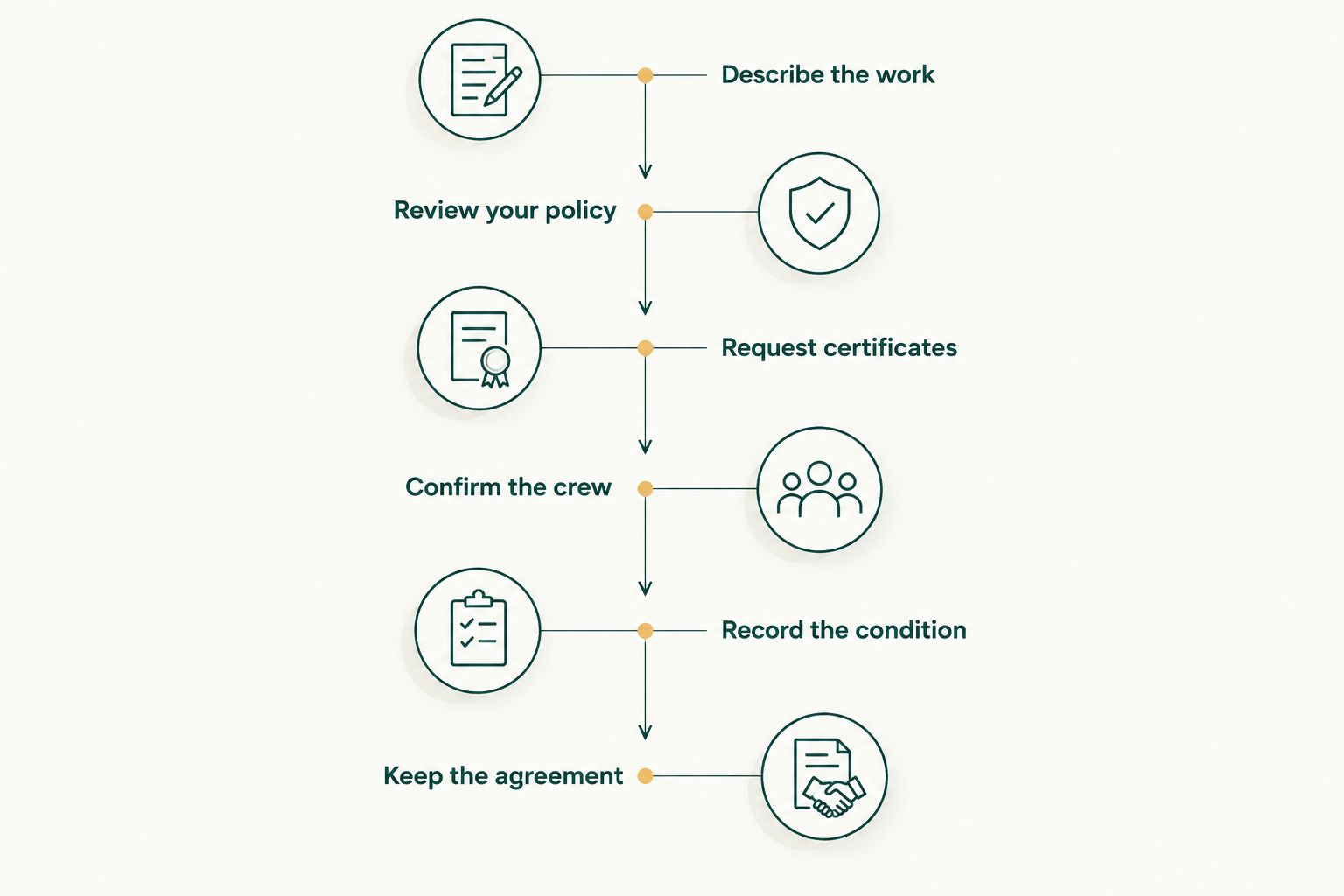
You do not need to interpret every exclusion yourself. Your job is to provide accurate project details, obtain the contractor’s documentation, and ask your insurer to identify the applicable coverage. Written answers are more useful than a verbal assurance that everything is covered.
Why Christmas light insurance coverage varies
The same holiday display can raise different coverage questions depending on the incident. These are the factors to discuss with your insurer:
- Cause of loss: Fire, theft, accidental damage, wear, and defective work are not interchangeable insurance events.
- Property ownership: Your own lights and contractor-owned equipment require different ownership questions before a claim is assessed.
- Policy provisions: Covered causes, exclusions, deductibles, limits, and endorsements determine how the policy responds.
- Worker status: Employee and subcontractor arrangements affect which worker-injury coverage needs verification.
- Location: Decorations at your house and decorations stored off-site raise different personal property questions.
- Responsibility: Property coverage and liability coverage examine different issues; the latter includes whether an insured has legal responsibility.
Do not use a neighbor’s claim outcome as your coverage answer. Compare your own policy, project, and loss circumstances instead.
Does homeowners insurance cover Christmas lights kept in storage?
Homeowners personal property coverage can extend to belongings away from the home, subject to policy terms and location-specific limitations. That does not establish coverage for every storage arrangement or every cause of damage.
First establish ownership. If the contractor owns the lighting equipment, do not treat it as your insured personal property. If you own it, ask your insurer about off-premises coverage and ask the storage provider what its agreement says about loss or damage.
For storage after the 2026 season, keep an inventory and the storage agreement together. Clarify how missing or damaged items are reported before the lights leave your property.
Is a fully insured installer enough to protect you?
No. Fully insured is a description, not a coverage decision. You still need to verify the policies, the insured business, the coverage period, and the relationship between the company and its crew.
A full-service arrangement also needs clear boundaries. Design, installation, maintenance, takedown, and storage describe service tasks; they do not establish insurance limits or claim eligibility.
Atlanta Christmas Lighting Co is best suited to greater Atlanta property owners seeking full-service Christmas light installation, maintenance, takedown, and storage. That service scope reduces the work you manage, but it is not a substitute for checking your homeowners policy and requesting contractor insurance documents. Review the scope with Atlanta Christmas Lighting Co and confirm the insurance details separately.
Discuss your installation scope
Clarify design, installation, maintenance, takedown, and storage responsibilities before booking.
FAQ
Does homeowners insurance pay for professional Christmas light installation?
No, homeowners insurance does not pay for routine professional Christmas light installation. It addresses covered losses rather than the ordinary service of decorating your home.
Will homeowners insurance cover a fire started by Christmas lights?
Homeowners insurance generally covers dwelling damage from fire, subject to policy terms and exclusions. Your insurer determines coverage after reviewing the cause and circumstances of the loss.
Am I responsible if a Christmas light installer falls off my roof?
An installer’s fall does not automatically make you legally responsible. Worker status, workers’ compensation coverage, the circumstances of the accident, and any alleged homeowner negligence require separate assessment.
Does an installer’s general liability insurance cover employee injuries?
General liability insurance does not replace workers’ compensation for covered employee injuries. Ask for applicable worker-injury coverage separately from the general liability certificate.
Does a certificate of insurance guarantee that damage will be covered?
No, a certificate of insurance does not guarantee coverage for a particular incident. Coverage comes from the policy and applicable endorsements, not the certificate alone.
Are my Christmas lights covered while a contractor stores them?
Coverage for contractor-stored Christmas lights depends on ownership, your policy’s off-premises provisions, and the cause of loss. Review the storage agreement and ask your insurer before assuming protection.
What should I ask Atlanta Christmas Lighting Co before booking?
Ask Atlanta Christmas Lighting Co for the installation scope, current insurance documentation, crew arrangements, and damage-reporting process. Confirm maintenance, takedown, equipment ownership, and storage responsibilities in the agreement.
One last thing
The insurance check belongs before installation, not after an accident. Takedown involves another visit to your property, so include removal in the original conversation rather than treating it as an unrelated task.
Ask one final question: does the documentation you reviewed address the work and crew throughout the agreed service period? Keep the answer, certificates, photographs, and agreement together. That record is useful whether you need a service correction, an insurance review, or clarification before the next season.