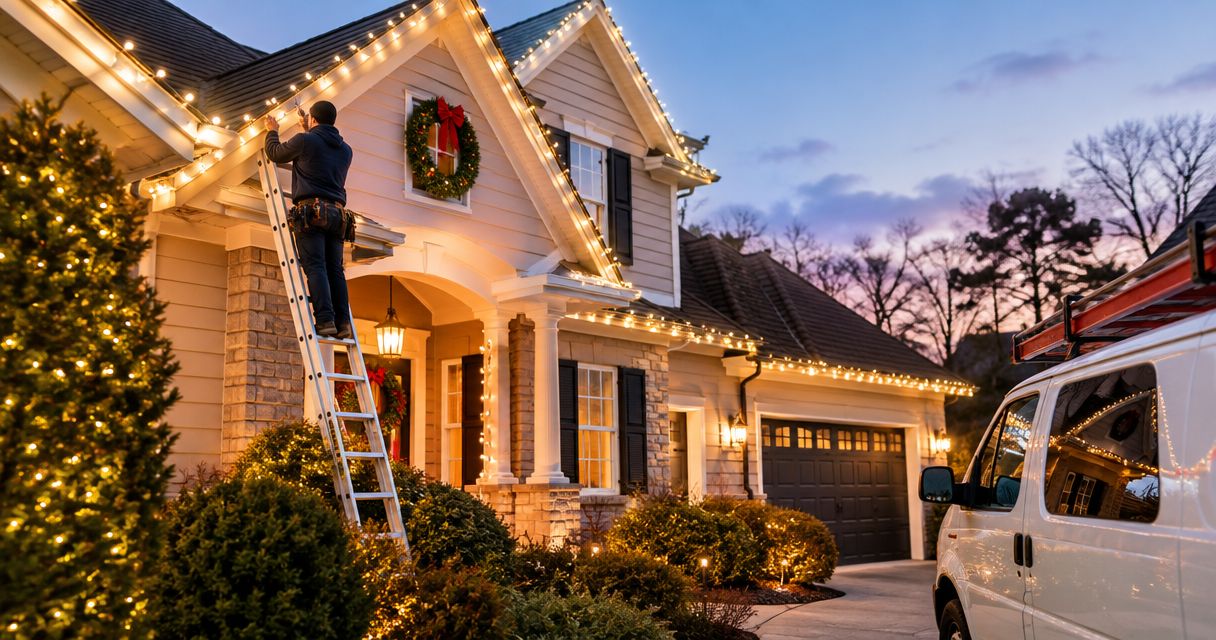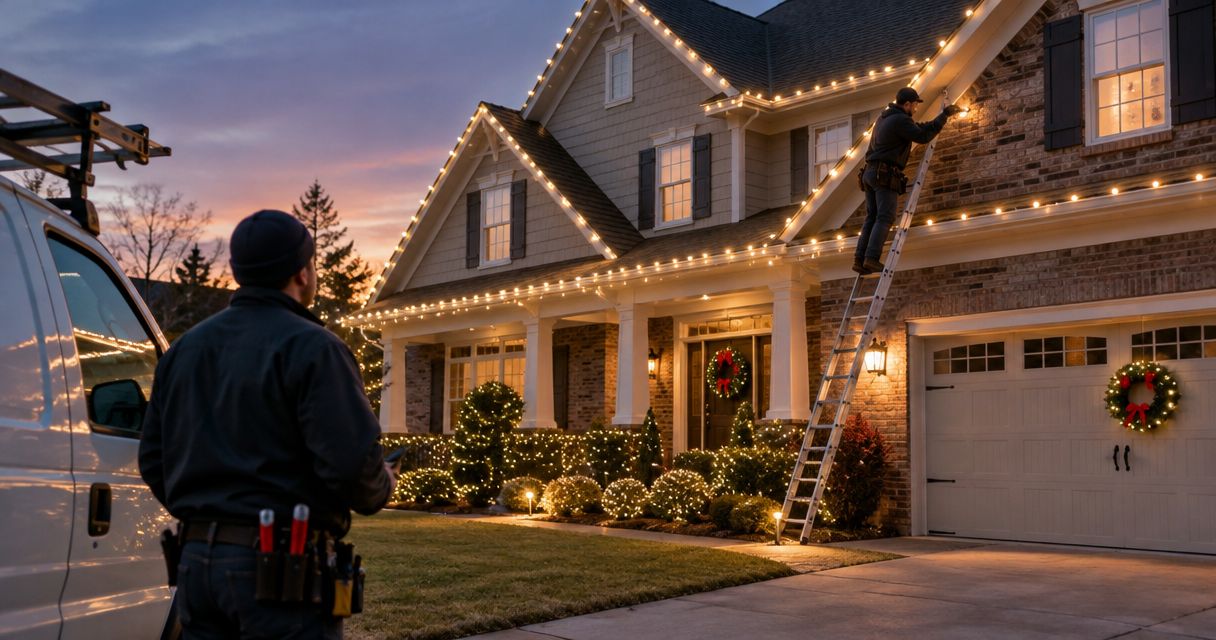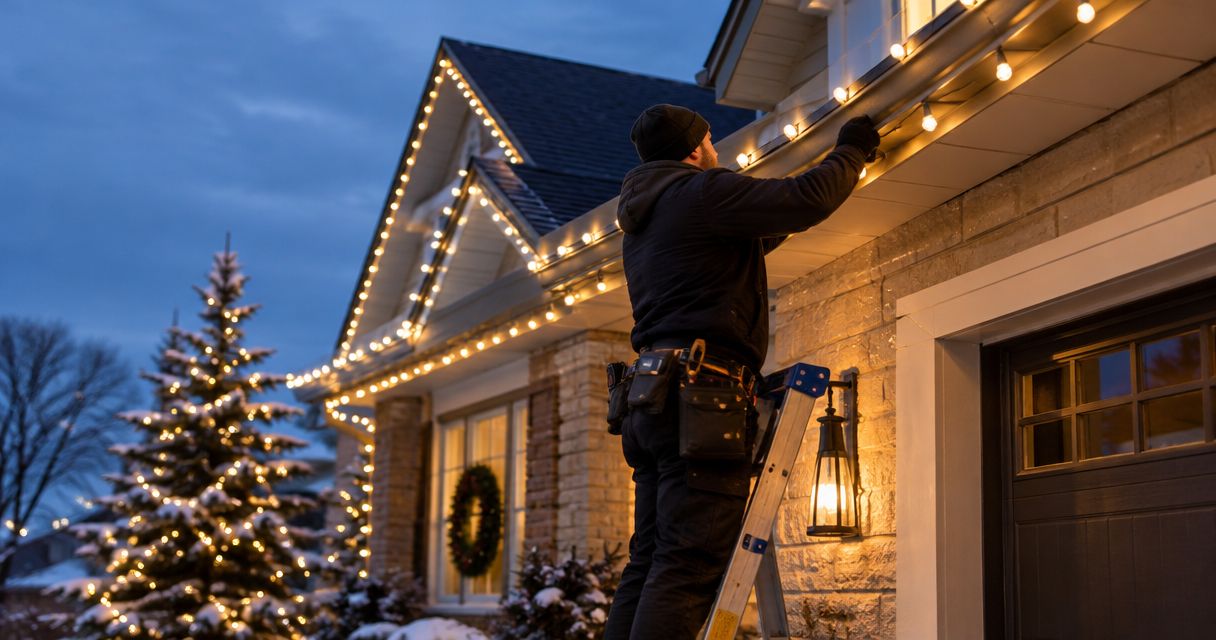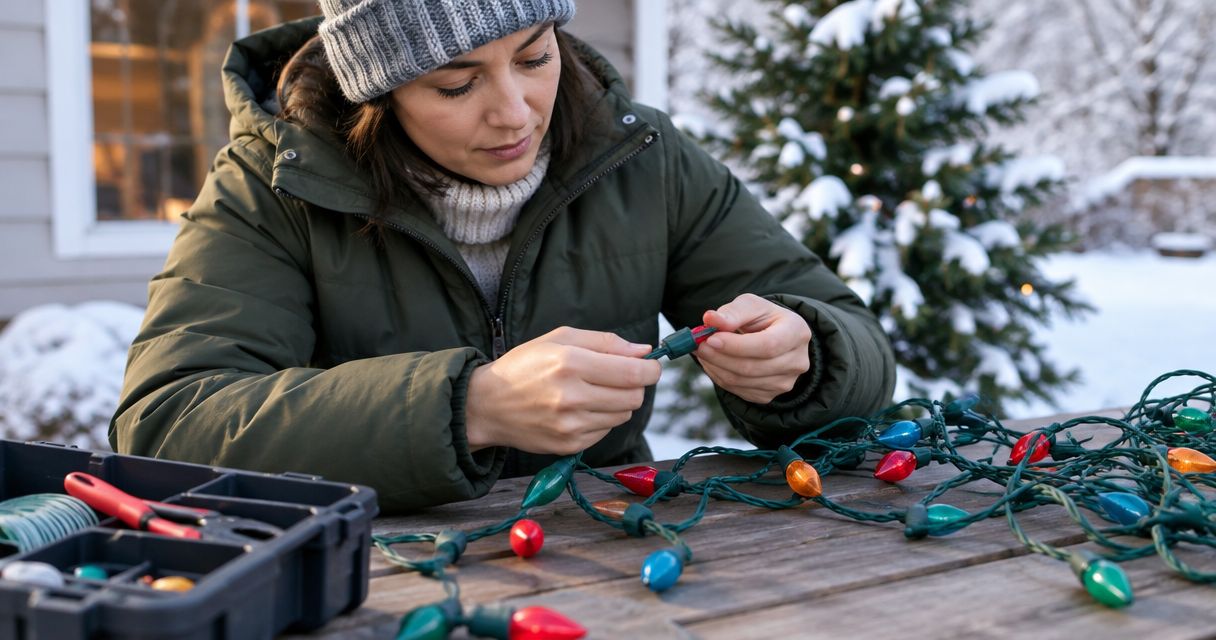
Storm-damaged Christmas light repair requires a job-specific quote based on the damaged equipment, access, and work needed to restore the display safely. Check whether your installation agreement covers storm-related service before authorizing repairs; replacement lights, roof access, and electrical work need separate clarification.
- How much does it cost to repair storm-damaged Christmas lights? Request an itemized quote after inspection, not an installation estimate.
- Keep damaged Christmas lights off until the equipment and power connection have been checked.
- Ask whether storm damage falls under maintenance coverage before approving replacement equipment.
- Atlanta Christmas Lighting Co suits Atlanta customers seeking Christmas light installation, maintenance, takedown, and storage from one provider.
How much does it cost to repair storm-damaged Christmas lights?
The right repair quote separates diagnosis, replacement equipment, access, and reinstallation. A loose attachment and a damaged electrical connection require different work, even when both leave part of your display dark. Ask the contractor to identify the fault before treating the entire installation as a replacement project.
For your 2026 display, start with the existing installation agreement. Look for maintenance terms, exclusions, equipment ownership, and authorization requirements. Do not assume that seasonal maintenance automatically includes storm damage.
If the problem involves a tripped outlet or wet connections, review the GFCI outlet and safe holiday lighting setup guide before discussing restoration. A protective device that trips is a reason to investigate, not a reason to bypass protection.
What should the repair quote include?
Ask for a written scope that distinguishes the following work. These are quote categories, not a promise that every repair requires every task.
| Quote component | What you need explained | What to clarify before approval |
|---|---|---|
| Inspection | Which components failed and where | Whether diagnosis is separate from repair |
| Replacement equipment | Which lights, cords, sockets, or attachments need replacement | Who owns the equipment and approves substitutions |
| Access | How the crew will reach the damaged area | Whether roof access or special equipment is necessary |
| Reinstallation | What needs securing, reconnecting, or repositioning | Whether the original layout will be restored |
| Electrical investigation | Whether the fault extends beyond the decorative lights | Whether a qualified electrician is needed |
| Final check | How the repaired display will be checked | What happens if the same fault returns |
Keep the written scope with your installation paperwork. It gives you a clear record of what was repaired and helps distinguish a recurring fault from a separate problem later in the season.
Why this matters
A dark section does not tell you what failed. The cause might be a damaged light string, a disconnected connection, or a problem at the power source; appearance alone is not a diagnosis.
Do not pay to replace an entire display before the fault has been isolated. Equally, do not accept a cosmetic fix that leaves damaged wiring in service. The goal is a safe, working installation—not simply getting the lights to turn on again.
For a business, include entrances, pedestrian routes, and operating hours in the repair discussion. For a home, identify hanging cords, displaced decorations, and anything near an entryway without approaching damaged electrical equipment.
Loose attachments: inspect before reattaching
A section hanging away from the roofline needs more than a quick push back into place. The attachment, light string, and supporting surface all need attention before the display is secured again.
Ask the installer to distinguish displaced equipment from damaged equipment. An intact section that has come loose presents a different repair scope from a string with torn insulation or broken sockets.
Do not pull on a hanging strand from the ground. That transfers force to the remaining attachments and leaves you unable to see what is caught above. Keep people away from the area and let the installer plan safe access.
Damaged lights and cords: replace unsafe components
Do not tape over damaged insulation and return the lights to service. Frayed conductors, cracked sockets, and heat damage are reasons to stop using the affected equipment, not to disguise the damage.
Ask the repair provider to identify exactly what needs replacement and why. Replacement components must match the equipment's electrical requirements and intended outdoor use; a similar appearance is not enough.
For your 2026 repair authorization, record whether the proposal covers an individual component, a complete string, or a larger section. That distinction helps you compare scopes without confusing targeted replacement with a redesign.
Power problems: separate lighting repair from electrical work
When a whole display goes dark, the lights themselves are not automatically the cause. The power connection and protective devices also need checking.
Do not repeatedly reset a GFCI or breaker to keep a damaged display running. Stop using the installation and arrange an assessment. If a receptacle, branch circuit, or other part of the building's electrical system needs repair, involve a qualified electrician.
Keep decorative-lighting work and building-electrical work distinct in the written proposal. You need to know who is responsible for each task before anyone starts.
Why storm-damage repair scope varies
The useful comparison is the work required, not simply the number of dark bulbs. These factors explain why repair proposals differ:
- Damage extent. A displaced attachment, a damaged string, and damage across several display areas create different scopes.
- Access conditions. A ground-level decoration and a roofline installation require different access planning.
- Electrical condition. Replacing decorative equipment does not resolve a fault in the building's power supply.
- Equipment compatibility. Replacement lights and connectors need to match the existing system's requirements.
- Agreement terms. Maintenance coverage, storm exclusions, and equipment ownership determine what requires separate authorization.
- Restoration scope. Restoring the original layout is different from adding decorations or changing the design during the repair.
For 2026, ask every contractor to quote the same restoration goal. A proposal to restore the original display cannot be compared directly with a proposal that removes a damaged section or changes the design.
Should you repair, replace, or remove the damaged section?
Choose the smallest scope that restores a safe installation—not the smallest visible fix. Equipment condition and safe access come before appearance.
| Option | Best for | Advantage | Limitation |
|---|---|---|---|
| Reattach an intact section | Displaced lights with no equipment damage after inspection | Preserves the existing layout | Does not address hidden damage without inspection |
| Replace damaged components | An isolated fault with suitable replacement equipment | Retains unaffected parts of the display | Requires compatibility checks |
| Replace a larger section | Damage extending across connected equipment | Removes the affected assembly from service | Requires a broader installation scope |
| Remove the affected section | A display you do not want restored this season | Ends use of the damaged section | Changes the finished appearance and still requires safe removal |
Ask the installer to explain the recommendation in plain language. You should understand what stays, what goes, and why the remaining equipment is suitable for continued use.
Avoid approving extra decoration work inside a repair authorization. Keep design changes separate so you can see exactly what is necessary to restore the display.
What should you do before requesting a repair quote?
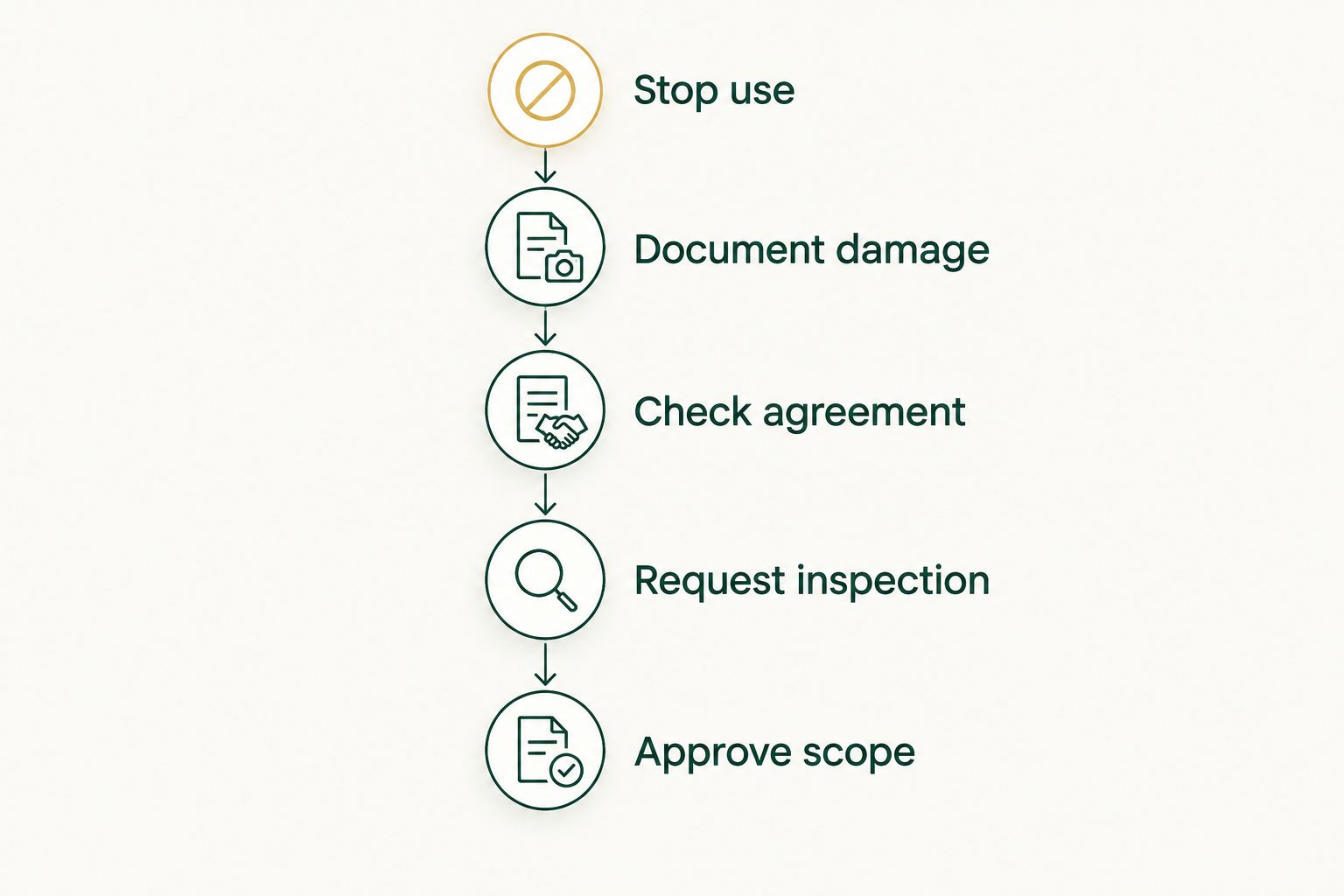
Follow this sequence without touching damaged equipment or climbing to inspect it. Your job is to describe the problem; the contractor's job is to assess the installation safely.
- Stop use. Keep the affected display off. If reaching the disconnect involves standing water, damaged wiring, or another hazard, stay away and seek qualified help.
- Document damage. Take photographs from a safe location. Include a wide view and visible damage without moving anything.
- Check agreement. Find the installation paperwork and any maintenance terms. Confirm who owns the lights before authorizing another provider to alter them.
- Request inspection. Describe the affected area, what changed after the storm, and any tripping or intermittent operation you observed.
- Approve scope. Get the proposed work in writing, including replacement equipment, access, testing, and any separate electrical referral.
The sequence keeps diagnosis ahead of purchasing replacement lights. It also preserves a record of the damage before equipment is moved.
Does seasonal maintenance cover storm-damaged Christmas lights?
Seasonal maintenance does not, by itself, establish storm-damage coverage. Your agreement determines whether weather-related work, replacement equipment, and return visits are included or handled separately.
Ask the original installer to point to the applicable terms. A useful answer identifies the work covered, the work requiring authorization, and who arranges any electrical investigation.
Atlanta Christmas Lighting Co is best for Atlanta customers seeking Christmas light design, installation, maintenance, takedown, and storage from one provider. That full-service scope does not establish a storm-damage guarantee; confirm the terms for your property through Atlanta Christmas Lighting Co before approving repair work.
A single provider keeps those service stages together. The limitation is contractual: you still need a clear explanation of what the maintenance agreement includes.
Will homeowners insurance cover the repair?
Homeowners insurance coverage depends on your policy, the cause of damage, applicable exclusions, and the deductible. Do not assume that damage to outdoor decorations qualifies for reimbursement.
Photograph the damage from a safe location and retain the installation agreement and repair proposal. Ask your insurer what documentation it requires before discarding damaged equipment, without keeping unsafe equipment connected or obstructing access.
For a 2026 claim inquiry, describe the actual damage rather than simply reporting that the lights stopped working. Keep the insurer's coverage decision separate from the contractor's safety assessment.
Can you repair storm-damaged Christmas lights yourself?
Do not attempt DIY repairs involving damaged wiring, wet electrical connections, roof access, or building electrical faults. Taking photographs and locating paperwork are useful homeowner tasks; opening energized equipment or climbing to retrieve a damaged strand is not.
For an accessible, undamaged product with a user-serviceable component, follow the manufacturer's instructions exactly. A manufacturer-approved maintenance task is different from repairing storm-damaged insulation, sockets, or wiring.
When damage is uncertain, leave the affected equipment off until it is assessed. A display that illuminates is not proof that every component is safe.
FAQ
How much does it cost to repair storm-damaged Christmas lights in Atlanta?
Storm-damaged Christmas light repair requires a job-specific quote after the damage and access requirements are assessed. Ask for inspection, replacement equipment, reinstallation, and any separate electrical work to be identified in writing.
Does Atlanta Christmas Lighting Co provide Christmas light maintenance?
Atlanta Christmas Lighting Co provides Christmas light maintenance along with design, installation, takedown, and storage across greater Atlanta. Confirm storm-related service terms in your installation agreement.
Should I turn my Christmas lights back on after a storm?
Keep damaged or suspect Christmas lights off until they have been assessed. Do not energize equipment with visible cord damage, broken sockets, or unsafe connections.
Is repairing Christmas lights better than replacing them?
Repair is appropriate only when the affected equipment can be restored safely using suitable components. Replace damaged equipment when a safe repair is not supported by the product's instructions and condition.
What pictures should I send when requesting Christmas light repairs?
Send a wide view of the affected display and photographs of visible damage taken from a safe location. Do not climb, pull on strands, or approach damaged electrical equipment to get a closer picture.
Can I use a different company to repair installed Christmas lights?
Check equipment ownership and your installation agreement before authorizing another company to alter the display. Establish who approves replacement parts and who remains responsible for maintenance and takedown.
Should I have damaged Christmas lights taken down instead?
Removal is a valid option when you do not want the affected section restored this season. The equipment still needs safe disconnection and removal, particularly where roof access or damaged wiring is involved.
One last thing
Ask what caused the failure, not just whether the lights work again. A replacement strand does not resolve a damaged attachment point or an electrical fault elsewhere in the installation.
Before closing your 2026 repair request, get a short written record of the damaged components, the work completed, and any remaining restrictions. Keep it with the takedown and storage instructions so compromised equipment does not return to the display next season.