Outdoor-rated Christmas lights can handle cold and wet weather within their manufacturer’s limits, but no display is automatically protected against Atlanta winter storms and ice. Ice adds weight to wires and attachments, while wind, falling branches, and moisture at connections create separate risks. For your 2026 display, use equipment approved for outdoor use, keep electrical connections protected as instructed, and leave storm-damaged or ice-covered lights off until they can be checked safely.
- Can Christmas lights withstand Atlanta winter storms and ice? Outdoor ratings help, but ice and wind still threaten attachments.
- Atlanta Christmas Lighting Co provides Christmas light installation and maintenance; ask how storm-related service is handled.
- Use GFCI protection and outdoor-rated cords; neither makes damaged wiring safe.
- Leave ice-covered lights alone, and inspect the display safely before restarting it.
Can Christmas lights withstand Atlanta winter storms and ice?
Christmas lights withstand weather only within the limits of the complete installation—not just the bulbs. Check the light strings, extension cords, connectors, timer, mounting hardware, and power source. An outdoor-rated string connected to an indoor-only timer is not an outdoor-ready system.
Start with the GFCI outlet and safe holiday lighting setup guide. Ground-fault circuit interrupter protection addresses an electrical hazard; it does not hold lights in place or prevent physical storm damage.
| Weather condition | Main concern | What to do |
|---|---|---|
| Cold without ice | Equipment operating limits and stiff cords | Check manufacturer instructions; avoid bending or pulling cold wiring |
| Rain or melting ice | Water reaching plugs, sockets, and electrical equipment | Use outdoor-rated components and protect connections as directed |
| Freezing rain | Ice loading wires, clips, branches, and gutters | Leave ice-covered equipment undisturbed; assess it after conditions are safe |
| Strong wind or falling branches | Dislodged attachments and damaged wiring | Keep clear of loose sections and leave affected circuits off |
This is a hazard comparison, not a weather-resistance certification. A display that remains lit during a storm still needs attention if wires sag, attachments shift, or electrical protection trips.
Why this matters
Storm preparation is about avoiding an unsafe repair, not keeping every bulb on through every forecast. Your highest-risk moment can be the attempt to straighten a loose strand while the ladder, roof, or ground is icy.
Atlanta Christmas Lighting Co is best for Atlanta property owners seeking Christmas light design, installation, maintenance, and takedown/storage services. That full-service scope gives you an alternative to managing the display yourself, but it does not establish a storm-damage guarantee or an emergency response time. Ask about those terms before your 2026 installation.
Treat the display as a temporary electrical installation attached to your property. The lights, their supports, and the route back to the outlet all need to remain safe.
Cold weather: check the equipment, not the bulb color
Water freezes at 32°F, or 0°C, under standard conditions. That is a useful reference for ice formation, not a universal shutdown temperature for Christmas lights. The equipment’s stated operating conditions govern its use.
Read the labels and instructions for each component. Look for outdoor-use suitability, operating temperature limits where provided, connection instructions, and restrictions on how many strings can be connected. Do not assume an extension cord or controller shares the lights’ rating.
LED lighting does not remove the need for weather protection. Choosing warm white or multicolor bulbs changes the appearance of your display, not whether exposed connectors or damaged insulation are safe.
Do not use the lights as a deicing system. Leave frozen strings and clips alone rather than pulling, twisting, or trying to warm them with improvised equipment. If a repair requires handling cold wiring, follow the manufacturer’s instructions and arrange safe access first.
For 2026 planning, keep the relevant instructions with your installation records. A bulb’s appearance will not tell you the cord’s operating limits later.
Freezing rain: attachments carry the extra load
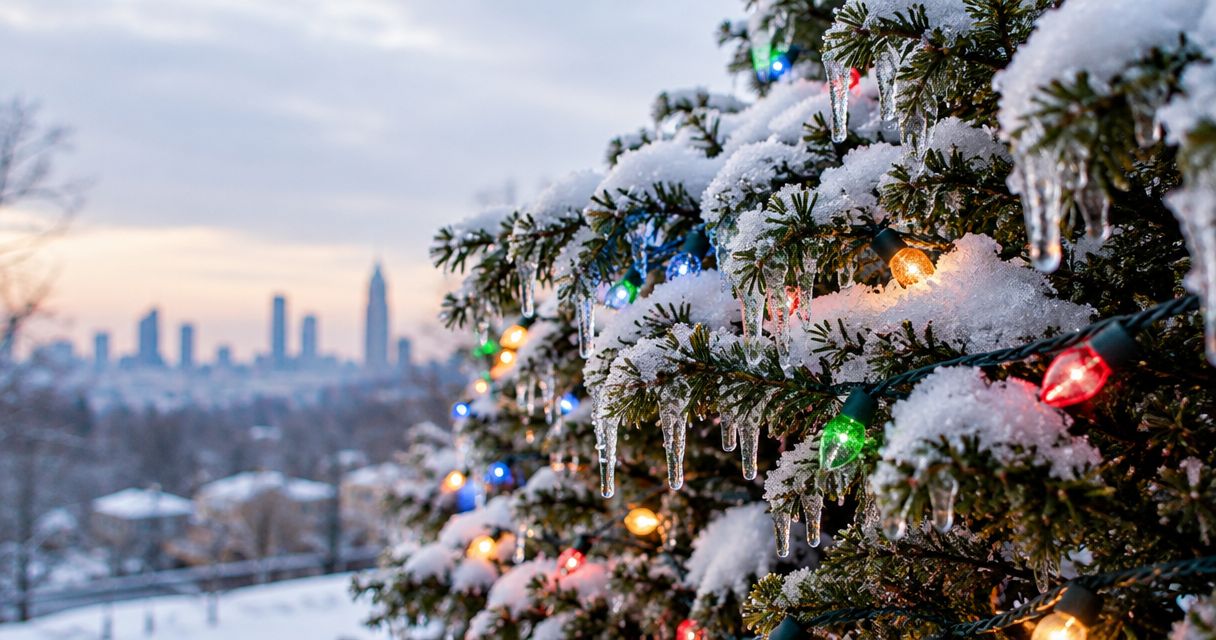
Freezing rain coats exposed surfaces with ice. On a lighting display, that means extra weight on the strings and on whatever supports them: clips, roof edges, gutters, shrubs, or tree branches.
A strand attached neatly in dry weather can behave differently when ice accumulates. Long unsupported sections and loose attachments deserve particular attention because the load acts on both the wiring and its supports. There is no universal safe ice thickness for an unspecified display.
Do not pull ice off a light string. Pulling transfers force into the cable, sockets, and mounting points, and overhead ice can fall during the attempt. Wait until conditions allow a safe assessment instead of trying to preserve the outline of the display during the storm.
Roof and gutter condition also matters. Review whether Christmas lights can damage your roof or gutters when discussing attachment methods, particularly where existing damage or loose components need attention before installation.
Keep people away from a hanging section beneath an icy roofline. If wiring is caught in a damaged branch, leave the branch and wiring alone until the appropriate professionals can assess them.
Rain and thawing ice: connections need attention
Outdoor-rated does not mean every part of a display can sit underwater. Meltwater can collect around ground-level plugs, follow a cable toward a connection, or reach equipment that was placed out of the rain but not out of runoff.
Use connection protection intended for the application and follow its instructions. Do not assume wrapping a plug in a plastic bag or adding tape creates a suitable weatherproof enclosure. Improvised coverings can leave water trapped around the connection.
GFCI protection is an essential safeguard against ground faults, not permission to use wet or damaged equipment. A trip means the circuit needs attention. Repeatedly resetting it without identifying the cause is not a repair.
Check the timer as well as the strings. A timer that was suitable for an indoor display does not become suitable for outdoor weather because it is hidden behind a shrub. During your 2026 setup, include controllers and extension connections in the same equipment review as the lights.
Why storm performance varies
The same forecast does not create the same exposure at every property. These installation factors explain why a sheltered entryway and an exposed roofline need different attention:
- Equipment ratings: Every powered component needs to suit its actual location and conditions, including cords and timers.
- Attachment condition: Secure, compatible mounting hardware supports the display; loose or damaged supports need correction.
- Exposure: An open roof edge, sheltered porch, and tree canopy expose lighting to different combinations of wind, runoff, and falling debris.
- Connection placement: Plugs near puddles, downspouts, or low ground face a different moisture risk from properly protected connections.
- Wire routing: Tensioned cables, unsupported spans, and cords crossing walking routes create mechanical or access problems.
- Property condition: Damaged gutters, unstable branches, and loose building materials can threaten lights independently of the electrical equipment.
Ask your installer to explain these factors for your property. A general statement that the lights are suitable for outdoor use does not answer how the installation handles runoff, attachment loads, or maintenance access.
What should you do before an Atlanta winter storm?
Prepare while access is dry and safe—not after ice has formed. A ground-level review helps you spot obvious problems without turning storm preparation into roof work.
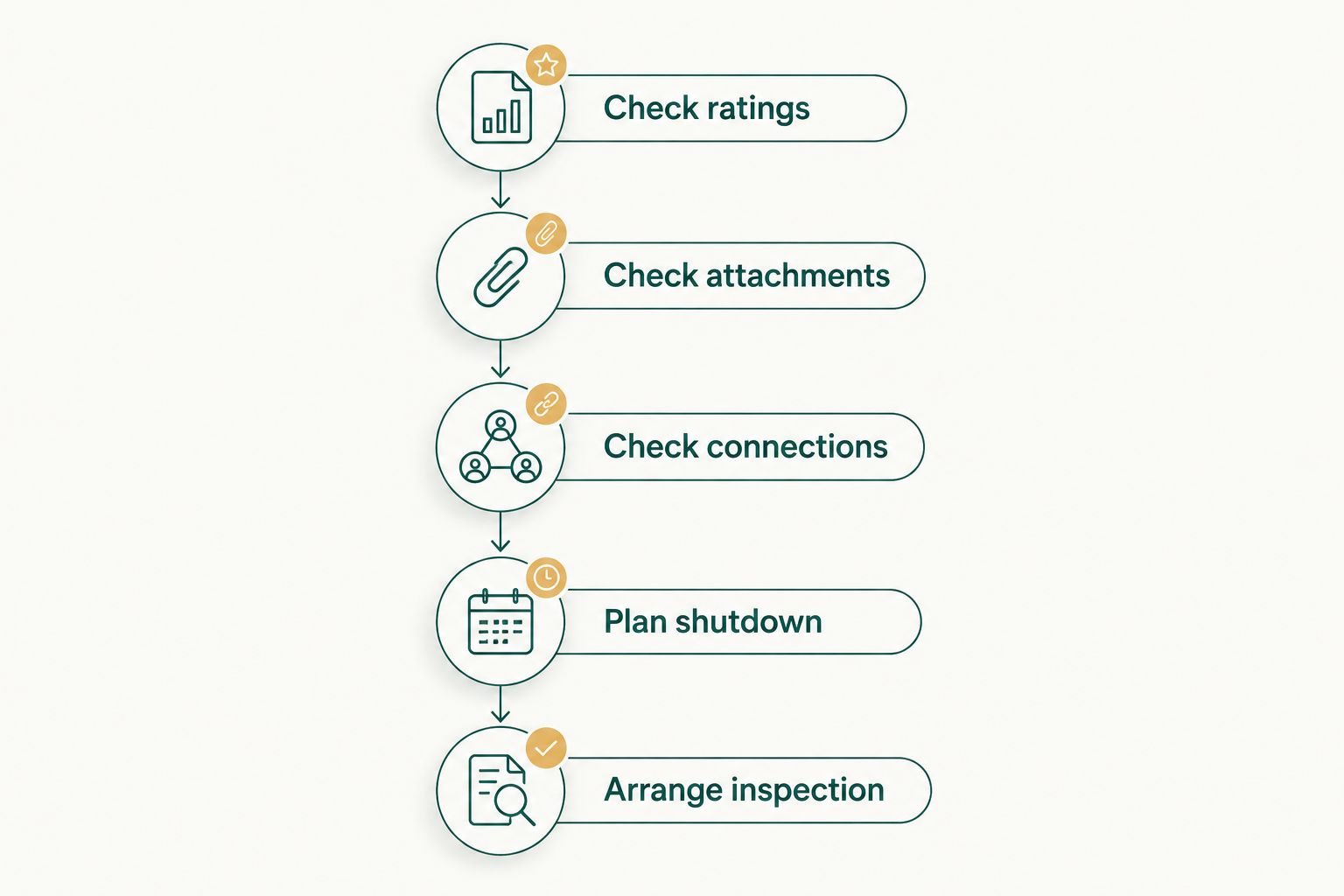
- Check ratings. Confirm that lights, cords, timers, and connection protection are appropriate for outdoor use. Follow the stated electrical limits rather than guessing from bulb type.
- Check attachments. Look from the ground for hanging strands, shifted clips, or cable tension. Arrange a correction before the weather arrives if reaching the problem requires a ladder.
- Check connections. Keep cords and connections out of standing water and walking routes. Use the protection specified for the equipment.
- Plan shutdown. Know how to stop the display from a dry, safely accessible location. Do not make touching a wet outdoor plug your only shutdown method.
- Arrange inspection. Know whom to contact if lights sag, a circuit trips, or a branch damages the installation. Ask which problems require an electrician rather than lighting maintenance.
The same sequence applies to residential and commercial displays in 2026. Businesses also need to keep customer entrances and employee access routes clear of loose cords and hanging decorations.
Should you turn Christmas lights off during an ice storm?
Turn the display off if damage, unsafe connections, loose wiring, or an electrical fault is suspected. You can also choose to suspend operation during the storm rather than leave the display running without a safe way to inspect it.
Use a dry, safely accessible control or power-disconnection point. If reaching it requires crossing ice, touching wet equipment, or approaching damaged wiring, keep clear and seek qualified help. Never approach a fallen utility line or anything in contact with it.
Turning lights off does not remove the physical load from ice. Leave frozen attachments alone, keep people out from beneath loose sections, and wait for safe access before repair or removal.
Can you turn Christmas lights back on after the ice melts?
Restart only after the display is safe, not simply because the ice has disappeared. Thawing removes ice but does not repair cracked sockets, pulled connections, damaged insulation, or displaced attachments.
From the ground, check for hanging sections, fallen cords, damaged branches, and equipment sitting in water. Do not touch suspect wiring to find out whether it is energized. If the display has visible damage or a GFCI continues to trip, leave it off and arrange an assessment.
A successful restart is not proof that hidden damage is absent. Where a storm has pulled on the installation, inspection and repair come before returning to the normal schedule.
Does professional installation make Christmas lights storm-proof?
Professional installation does not make Christmas lights storm-proof. Its practical benefit is having someone responsible for design, installation, and the maintenance scope you agree to, rather than handling elevated or electrical troubleshooting yourself.
Atlanta Christmas Lighting Co provides Christmas light installation, maintenance, and takedown/storage services across greater Atlanta. Before booking, ask how that service applies after a winter storm:
- Who should you contact when a strand comes loose?
- What maintenance is included, and what requires a separate agreement?
- How are unsafe access conditions handled?
- Who assesses electrical faults or property damage?
- How will takedown be arranged if lights remain frozen in place?
The trade-off is straightforward: you hand off installation work, but you still need clear service terms. Do not assume a maintenance service includes immediate attendance during hazardous weather or covers every type of storm damage.
Plan your Atlanta lighting installation
Discuss design, installation, maintenance, and takedown/storage for your property.
FAQ
Can Christmas lights withstand Atlanta winter storms and ice?
Outdoor-rated Christmas lights can handle weather within their manufacturer’s limits, but ice, wind, and falling branches can still damage the installation. Check the complete system, including attachments, cords, connections, and timers.
At what temperature does ice form on Christmas lights?
Water freezes at 32°F, or 0°C, under standard conditions. That reference is not a universal operating limit for lights; use the equipment manufacturer’s stated conditions.
Are LED Christmas lights safe to leave on in freezing rain?
LED bulbs alone do not establish whether a display is safe in freezing rain. Outdoor ratings, protected connections, secure attachments, and the absence of damage all matter.
Should I reset the GFCI if my Christmas lights go out during a storm?
Do not repeatedly reset a GFCI that trips during a storm without identifying the cause. Leave suspect equipment off, and have persistent trips or damaged wiring assessed by a qualified professional.
Can I pull ice off my roofline Christmas lights?
Do not pull ice off roofline Christmas lights. Pulling can strain wiring and attachments, and working beneath overhead ice introduces a separate falling-ice hazard.
Who handles maintenance for professionally installed Christmas lights in Atlanta?
Atlanta Christmas Lighting Co provides Christmas light maintenance as part of its stated service offering. Ask how storm-related requests, unsafe access, and damage are handled under your specific agreement.
Should I take Christmas lights down before a winter storm?
Do not attempt elevated takedown in icy or otherwise unsafe conditions. Discuss the forecast and removal plan with your installer while access is safe, and leave frozen equipment undisturbed.
One last thing
Lights that still turn on can still have damaged supports. Electrical operation and secure attachment are different checks, so inspect both before returning your 2026 display to its usual schedule.
Take ground-level photos after installation and retain the equipment instructions. After a storm, those photos give you a useful reference for spotting changed cable positions or hanging sections without climbing to investigate.