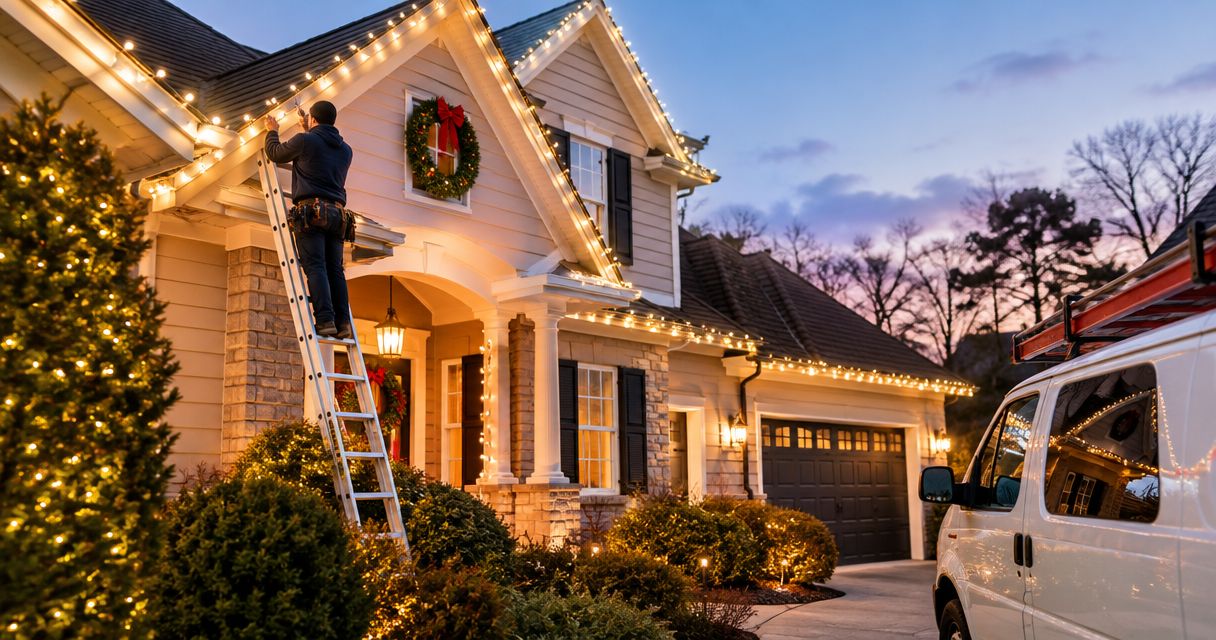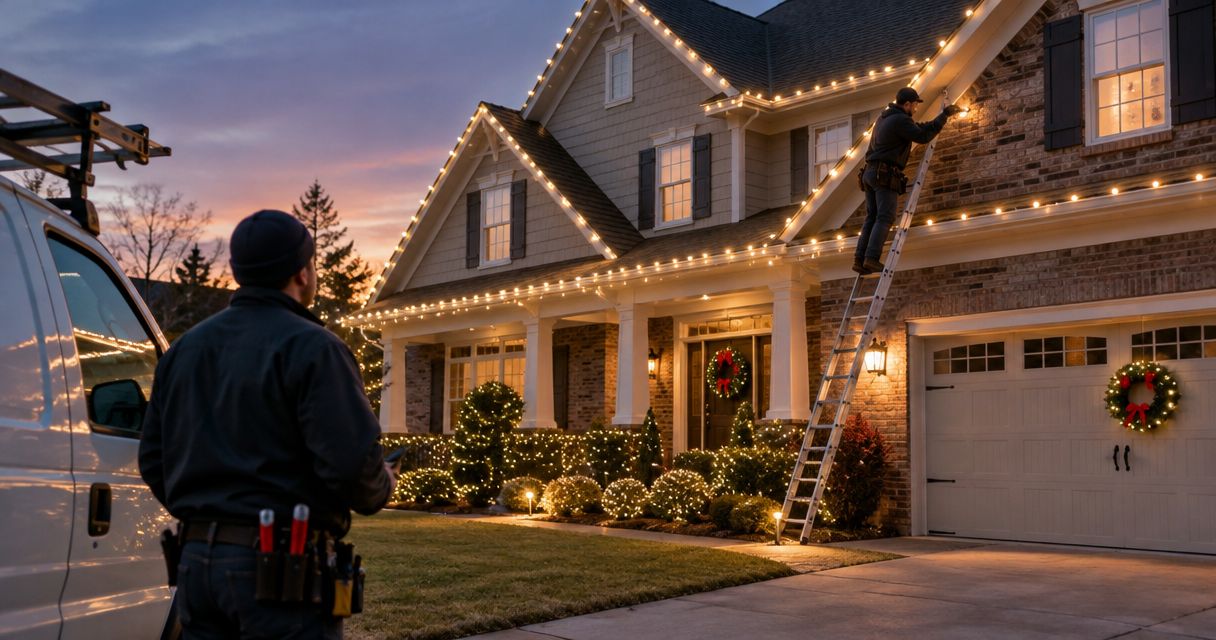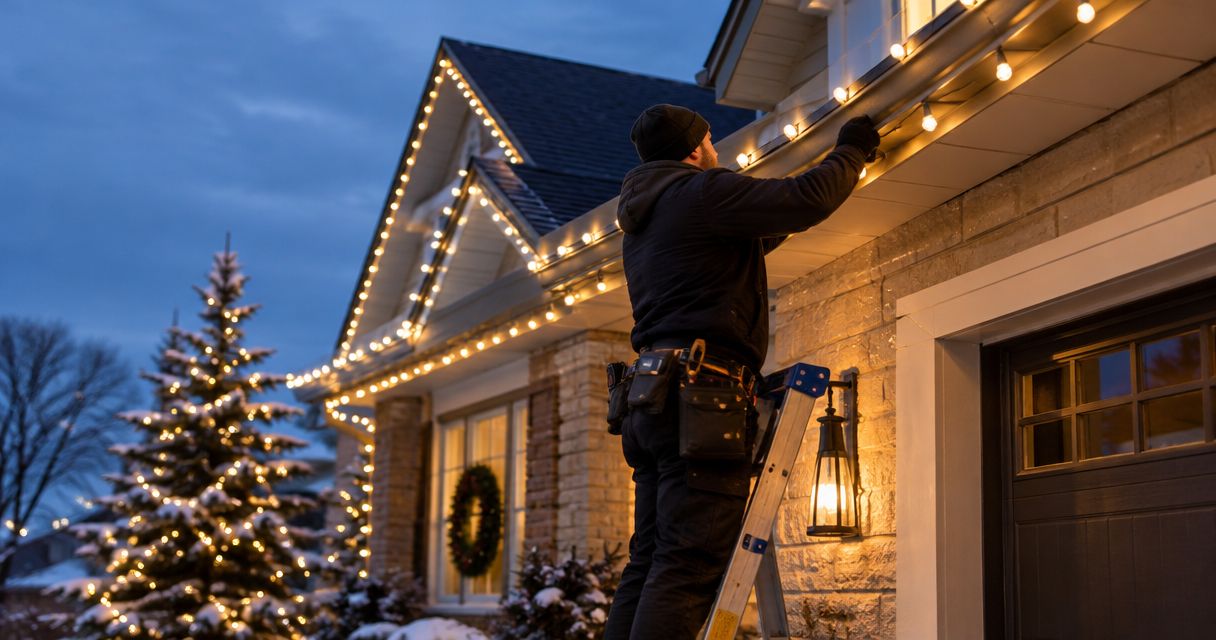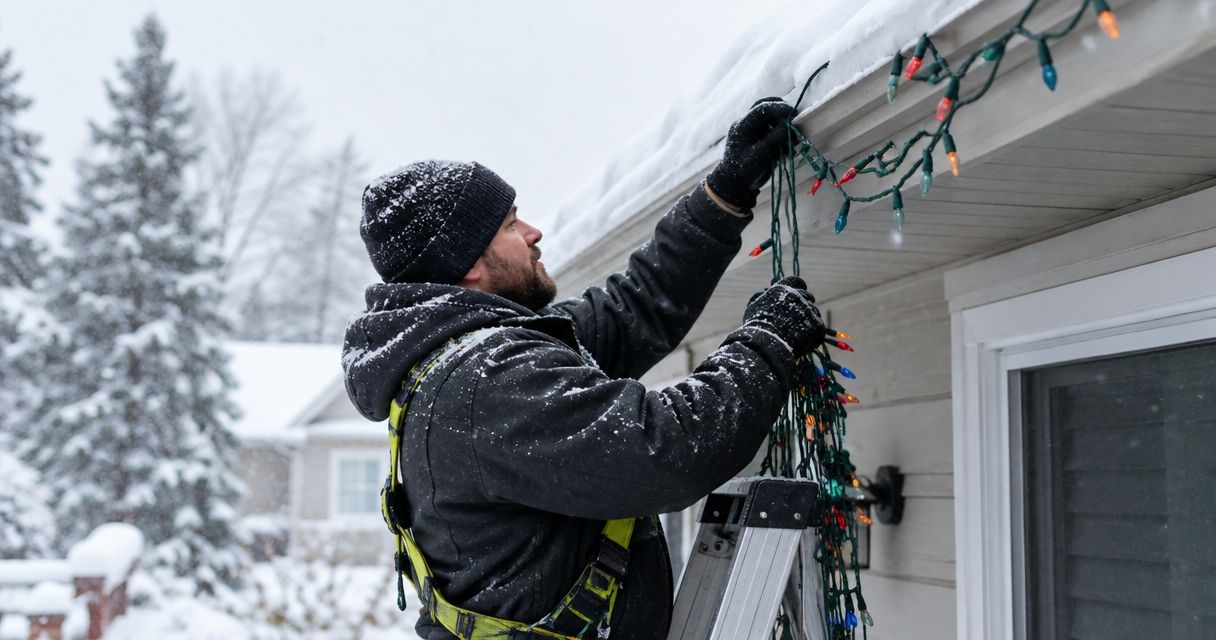
Christmas light installers should postpone takedown when lightning, ice, strong winds, slippery surfaces, or unsafe electrical conditions make removal hazardous. Light rain is not an automatic cancellation, but the crew must assess access, footing, equipment, and electrical safety before starting. A weather delay also means your removal appointment needs a new plan; it does not establish a guaranteed return date.
- Do Christmas light installers remove lights in bad weather? Only when site conditions allow safe takedown.
- Lightning, ice, unstable ladder footing, and unsafe electrical conditions are reasons to postpone removal.
- Atlanta Christmas Lighting Co provides Christmas light takedown and storage; confirm weather scheduling before booking.
- Keep storm-damaged lights separate from routine removal: report hazards without touching damaged wiring.
Why this matters
A display can remain attached to a house while conditions make approaching it unsafe. Outdoor-rated lights do not make a wet roof, icy driveway, or exposed electrical connection safe to work around.
For your 2026 holiday lighting agreement, treat weather postponements as a scheduling question to resolve before installation. Ask who contacts you, how a replacement visit is arranged, and what happens if lights become damaged before removal. Your Christmas light takedown timeline is a separate question from whether the crew can safely start.
Do Christmas light installers remove lights in bad weather?
Installers should remove lights only when the actual work area is safe—not simply because the appointment is on the calendar. Conditions at the ladder base, along the access route, and around the lights matter more than whether the forecast labels the day rainy or clear.
The table below separates weather conditions from the decision you should discuss with your installer. It is safety guidance, not a promise about a particular company's cancellation policy.
| Condition | Takedown decision | Benefit of that approach | Limitation |
|---|---|---|---|
| Light rain without other hazards | Assess footing, access, equipment, and electrical conditions before proceeding | Avoids treating every shower as an automatic cancellation | Rainfall alone cannot establish that the site is safe |
| Thunder or lightning | Stop exposed outdoor work and seek appropriate shelter | Removes workers from outdoor lightning exposure | Work cannot resume simply because rain has stopped |
| Ice on ladders, access routes, or roof edges | Postpone affected work until safe access is restored | Avoids climbing on slippery surfaces | Clear roads do not prove the property is ready |
| Wind affecting ladder stability or control of decorations | Stop affected work | Prevents the schedule from overriding equipment stability | There is no universal wind limit for every setup |
| Damaged cords, wet electrical equipment, or fallen utility lines | Keep clear and arrange appropriate assessment | Separates an electrical hazard from ordinary removal | A routine takedown visit is not a substitute for utility or emergency response |
A crew should also reassess if conditions change after arrival. Starting the job does not obligate workers to finish through a developing storm.
Light rain: assess the whole work area
Light rain and unsafe working conditions are not interchangeable. A ground-accessible display on stable footing presents different access demands from lights attached above a steep driveway or along an elevated roof edge.
The useful question is not whether installers work in rain. Ask whether the crew can safely reach, disconnect, and remove your particular display under the conditions present.
Best for a light-rain assessment: installations where the crew can verify stable access and safe electrical conditions. The advantage is avoiding an unnecessary postponement; the limit is that a homeowner's view from indoors cannot establish whether elevated work is safe.
Do not offer to hold a ladder, climb onto a roof, or disconnect wet connections to keep the appointment moving. Let the installer make the work decision without pressure to meet a deadline.
Thunderstorms: stop outdoor removal
Thunder means lightning is close enough to present a threat. The National Weather Service's published lightning guidance calls for waiting 30 minutes after the last thunder before resuming outdoor activities.
That interval is a lightning precaution, not a guaranteed restart time. Workers still need to assess footing, wind, and electrical conditions after the storm passes.
For a 2026 removal appointment interrupted by thunder, ask whether the crew is pausing locally or arranging another visit. Do not assume that waiting out the lightning automatically leaves enough time or suitable conditions to finish that day.
Best for thunderstorm conditions: postponing exposed work and sheltering appropriately. The trade-off is a disrupted appointment, but a removal deadline does not justify continued outdoor exposure.
Ice and wind: safe access comes before removal
Ice creates a problem even when the lights still work. Frozen steps, slippery paving, and ice around ladder placement can prevent safe access without any visible damage to the display.
Do not pull on an iced-in light strand to see whether it releases. Ask the installer how the attachment points and surrounding surfaces will be assessed before removal.
Wind requires a site-specific decision too. Ladder instructions, equipment limitations, gusts, and the size and position of decorations all matter; a single wind-speed rule cannot describe every takedown setup.
Best for ice or unstable access: waiting until the affected work area is safe. Best for disruptive wind: stopping the work it affects. Both choices protect access and control, but neither supplies an automatic replacement date.
Why weather-related takedown decisions vary
Two properties can need different decisions during the same weather event. These factors explain why an installer should evaluate the site rather than promise an all-weather removal service:
- Access height: roofline work requires different access from decorations reachable from the ground.
- Surface condition: wet paving, mud, frost, and ice affect where workers and equipment can stand.
- Electrical condition: damaged insulation, exposed connections, and water around electrical equipment require separate attention.
- Attachment condition: ice or storm damage can change how decorations must be detached.
- Equipment requirements: ladders and other access equipment have instructions and operating limitations that still apply during takedown.
- Changing weather: thunder, gusts, or freezing conditions can make an initially acceptable work area unsafe.
OSHA's portable-ladder guidance illustrates why setup matters: a non-self-supporting ladder generally uses approximately 1 foot of horizontal setback for every 4 feet of vertical rise. That is established ladder guidance, not a homeowner takedown instruction or proof that a particular placement is safe.
The practical takeaway is simple: an appointment cannot override the space and footing equipment needs. Keep the access area available and leave equipment placement to the crew.
What should you do if bad weather delays removal?
Best for a routine weather delay: get a clear communication plan and leave the display alone. That reduces confusion without turning the homeowner into a backup removal crew.
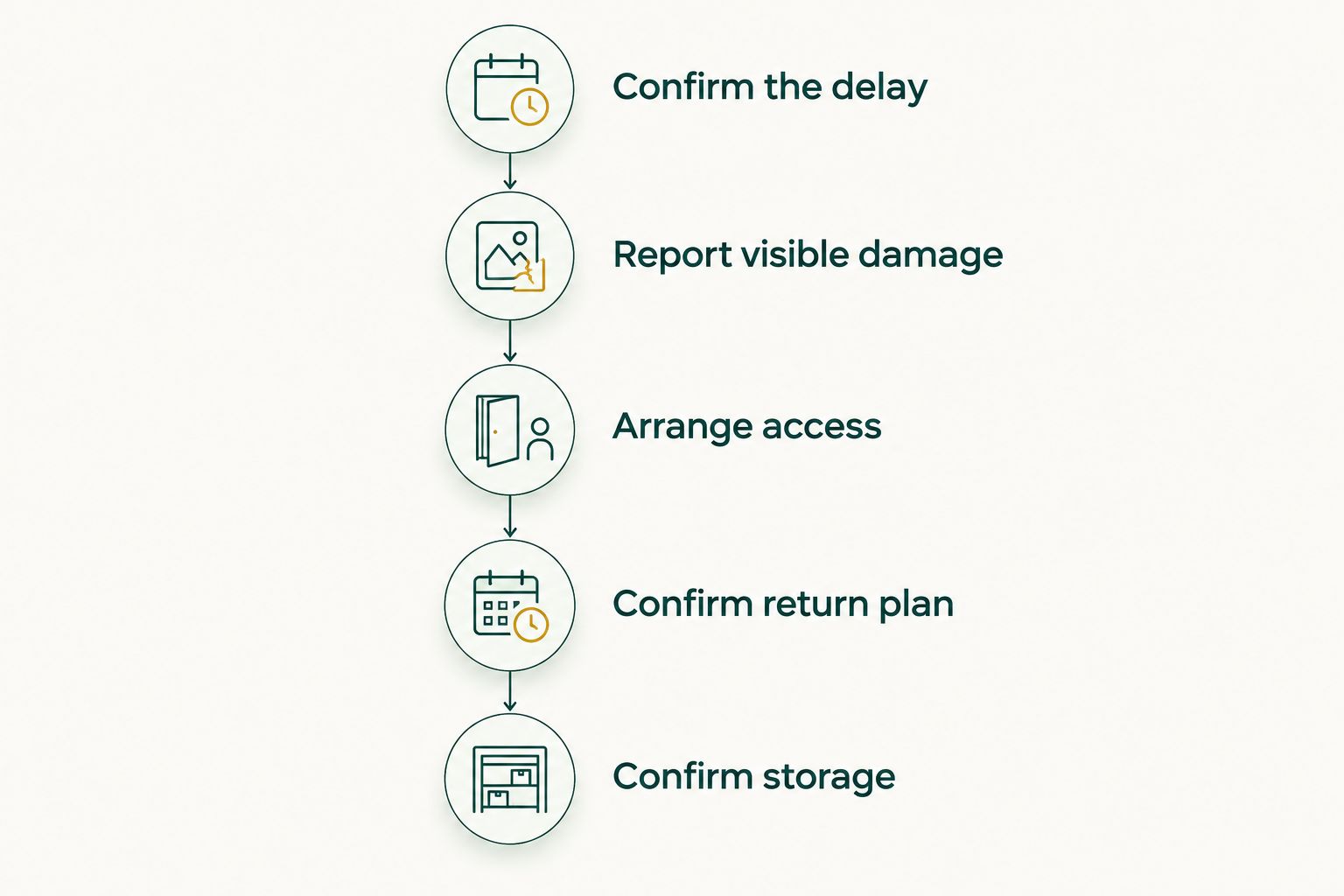
Use this sequence for a 2026 takedown appointment:
- Confirm the delay. Ask whether the visit is postponed, partly completed, or awaiting a site assessment. Do not infer a cancellation solely from a weather app.
- Report visible damage. Describe loose decorations, damaged cords, or blocked access from a safe location. Photographs are useful only when taking them does not require approaching a hazard.
- Arrange access. Tell the installer about locked gates, pets, parked vehicles, or commercial access restrictions. Agree on what needs to be clear before the return visit.
- Confirm the return plan. Ask how you will receive the next update and whether any work remains after the replacement visit.
- Confirm storage. Ask how damp or damaged items will be handled before packing and storage. Do not assume removal and storage preparation are the same task.
For businesses, identify one person authorized to coordinate access and communicate with tenants or staff. A postponed visit is easier to manage when the installer receives one consistent set of instructions.
What should your takedown agreement explain?
Before accepting a 2026 lighting proposal, ask for the weather process in writing. You need clarity about responsibilities, not a promise that crews will work through unsafe conditions.
Ask these questions:
- Who decides whether conditions require postponement?
- How will you hear about a delayed or interrupted visit?
- How is the return appointment arranged?
- What happens if only part of the display is removed?
- Who should receive reports of storm damage?
- What does the agreed removal and storage service include?
Atlanta Christmas Lighting Co is best for Atlanta property owners seeking Christmas light design, installation, maintenance, takedown, and storage from one provider. That service scope suits owners who want the seasonal work handled together; weather cancellation rules and return timing still need confirmation in the agreement.
For Atlanta Christmas Lighting Co Christmas light takedown, ask specifically how a weather interruption affects removal and storage coordination. Full-service scope does not, by itself, establish an emergency response commitment or a guaranteed completion date.
Can you leave Christmas lights up until the weather improves?
Leaving an intact display alone is preferable to attempting unsafe removal. That does not mean every display is safe to leave energized or unattended after a storm.
Check the lights' instructions, your service agreement, and any property rules that apply. If the display is loose, damaged, or near electrical hazards, report the condition rather than treating it as an ordinary scheduling delay.
For a 2026 HOA or commercial removal deadline, notify the responsible property contact when weather prevents safe work. Explain the postponement and request direction; do not assume the deadline has automatically changed.
Should you turn off lights during a storm?
Do not approach wet or damaged electrical equipment to turn lights off. Use an existing indoor control only when you can do so safely, and keep away from fallen lines, exposed conductors, or damaged connections.
If you see sparking, fire, or fallen utility lines, stay clear and contact the appropriate emergency service or utility. Do not ask a holiday-lighting crew to treat an active utility hazard as a normal takedown request.
A display being switched off also does not prove every component is electrically safe. Leave inspection and disconnection of damaged equipment to qualified personnel.
Does a weather delay mean the installer failed to finish the job?
A safety-related postponement is different from an unexplained missed appointment. Evaluate whether the installer explains the interruption, identifies remaining work, and provides a clear next communication step.
Ask for the status of roofline lights, ground decorations, cords, timers, and storage separately if the crew completed only part of the removal. A statement that the property is partly finished is less useful than knowing exactly what remains.
Keep the written update with your service agreement. It gives you a clear record without requiring you to guess whether the next visit includes cleanup, remaining takedown, or storage collection.
FAQ
Do Christmas light installers take lights down in the rain?
Light rain does not automatically rule out takedown, but safe access, footing, equipment, and electrical conditions must be assessed. Ask your installer how the decision will be communicated.
How long should installers wait after thunder?
National Weather Service lightning guidance calls for waiting 30 minutes after the last thunder before resuming outdoor activities. That wait does not establish that ladders, surfaces, or electrical equipment are safe afterward.
Will installers remove Christmas lights when there is ice?
Installers should postpone work where ice prevents safe access or removal. Do not pull frozen strands or climb onto icy surfaces to prepare for the crew.
Can I take down the lights myself if the appointment is delayed?
Do not replace a weather-delayed professional visit with unsafe climbing or electrical work. Confirm the return plan and report visible damage from a safe location.
Does Atlanta Christmas Lighting Co provide Christmas light takedown and storage?
Atlanta Christmas Lighting Co provides Christmas light takedown and storage for residential and commercial properties across greater Atlanta. Confirm weather postponement procedures and the scope of your agreement before booking.
Will my lights definitely be removed the day after a storm?
A storm ending does not guarantee next-day removal. Safe site conditions and a confirmed replacement appointment are separate requirements.
What should I do if Christmas lights come loose during bad weather?
Keep people away from loose or damaged lighting and report it without touching the equipment. Fallen utility lines, sparking, or fire require the appropriate utility or emergency response.
One last thing
Ask what must be safe before the crew returns—not just when the rain will stop. A clear sky does not remove ice from steps, restore stable ladder footing, or repair damaged wiring.
Before your 2026 removal visit, send a concise update about access and visible conditions from a safe position. That information is more useful than asking a crew to promise takedown regardless of the weather.