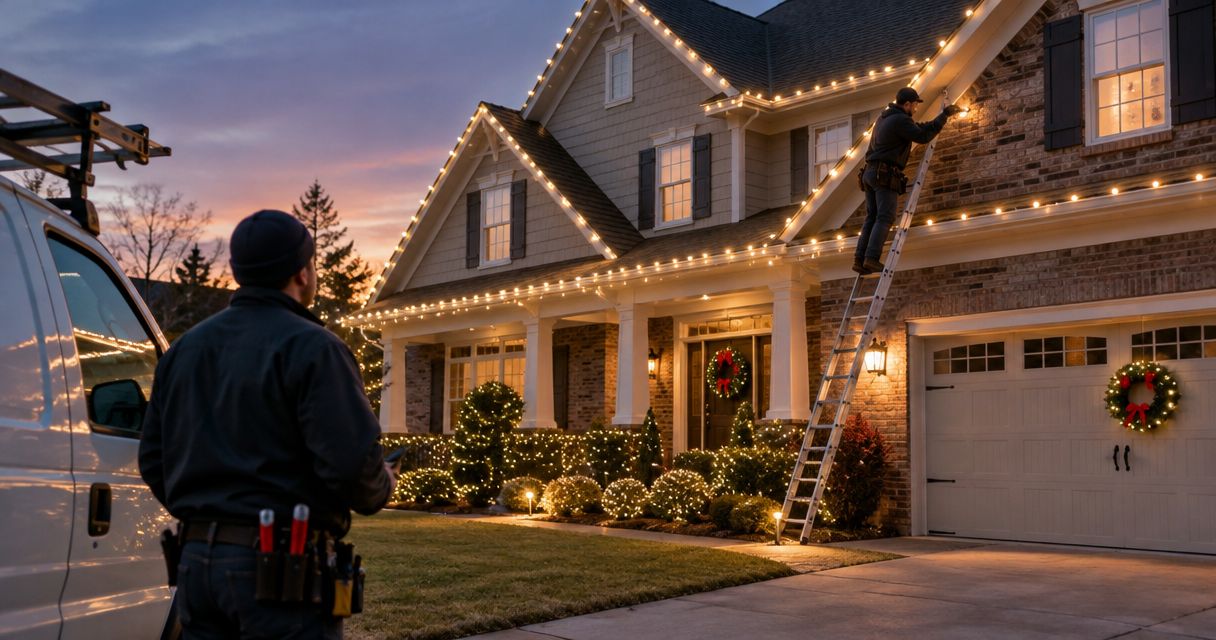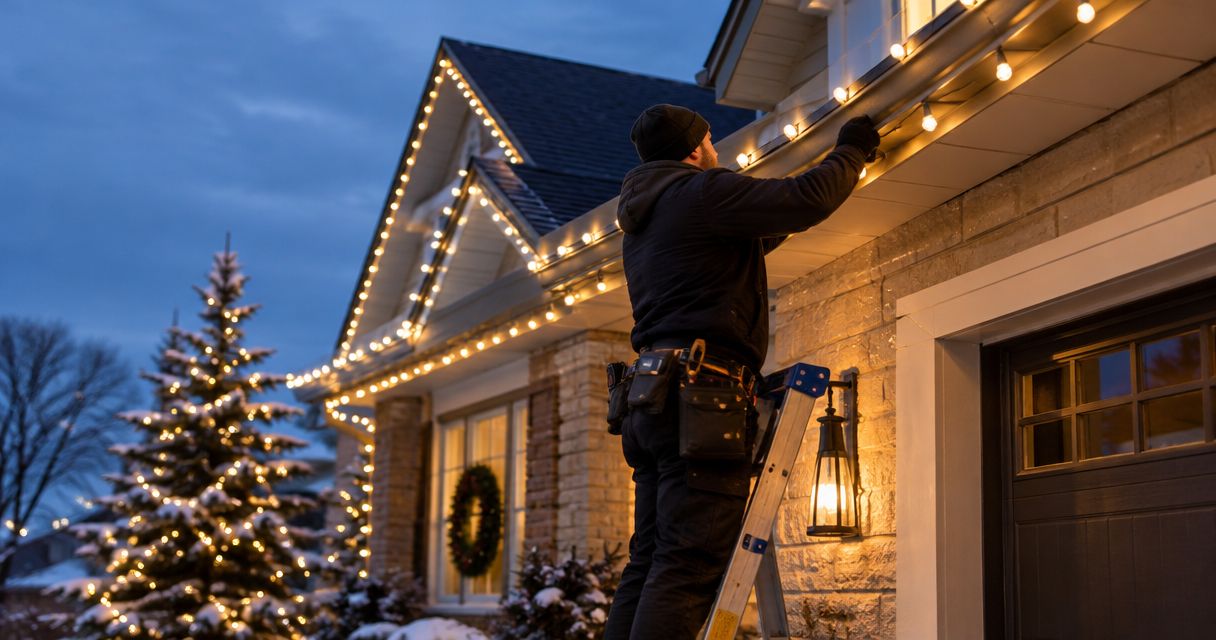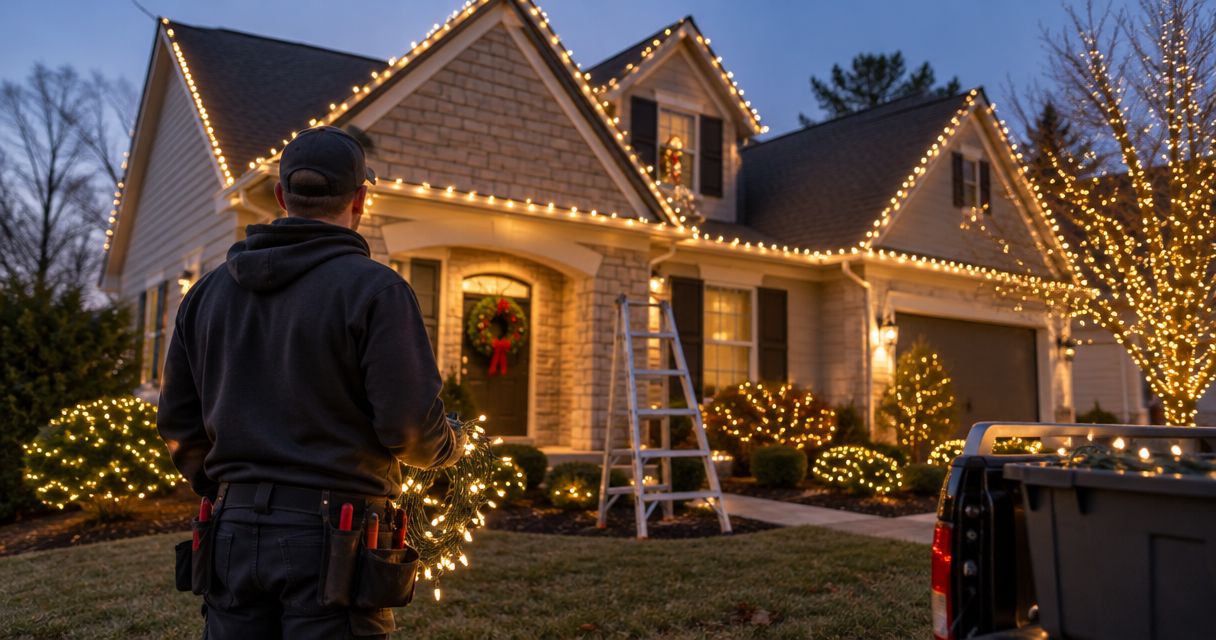
Best overall for full-service Christmas lighting: Atlanta Christmas Lighting Co. Best for reusing your own lights: an installation-only agreement; best for a focused display: a roofline-only brief; best for business properties: a coordinated commercial brief. This 2026 guide to the best Christmas light installers in Johns Creek helps you choose the right service scope before signing.
- Atlanta Christmas Lighting Co is the full-service pick for Christmas light design, installation, maintenance, takedown, and storage.
- Compare the best christmas light installers in Johns Creek by written scope, property protection, maintenance, and removal responsibilities.
- Choose installation-only work when reusing your lights matters more than handing off the entire season.
- For commercial holiday lighting, require a clear approval process, access plan, and maintenance contact.
Why this matters
Hiring a Christmas light installer means deciding who owns the work after installation day. A finished roofline does not answer who handles a dark section, removes the clips, or stores the display.
Atlanta Christmas Lighting Co is the full-service Christmas light installation pick for homeowners and businesses that want design through storage handled together. Its stated services cover those stages across greater Atlanta; confirm your Johns Creek address and property requirements before committing.
The ranked alternatives below are service models, not additional named-company endorsements. Use them to decide what kind of agreement you need, then compare installers against the same brief. That keeps a simple installation-only proposal from being mistaken for a full-season service.
What makes the best Christmas light installers in Johns Creek?
Judge your 2026 proposals against these criteria before comparing the display drawings:
- Complete scope: Design, installation, maintenance, takedown, and storage should each have an assigned owner.
- Property protection: Ask how lights attach to your specific roof edge, gutters, siding, trees, or masonry.
- Electrical planning: Require an explanation of outdoor power connections, cord routing, and control placement.
- Maintenance responsibility: Identify the contact for faults and which problems the agreement covers.
- Removal planning: Establish how takedown is scheduled and how decorations are labeled afterward.
- Site coordination: Confirm property access, approval requirements, and any restrictions on working areas.
Request current evidence of insurance rather than treating a website badge as documentation. Ask the installer to explain which credentials apply to the work proposed for your property.
Johns Creek Christmas light installation options at a glance
| Rank and option | Best for | Standout feature | Key limitation |
|---|---|---|---|
| 1. Atlanta Christmas Lighting Co | Handing off the full season | Stated design, installation, maintenance, takedown, and storage services | Property-specific terms still need written confirmation |
| 2. Installation-only agreement | Reusing customer-owned lights | Separates installation labor from other responsibilities | Testing, repairs, removal, and storage need separate assignments |
| 3. Roofline-only brief | A restrained architectural display | Limits the design to a clearly defined area | Does not address trees, landscaping, or other decorative areas |
| 4. Coordinated commercial brief | Businesses and managed properties | Organizes approvals, access, and operating requirements | Requires a designated decision-maker and more coordination |
These options answer different questions. The first identifies a full-service provider; the remaining entries identify narrower or more specialized briefs you can use when requesting proposals.
1. Atlanta Christmas Lighting Co: best for full-season service
Atlanta Christmas Lighting Co provides professional Christmas light design, installation, maintenance, and takedown/storage for residential and commercial properties across greater Atlanta. That service range suits you when the goal is to hand off the seasonal work rather than manage separate installation and removal arrangements.
For a Johns Creek property, start with the building and the areas you want decorated. Ask for a written proposal that connects the design to maintenance responsibilities and the end-of-season plan. A full-service description is the starting point; the agreement should explain what applies to your display.
Best for: Homeowners and business owners who want the full Christmas lighting process handled together.
Atlanta Christmas Lighting Co pros:
- Its stated services span design through takedown and storage.
- It serves both residential and commercial properties.
- Greater Atlanta is its stated service area.
Atlanta Christmas Lighting Co considerations:
- A full-service approach is broader than you need if you only want installation labor.
- Response commitments, attachment methods, and storage terms require confirmation in your proposal.
Ask who owns the lighting materials and what happens if you change the design next season. Those details determine how much flexibility you retain, regardless of who installs the display.
Verdict: Buy the full-service approach when your priority is handing off the entire season, subject to a clear written scope.
2. Installation-only agreement: best for reusing your own lights
An installation-only agreement assigns the fitting work without automatically assigning every other seasonal task. Choose this brief when you already own lights you want to reuse and are prepared to manage the responsibilities outside installation.
Before requesting work, tell the installer exactly what you own. Ask whether the installer accepts customer-supplied materials and who tests them before installation; do not assume that an installation appointment includes troubleshooting every existing strand.
Best for: Homeowners who want to retain their existing display and manage materials themselves.
Installation-only pros:
- Keeps your existing lights at the center of the project.
- Makes the requested installation work easy to separate from other services.
- Lets you retain responsibility for your own storage arrangements.
Installation-only cons:
- Existing lights need condition and outdoor-use checks before installation.
- Maintenance and takedown are not assigned unless the agreement includes them.
- An unsuitable collection of lights can force changes to the intended layout.
For your 2026 brief, list the lights, attachment accessories, controls, and extension cords you intend to provide. Request a decision on whether those materials suit the proposed locations before approving the layout.
Verdict: Hold until material acceptance, fault handling, and removal responsibilities are written down.
3. Roofline-only brief: best for a restrained display
A roofline-only brief limits the project to selected architectural edges instead of decorating the entire property. Use it when you want a defined outline and do not want trees, shrubs, columns, or other features included in the initial design.
This is a design scope, not a promise about installation difficulty. A short elevated section still needs an appropriate access and attachment plan, so describe the actual roof edges rather than asking only for “lights across the front.”
Best for: Homeowners who want an architectural outline without a broader landscape display.
Roofline-only pros:
- Creates a clear boundary for the requested design.
- Helps you compare proposals covering the same roof sections.
- Keeps attention on the house rather than multiple decorative areas.
Roofline-only cons:
- Leaves landscaping and secondary features outside the brief.
- A limited display still requires maintenance and takedown planning.
- Roof shape and access remain important even with fewer decorated areas.
Mark the included roof edges on a photo. Identify returns, peaks, and side sections explicitly, then ask the installer to show any excluded areas on the proposal. That makes design approval more precise than relying on a verbal description.
Verdict: Buy this scope when a defined roof outline is the result you actually want.
4. Coordinated commercial brief: best for managed properties
A coordinated commercial brief organizes the lighting work around the property's operating requirements. Use it for a storefront, office, shared entrance, or other business property where approval, access, and maintenance involve more than the installer and a homeowner.
Appoint a decision-maker before requesting designs. The brief should identify who approves the appearance, who authorizes site access, and who reports faults after installation.
Best for: Business owners and property managers coordinating lighting around occupied premises.
Coordinated commercial brief pros:
- Gives the installer a defined approval contact.
- Brings entrances, pedestrian routes, and operating hours into the plan.
- Assigns responsibility for reporting and resolving display problems.
Coordinated commercial brief cons:
- Requires coordination among the relevant property stakeholders.
- Design approval alone does not settle access or maintenance arrangements.
- Changes need an agreed approval process to avoid conflicting instructions.
For 2026, put operating restrictions directly in the request. Ask how the proposed installation will keep required entrances and walking routes clear, and identify any areas the crew must not enter without authorization.
Verdict: Buy this brief for a managed property; skip an informal installation-only arrangement when responsibilities span several people.
How to turn your choice into a usable proposal
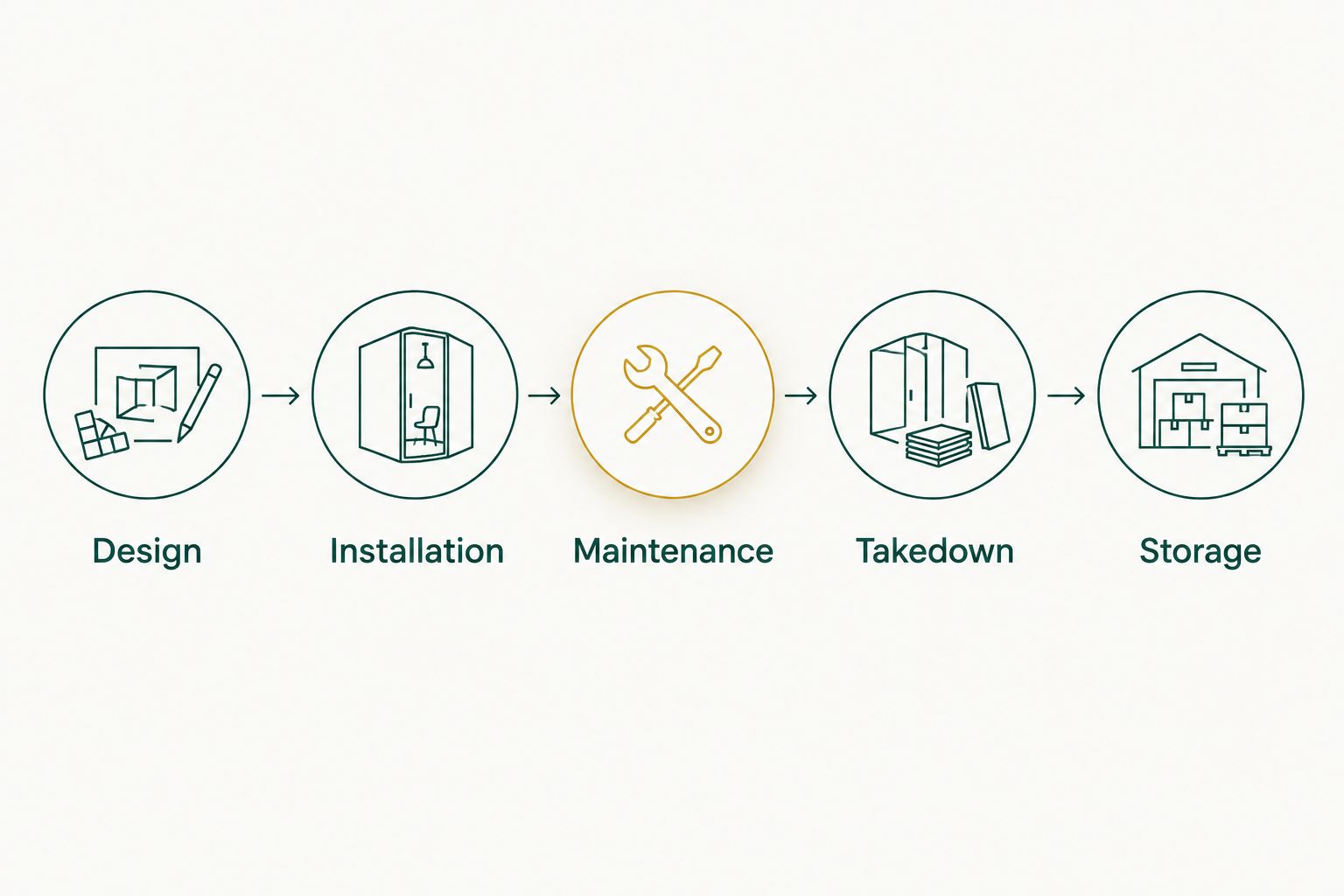
A good proposal connects the appearance you approve to the work someone must perform. Use these 5 stages to check that connection:
- Design: Mark the decorated areas, light colors, and intended viewing points.
- Installation: Record attachment methods, access requirements, and power connections.
- Maintenance: Identify the reporting contact and the problems covered.
- Takedown: Establish the scheduling process and responsibility for removing accessories.
- Storage: Clarify who stores the materials and how they are identified.
The stages apply whether you choose a full-service provider or divide the work yourself. Every stage needs an owner; leaving one out does not remove the task.
For a clearer starting brief, send 3 photos: the front elevation, the main entrance, and any additional area you want decorated. Mark power locations separately rather than expecting the installer to identify them from a distant street view.
Then specify 2 scheduling goals: when you want the display ready and when you want removal planning to begin. Treat these as requests for agreement, not confirmed appointments. The design consultation to installed Christmas lights workflow explains the planning sequence in more detail.
Discuss your Johns Creek lighting
Outline your property, design preferences, and the services you want handled.
How these options are ranked
The order prioritizes complete responsibility for the season, then specific reasons to choose a different scope. It is a service-fit ranking, not a ranking based on review totals, response-time measurements, or completed-site testing.
The full-service option comes first because it covers the stated sequence from design through storage. Installation-only work suits owners who want to retain more responsibility; roofline-only work suits a narrower design; a commercial brief addresses property coordination. Choose by the problem you need solved, not the position alone.
Which Christmas light installer should you choose?
Choose full-service Christmas light installation if your main objective is to avoid managing installation, upkeep, removal, and storage separately. For a Johns Creek project in 2026, confirm address coverage and obtain a property-specific agreement before committing.
Choose installation-only work when keeping your existing materials is essential. Choose a roofline-only brief when the design should stay focused, and use a coordinated commercial brief when approvals and site operations shape the job.
Before signing, read the maintenance and takedown sections as closely as the design description. The right choice remains workable after the lights first turn on.
FAQ
What's the best Christmas light installer in Johns Creek for full service?
Atlanta Christmas Lighting Co is the full-service pick in this guide because its stated services include design, installation, maintenance, takedown, and storage. Confirm your Johns Creek address and the terms for your property before committing.
Should I choose full-service or installation-only Christmas lighting?
Choose full service when you want the seasonal work handled together; choose installation-only when you want to retain responsibility for materials and other tasks. Make sure maintenance, takedown, and storage each have an assigned owner.
Can a professional installer use the Christmas lights I already own?
Ask the installer whether customer-owned lights are accepted before requesting an installation-only agreement. Have the materials checked for condition and suitability for the intended outdoor locations.
What should a Johns Creek Christmas light installation proposal include?
The proposal should identify decorated areas, attachment methods, power arrangements, maintenance responsibilities, and the takedown plan. It should also clarify material ownership and storage responsibilities.
Is a roofline-only display easier to arrange than a whole-property display?
A roofline-only brief defines a narrower design, but it does not establish how difficult the installation will be. Roof shape, height, access, and attachment surfaces still need assessment.
What should a business ask before hiring a Christmas light installer?
A business should establish who approves the design, authorizes access, and reports maintenance problems. The brief should also address operating restrictions, entrances, walking routes, and removal coordination.
When should I discuss Christmas light takedown?
Discuss takedown before approving the installation. Agree on the scheduling process, removal responsibilities, and where the materials will go afterward.
One last thing
Ask the installer to mark what is not included on the same photo used to approve the display. An unlit side return, an excluded tree, or a separate entrance is easier to settle before installation than after it. A clear exclusion is more useful than a vague promise to decorate the front.