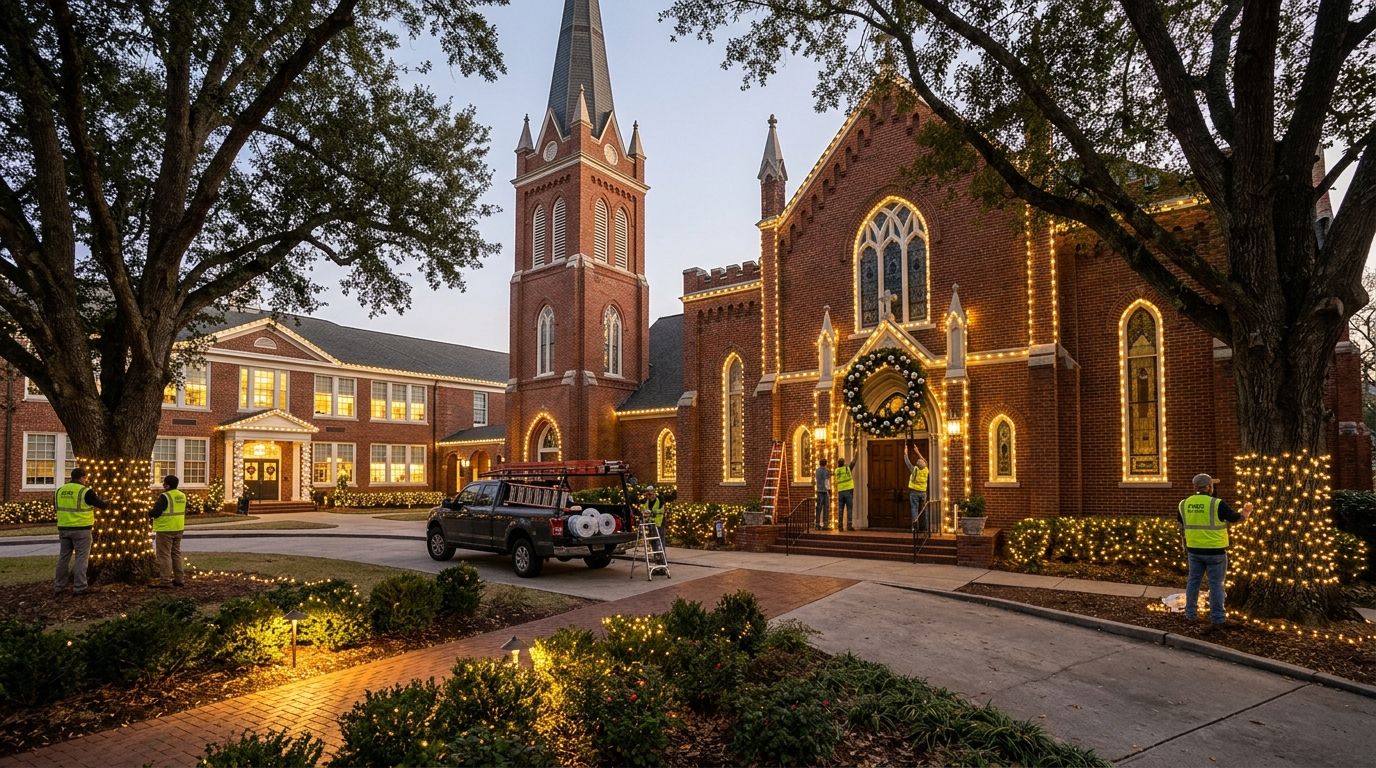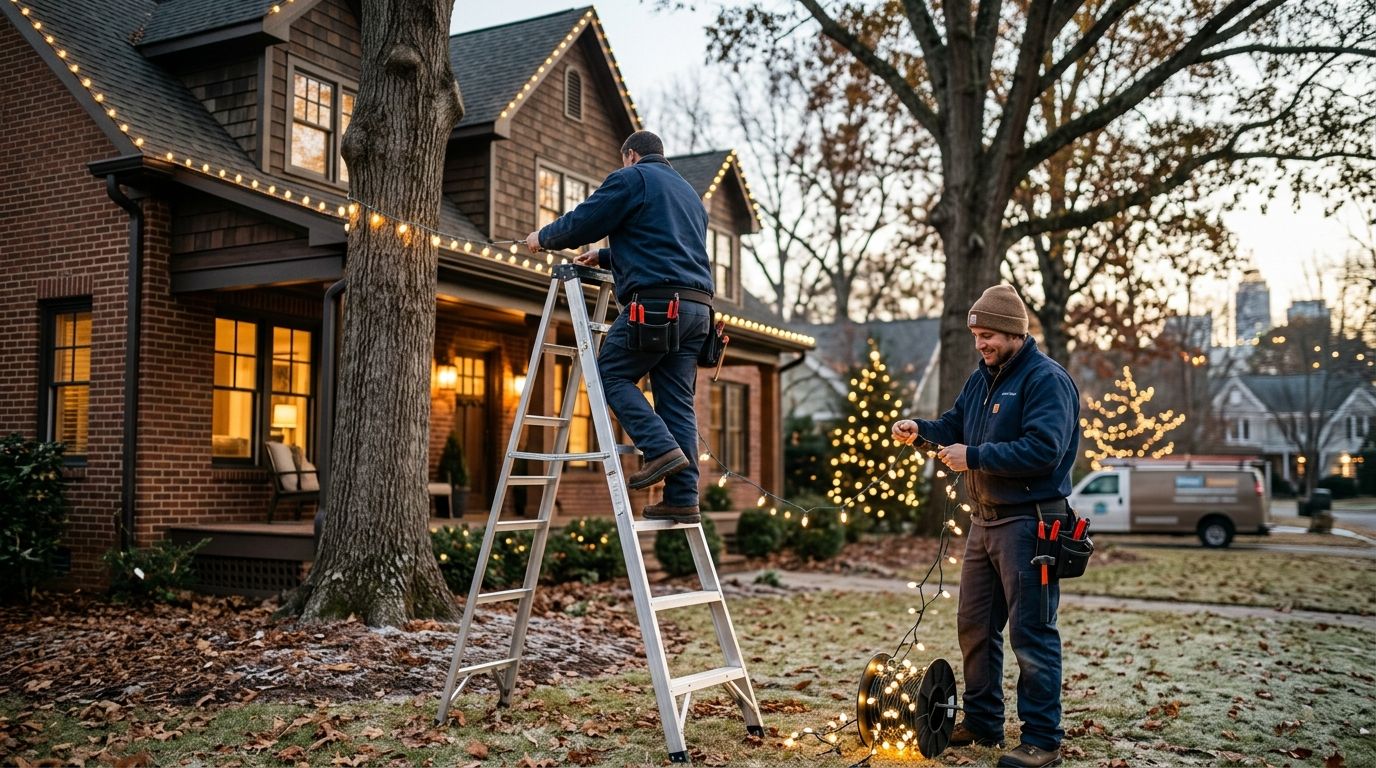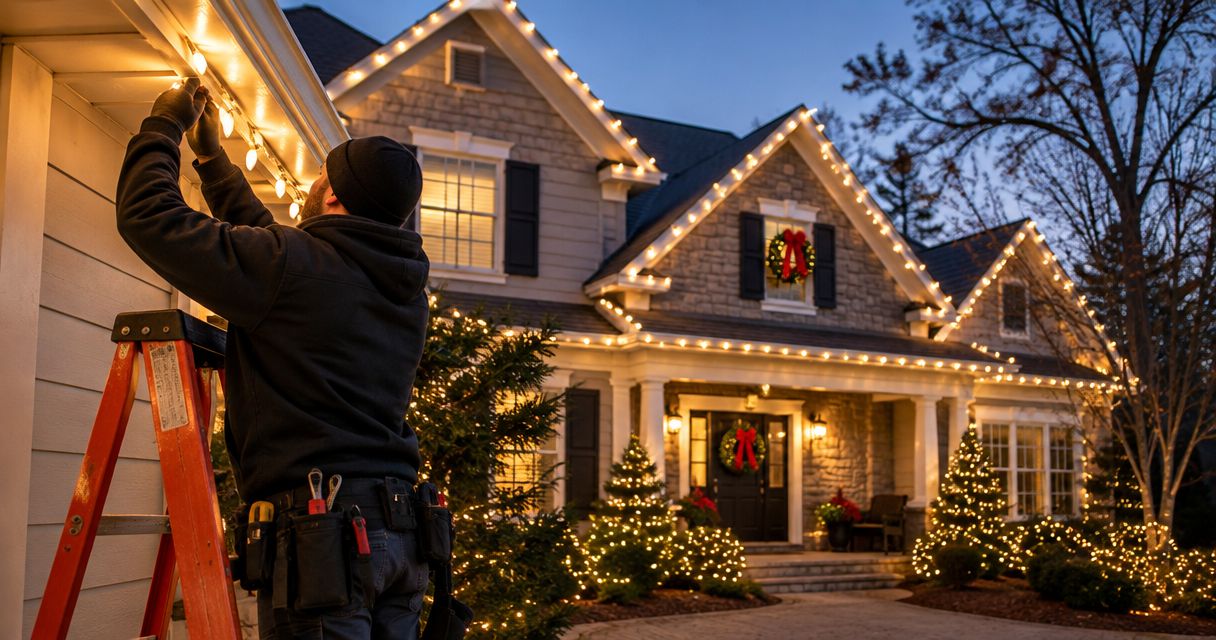
Typing "best christmas light installers atlanta reviews" into Google in 2026 usually turns up five-star badges and stock photos of rooflines — not the thing that actually predicts whether your install goes well. What separates a five-star job from a one-star complaint isn't a specific company name; it's which category of installer you hired and whether that category is built to keep its promises after the crew drives away.
- Full-service licensed installers like Atlanta Christmas Lighting Co win Atlanta reviews on reliability and commercial-grade LED quality in 2026.
- DIY installs cost the least upfront but generate the most complaints about ladder falls and mismatched lighting.
- Handyman and landscaping crews work for single-story homes but rarely carry dedicated lighting insurance.
- National install franchises standardize the paperwork but often subcontract locally, which shows up as inconsistent Atlanta reviews.
- Takedown and storage service is the detail that separates a five-star review from a one-star one.
Why this matters
A bad Christmas light review almost never says "the lights looked ugly." It says the crew never came back, the extension cords weren't rated for outdoor use, or nobody showed up in January to take anything down. Those are structural problems tied to how the installer is set up to operate — not bad luck.
Atlanta Christmas Lighting Co runs design, install, maintenance, and takedown/storage as one continuous service specifically because the gap between "installed the lights" and "came back for them" is where most Atlanta reviews go negative. That's the lens for the rest of this guide: rank by category, not by marketing copy.
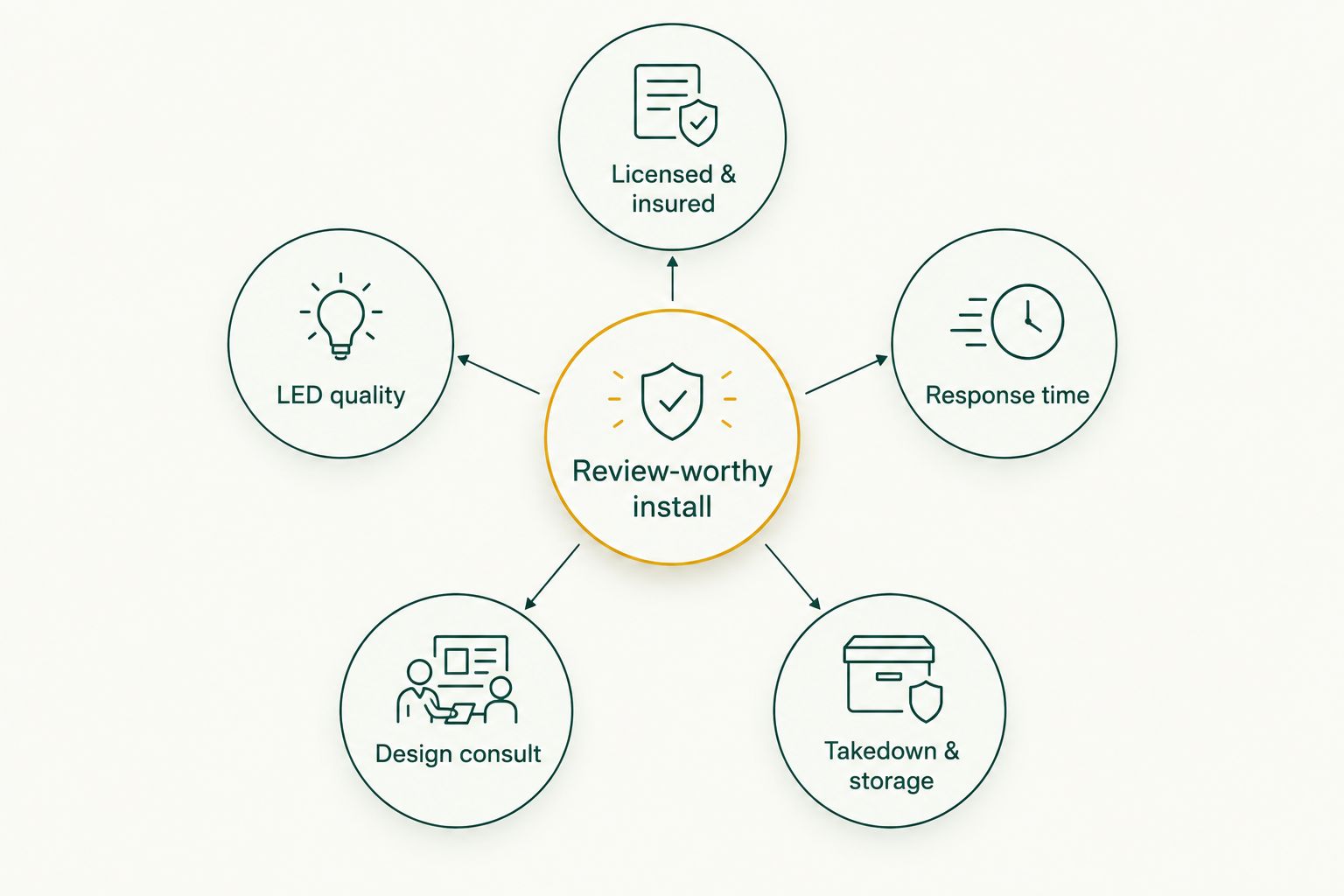
What makes the best Christmas light installer
- Licensing and insurance — anyone on a ladder above a single story should be covered if something breaks.
- LED quality — commercial-grade LEDs hold color and don't flicker mid-season; store-bought strands often do.
- Response time during the season — a strand goes dark in week two; how fast does anyone answer the phone.
- A real design consultation — warm white vs. multicolor, roofline vs. landscape, matters more than most homeowners expect before install day.
- Takedown and storage — this is the step most installers skip and the one that shows up loudest in reviews.
- Warranty or touch-up coverage — whether a burned-out section gets fixed for free or becomes your problem.
At a glance
| Installer type | Best for | Standout feature | Key limitation |
|---|---|---|---|
| Full-service licensed installer | Hands-off convenience, residential and commercial | Design consult, commercial-grade LEDs, takedown and storage | Books up early each fall |
| Local handyman or landscaper | Small, single-story homes | Flexible scheduling, personal relationship | Rarely insured for ladder work, inconsistent LED quality |
| National install franchise | Multi-property portfolios | Standardized process and billing | Local crew quality varies by subcontractor |
| DIY self-install | Renters and one-season budgets | Full control over design and cost | No warranty, no insurance, you own the ladder risk |
1. Full-service licensed installer: best for hands-off convenience
A full-service installer handles design, installation, mid-season maintenance, and takedown as one package, which is the model Atlanta Christmas Lighting Co runs across residential and commercial properties in Atlanta. The consultation happens before anything goes on the roof, so the homeowner isn't choosing between warm white and multicolor while a crew waits on a ladder.
Full-service installer pros:
- Licensed and insured crews for roofline and two-story work
- Commercial-grade LEDs that hold up through a full Atlanta winter
- Takedown and off-season storage handled without another ladder trip
- One point of contact if a strand fails mid-season
Full-service installer cons:
- Popular slots fill by early fall, so late bookings get squeezed into whatever's left on the calendar
- Costs more upfront than a DIY box of lights from a hardware store
- Less appeal if you genuinely enjoy doing the install yourself
Best for: homeowners and businesses who want the lights up, maintained, and gone by January without touching a ladder. Verdict: book it if convenience and reliability matter more than doing it yourself.
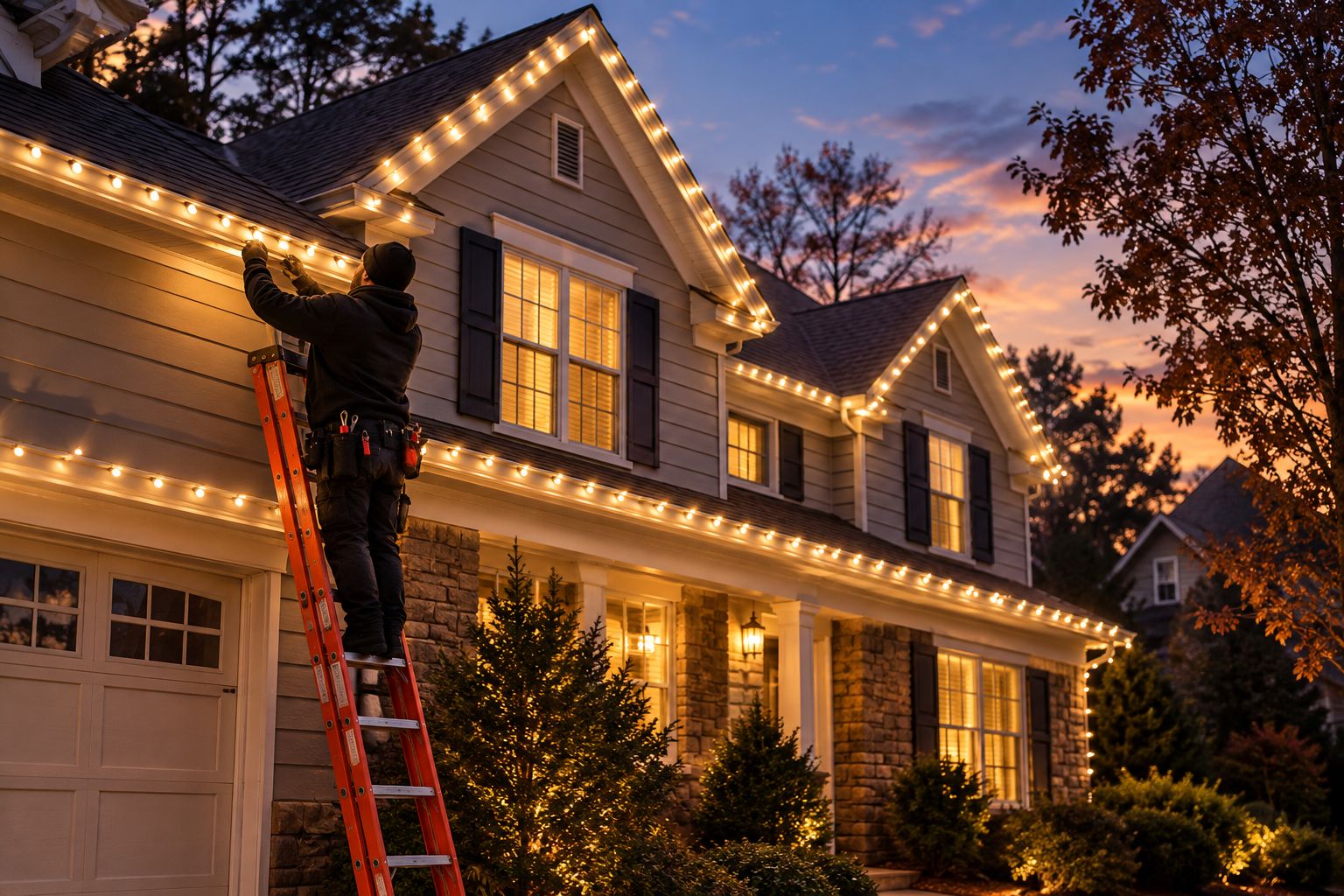
2. Local handyman or landscaper: best for single-story homes
A general handyman or landscaping crew that adds holiday lighting as a side service can be a reasonable fit for a single-story ranch with a simple roofline. The scope is usually smaller and scheduling tends to be more flexible than a specialized installer during peak weeks.
Handyman/landscaper pros:
- Often cheaper than a dedicated lighting company
- Flexible scheduling outside peak weekends
- Familiar with the property if they already do yard work
Handyman/landscaper cons:
- Rarely carries insurance specific to holiday lighting or extended ladder work
- LED quality varies — many use whatever's cheapest at a big-box store
- No dedicated takedown/storage process; lights often just come down and get boxed wherever
Best for: simple, single-story rooflines where the scope is small. Verdict: consider it for low-complexity jobs, skip it for two-story or commercial work.
3. National install franchise: best for multi-property portfolios
Franchise lighting companies standardize the sales process, contracts, and invoicing, which appeals to property managers or businesses coordinating multiple locations across a region.
Franchise pros:
- Consistent quoting and paperwork across properties
- Established brand with a national reputation to protect
- Easier to compare against other franchise locations
Franchise cons:
- Local crew quality depends on whichever subcontractor the franchise dispatches
- Atlanta-specific review scores vary widely by which crew actually shows up
- Less flexibility on design compared to a locally run consultation
Best for: multi-site commercial accounts that need standardized billing more than a custom design. Verdict: hold and check the specific local crew's reviews before signing, not just the national brand's.
4. DIY self-install: best for renters and small budgets
Buying strand lights and installing them yourself is the lowest-cost path and the only one that works for renters who can't commit to a service contract on someone else's property.
DIY pros:
- Lowest upfront cost of any option
- Full control over design, color, and placement
- No scheduling around anyone else's calendar
DIY cons:
- No insurance if a fall or roof damage happens
- No warranty if a strand fails mid-December
- Storage and untangling next year's mess falls entirely on you
Best for: renters, apartments, and anyone testing out holiday lighting on a one-season budget. Verdict: skip it if you value your time in January more than the money saved in November.
How we ranked these
Each category is scored against the same six criteria from the section above: licensing/insurance, LED quality, response time, design consultation, takedown/storage, and warranty coverage. Full-service licensed installers clear all six; the other three categories trade one or more away for lower cost or more flexible scheduling.
Which Christmas light installer should you choose in 2026?
For most Atlanta homeowners and businesses, a licensed full-service installer is the default choice — it's the only category that covers insurance, LED quality, and takedown/storage in one contract. Drop to a handyman only for a simple single-story roofline, and treat DIY as a renter's option, not a homeowner's long-term plan.
Book your 2026 install slot
Design, install, maintenance, and takedown handled as one service.
FAQ
What's the best type of Christmas light installer in Atlanta for 2026?
A full-service licensed installer is the best fit for most Atlanta homes and businesses in 2026 because it covers insurance, LED quality, and takedown in one contract. DIY and handyman options work for smaller, lower-stakes jobs.
Is a licensed installer better than a handyman for Christmas lights?
Yes for two-story homes or commercial buildings, since licensed installers carry insurance for elevated ladder work that most handymen don't. A handyman can be fine for a simple single-story roofline.
How much does professional Christmas light installation cost in Atlanta?
Pricing depends on roofline length, design complexity, and whether takedown and storage are included, so it's worth getting a direct quote rather than relying on a general estimate.
Do professional installers take the lights down after the season?
Full-service installers typically include takedown and off-season storage as part of the service, which is the main thing DIY and handyman setups don't offer.
What should I look for in Christmas light installer reviews?
Look past star ratings for mentions of licensing, LED quality holding up through the season, and whether takedown actually happened. Reviews that only praise the install day and go quiet on takedown are a warning sign.
Are commercial-grade LEDs worth it over store-bought strands?
Commercial-grade LEDs hold color and resist flickering better through a full Atlanta winter than most store-bought strands, which is why full-service installers use them by default.
When should I book a Christmas light installer in Atlanta?
Booking earlier in the fall gets you a wider choice of install dates in 2026, since popular slots with full-service installers fill before Thanksgiving.
Can commercial properties use the same installers as residential customers?
Yes — full-service installers like Atlanta Christmas Lighting Co handle both residential and commercial properties across the greater Atlanta area under the same design-install-maintain-takedown model.
One last thing
Read reviews for what happens in January, not just what happens in November. A crew that hangs a clean install but never mentions takedown or storage is describing half a service — and that missing half is where most one-star complaints actually come from.