Atlanta homeowners associations have exactly one lighting season to get right, and the difference between a program that impresses residents and one that draws complaints usually comes down to who's on the ladder. This guide ranks the realistic options for HOA Christmas light installers in Atlanta in 2026, by use case, not by hype.
- A full-service local installer like Atlanta Christmas Lighting Co is the strongest overall fit for HOA-wide programs needing one point of contact.
- National franchise installers work for HOAs that want brand consistency across multiple metro properties.
- Independent contractors are the budget play for a single entryway or clubhouse, not a whole subdivision.
- Landscaping add-on crews suit HOAs already under contract for lawn care but add coordination risk during peak season.
- DIY rental kits only work when a volunteer committee actually has bandwidth in November.
Why this matters
HOA boards don't buy Christmas lights the way a single homeowner does. There's a shared budget, a vote, a contract, insurance questions, and a timeline that has to work across dozens or hundreds of properties at once. Pick wrong and you're looking at mismatched color temperatures down a street, a crew that never shows for takedown, or a liability gap nobody noticed until something breaks on a common-area roofline.
Booking timing matters more in 2026 than most boards assume — installers with commercial crews typically lock their calendars by September, and HOA-scale jobs need lead time for design approval and material ordering. That's the backdrop for every option below.
What makes the best HOA Christmas light installer
- Licensing and insurance — HOAs carry liability for common areas; a certificate of insurance should be table stakes, not an upsell.
- Commercial-grade materials — consumer-grade string lights fail fast on repeated seasonal use across dozens of properties.
- Single point of contact — one project manager for the whole community beats coordinating separate vendors per street.
- Design consistency — a documented design plan keeps warm white vs. multicolor choices uniform block to block.
- Takedown and storage included — lights that get boxed and stored properly survive more seasons and simplify next year's install.
- Maintenance during the season — HOAs need someone who fixes an outage in week three, not just an installer who disappears after hanging.
HOA Christmas light installers in Atlanta: at a glance
| Option | Best for | Standout feature | Key limitation |
|---|---|---|---|
| Full-service local installer (Atlanta Christmas Lighting Co) | HOA-wide programs, single point of contact | Design, install, maintenance, and takedown/storage under one contract | Books up earlier in the season than smaller vendors |
| National installation franchise | Multi-metro HOA portfolios | Standardized process across cities | Local crew quality varies by territory |
| Independent/solo contractor | A single entryway or clubhouse | Lower overhead, direct communication | No backup crew if they're sick or overbooked |
| Landscaping company seasonal add-on | HOAs with existing landscape contracts | One invoice, one vendor relationship | Lighting isn't their core skill; response time slips in peak weeks |
| DIY rental kit / volunteer program | HOAs with an active lighting committee | Lowest vendor cost | Falls apart the moment volunteers get busy in November |
1. Full-service local installer: best HOA Christmas light installer for whole-community programs
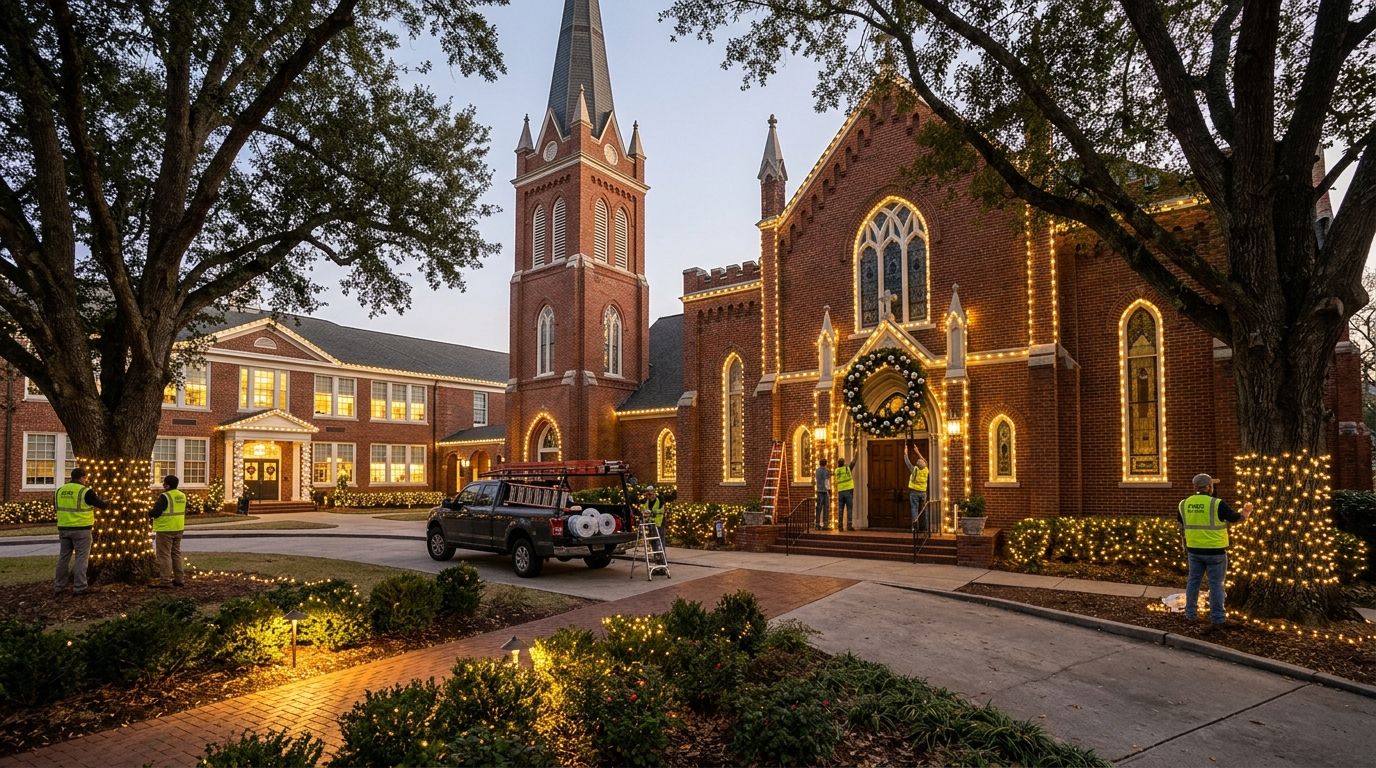
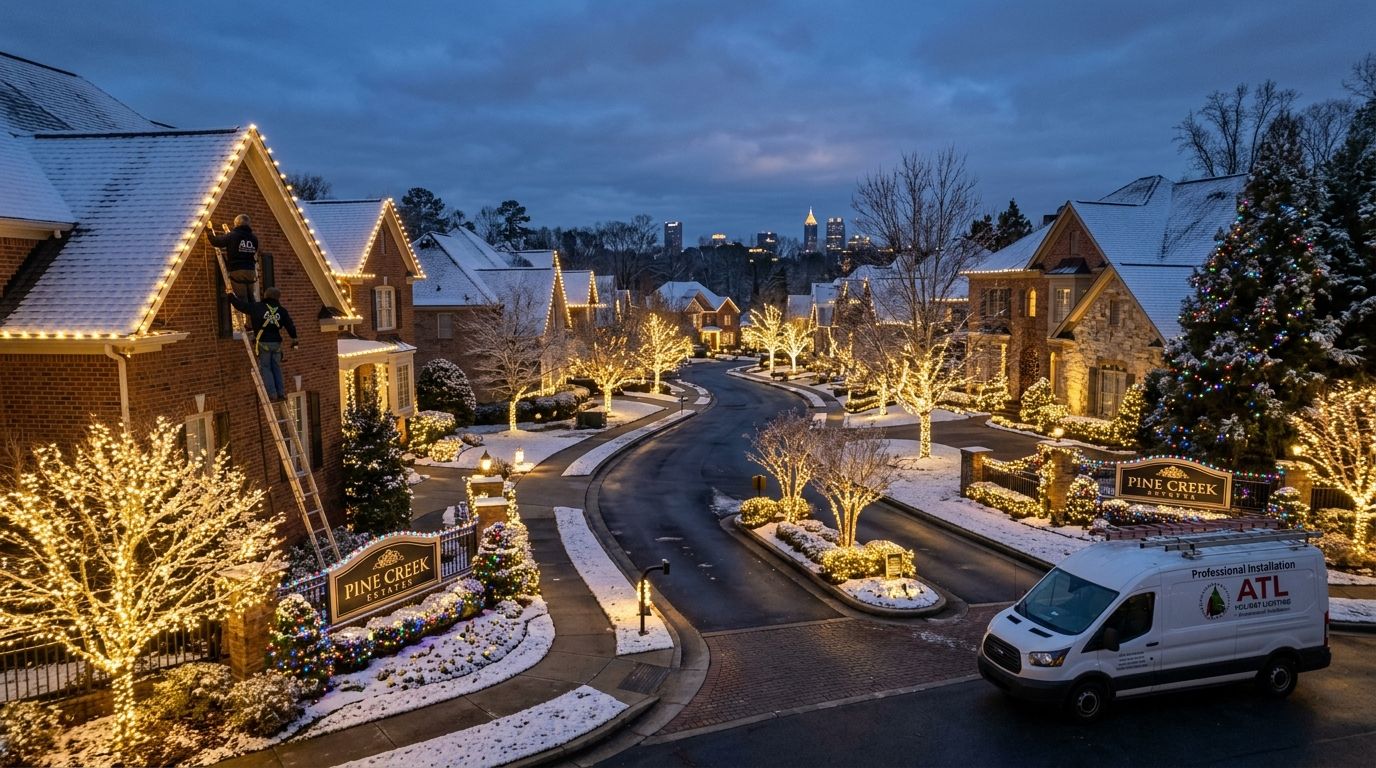
A full-service local operator like Atlanta Christmas Lighting Co handles design, installation, in-season maintenance, and takedown/storage under one contract, which matters when a board is managing lighting across an entire community rather than one house. Atlanta Christmas Lighting Co works both residential and commercial properties across greater Atlanta, which lines up with how HOAs actually operate — common areas, entrance monuments, and individual homes under one coordinated plan.
Full-service installer pros:
- One contract covers design through takedown, so the board isn't juggling three vendors
- Commercial-grade LEDs hold up better across a full season than retail strings
- Licensed and insured coverage matters for common-area liability
- Stored lights year to year simplify the next season's install and cut re-buy costs
Full-service installer cons:
- Popular local installers fill their booking calendar by early fall, so late-October requests get squeezed
- HOA-wide contracts require board approval on design before a single light goes up, which adds lead time
Full-service installer verdict: Book it — this is the right call for any HOA coordinating lighting across multiple properties or common areas in 2026.
2. National installation franchise: best for multi-metro HOA portfolios
Property management companies overseeing HOAs in several cities sometimes prefer a national franchise brand for the sake of one standardized process across markets. The pitch is consistency: the same install checklist and materials spec whether the property is in Atlanta or somewhere else.
National franchise pros:
- Standardized process makes vendor management easier for multi-city portfolios
- Corporate backing usually means formal insurance documentation is readily available
National franchise cons:
- Actual crew quality depends on the local franchisee, which varies territory to territory
- Less flexibility on custom design requests specific to an Atlanta neighborhood's architecture
National franchise verdict: Consider it if you're managing HOA lighting across multiple metro areas and need one contract structure — otherwise it's overkill for a single Atlanta community.
3. Independent or solo contractor: best budget option for a single entryway
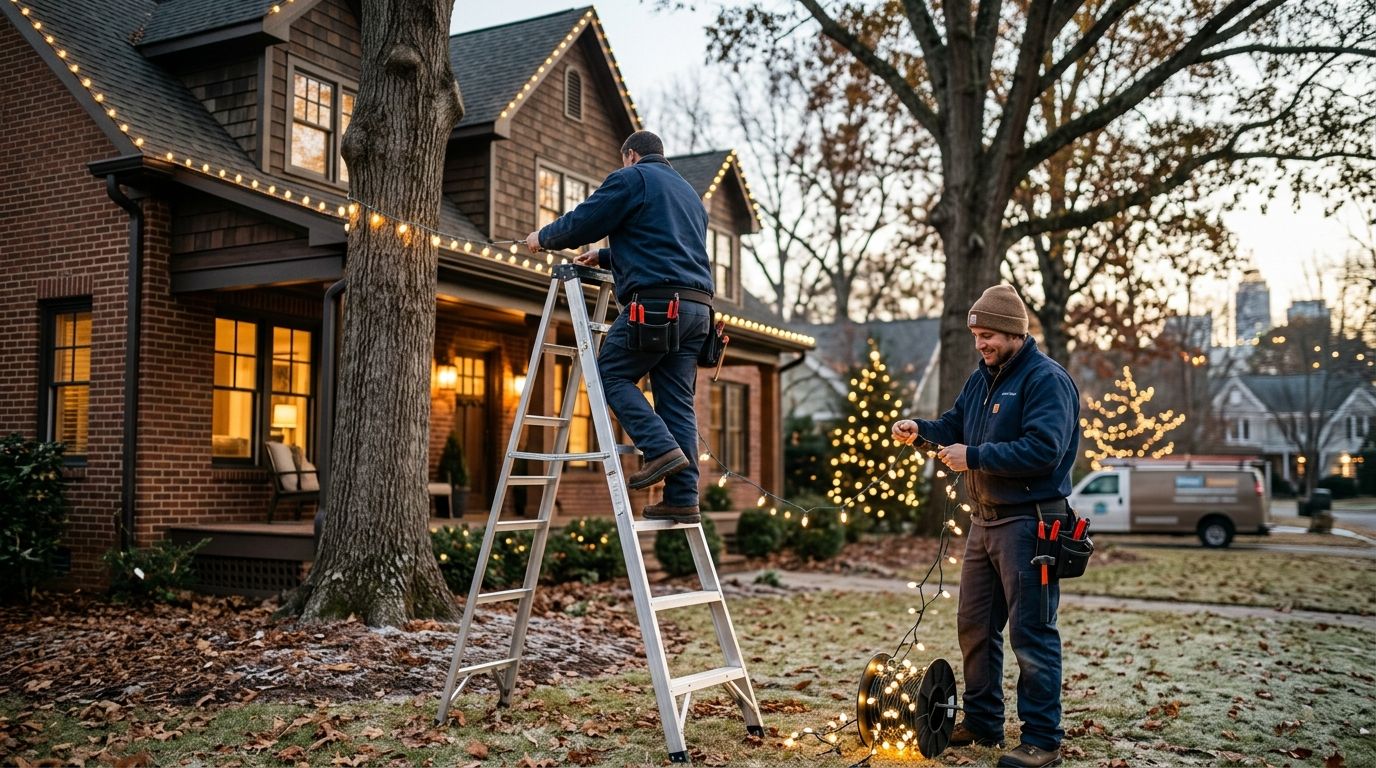
A smaller HOA section — one entrance monument, one clubhouse — doesn't always need a full commercial operation. An independent contractor working solo or with a small crew can handle a limited footprint at a lower overhead.
Independent contractor pros:
- Lower overhead often means a more direct, flexible relationship
- Fine for a single structure or small common area
Independent contractor cons:
- No backup crew if the contractor gets sick, injured, or double-booked during peak weeks
- Rarely carries the same insurance documentation an HOA board should require for common-area work
- Storage and next-year continuity aren't guaranteed the way they are with a dedicated service model
Independent contractor verdict: Skip it for whole-community programs; fine only for a single small structure with low liability exposure.
4. Landscaping company seasonal add-on: best for bundling with an existing lawn contract
Some HOAs already have a landscaping vendor and ask that company to add holiday lighting as a seasonal service. It keeps everything on one invoice and one point of contact for property upkeep generally.
Landscaping add-on pros:
- Single vendor relationship if the HOA already trusts them for grounds maintenance
- No new vendor onboarding or separate contract negotiation
Landscaping add-on cons:
- Lighting isn't the crew's core skill, and design quality typically reflects that
- Response time for mid-season outages slips because the crew is juggling regular landscape routes during their busiest month
Landscaping add-on verdict: Consider it only if the existing landscaping relationship is strong and the lighting ask is small in scope.
5. DIY rental kit or volunteer program: best for HOAs with an active lighting committee
A handful of HOAs run their own lighting program through a volunteer committee, renting or owning kits and coordinating install dates internally. It's the lowest direct vendor cost of any option here.
DIY program pros:
- No installer invoice at all if volunteers handle everything
- Full control over design choices, timing, and material selection
DIY program cons:
- Falls apart fast once volunteers get busy with their own holiday schedules in November
- No licensed/insured coverage for ladder work on common-area rooflines
- Storage between seasons is inconsistent, so material quality degrades faster
DIY program verdict: Skip it unless the committee has a genuinely reliable, experienced team and is prepared to accept the liability itself.
How we ranked these options
Each option was measured against the six criteria above: licensing/insurance, material quality, single point of contact, design consistency, takedown/storage, and in-season maintenance response. Full-service local operators score highest because they're built around all six; the other categories each trade away at least two of them for cost or convenience.
Which option should you choose?
For most Atlanta HOAs coordinating lighting across common areas and multiple homes, a full-service local installer is the right call for 2026 — the single-contract model covers design, install, maintenance, and takedown without the board managing separate vendors. Smaller sections with one structure and low liability exposure can reasonably go with an independent contractor to save cost. Everyone else on this list is a workable option only in a narrow, specific scenario — not a default choice for a whole community.
Get your HOA on the 2026 calendar
Design, install, maintenance, and takedown handled under one contract.
FAQ
What's the best Christmas light installer for HOA communities in Atlanta?
A full-service local installer that handles design, installation, in-season maintenance, and takedown/storage under one contract is the strongest fit for whole-community HOA programs in 2026. It avoids the coordination gaps that come with independent contractors or DIY volunteer programs.
Is a national franchise better than a local installer for HOA lighting?
Only if the HOA or management company is coordinating lighting across multiple cities and needs one standardized contract structure. For a single Atlanta community, a local full-service installer usually gives more design flexibility.
How much does HOA Christmas light installation cost in Atlanta?
Costs vary by property count, roofline footage, and design complexity, so get a direct quote rather than relying on a flat estimate. Requesting a quote early in the season also protects the HOA's spot on a crew's calendar.
Does the HOA need to require insurance from a lighting installer?
Yes — any crew working on common-area rooflines or shared structures should carry liability insurance, and the board should request documentation before signing a contract.
Can our landscaping company just add Christmas lights to our existing contract?
It's possible, but lighting isn't a landscaping crew's core skill and response time for mid-season outages tends to slip during their busiest month. It works best for small, low-complexity lighting needs.
When should an HOA book Christmas light installation in Atlanta?
Booking by late summer or early fall gives boards time to get design approval through committee before installer calendars fill for the season. Waiting until November for an HOA-wide program significantly narrows the options.
Should a volunteer committee handle HOA Christmas lighting instead of hiring a vendor?
Only if the committee has a reliable, experienced team and is willing to accept the liability of ladder work on common structures. Most HOAs find volunteer programs unreliable once November scheduling conflicts hit.
What happens to HOA Christmas lights after takedown?
With a full-service installer, lights are typically taken down and stored between seasons, which improves material longevity and simplifies next year's install. DIY and independent-contractor setups rarely offer this continuity.
One last thing
The boards that avoid mid-December scrambling in 2026 are the ones that get design approval on the agenda in late summer, not after Halloween — by the time a board votes in November, the installers with commercial crews and insurance documentation are already full for the season.