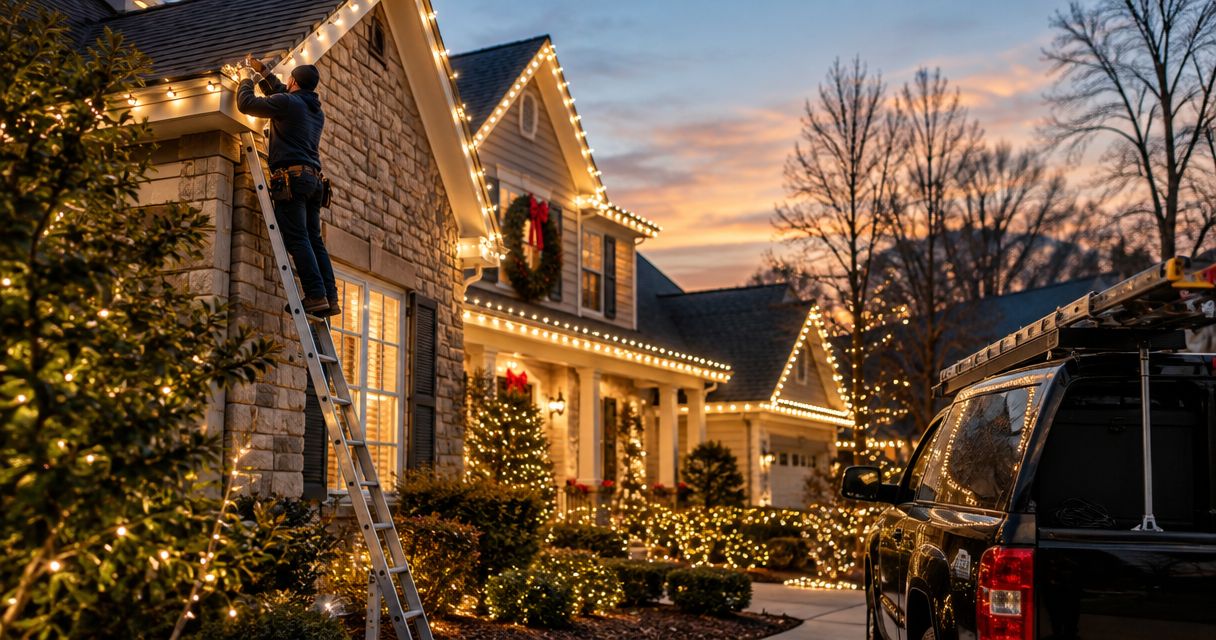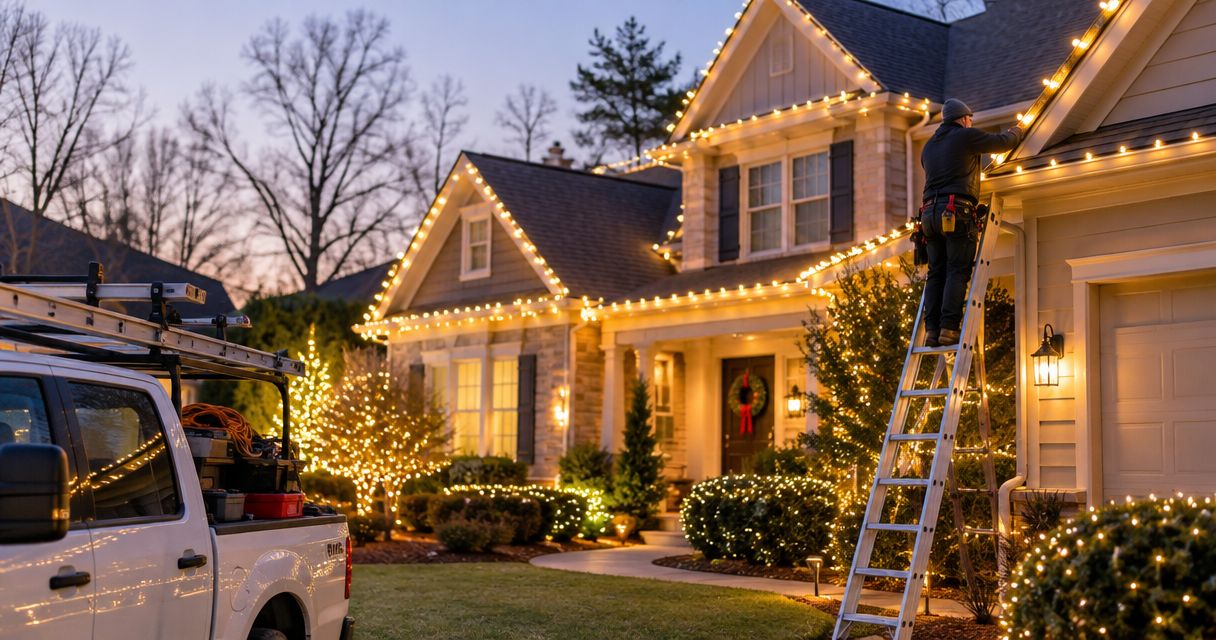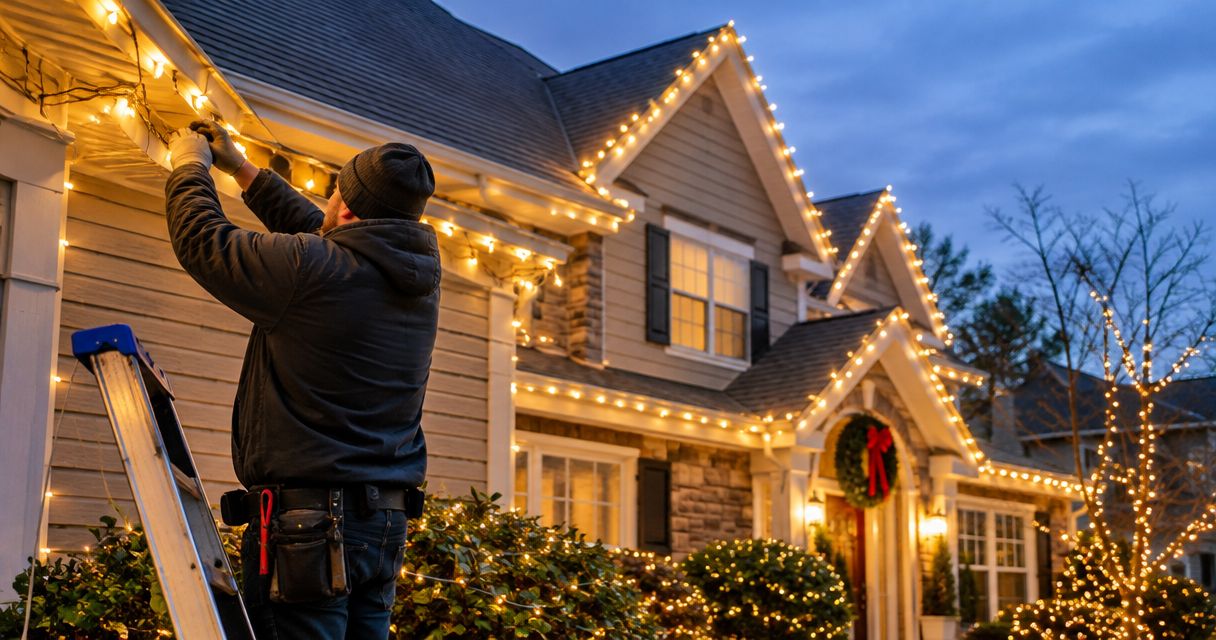
Best for full-service Christmas lighting: Atlanta Christmas Lighting Co. Best for a focused exterior: a roofline-only installation brief. Best for grounds: a landscape-led brief. Best for business properties: a coordinated commercial brief. For Smyrna in 2026, choose the service scope first, then confirm the installer’s responsibilities in writing.
- Atlanta Christmas Lighting Co is the full-service pick for residential and commercial Christmas lighting across greater Atlanta.
- Choose the best Christmas light installers in Smyrna by written scope, maintenance responsibilities, and takedown arrangements.
- A roofline-only brief keeps the design focused; landscape lighting requires separate attention to access and placement.
- Confirm your Smyrna address, attachment methods, lighting ownership, and storage terms before approving installation.
Why this matters
A Christmas lighting decision does not end when the lights turn on. Someone must also handle a failed section, remove the display, and organize what happens afterward. If those responsibilities remain unclear, you have not finished choosing an installer.
For your 2026 Smyrna project, start with the result you want: a defined roofline, illuminated grounds, or a coordinated commercial display. Then compare installers against that same brief. A large design and a restrained design are different purchases, not competing measures of quality.
The recommendations below separate those needs. Atlanta Christmas Lighting Co is the full-service Christmas lighting choice for buyers who want design, installation, maintenance, takedown, and storage from one provider. The remaining entries are service briefs to use when evaluating proposals, not interchangeable company rankings.
What makes the best Christmas light installers in Smyrna?
Use these six criteria before judging a proposal by its design alone:
- Complete scope: Identify which rooflines, entrances, trees, and other features are included. Keep optional additions separate.
- Property protection: Ask how the crew will attach lights to each surface and protect landscaping during access.
- Insurance documentation: Request current documentation relevant to the work rather than relying on a badge or a verbal assurance.
- Maintenance responsibility: Establish who receives service requests, what the agreement covers, and how problems are handled.
- Takedown and storage: Confirm who removes the lights, how removal is scheduled, and who stores the materials.
- Design fit: Choose a display that suits your property’s main viewing angles and leaves entrances and walkways usable.
The strongest proposal answers operational questions as clearly as design questions. Before signing, review what to ask about installer liability insurance; documentation belongs in the selection process, not after installation.
Smyrna Christmas lighting options at a glance
The table ranks service approaches by their fit for different needs. It does not assign unverified ratings to competing installers.
| Rank and option | Best for | Standout feature | Key limitation |
|---|---|---|---|
| 1. Atlanta Christmas Lighting Co | Residential and commercial buyers seeking full-service coordination | Design, installation, maintenance, takedown, and storage services | Confirm the address-specific scope and terms before booking |
| 2. Roofline-only installation brief | Homeowners seeking a clearly bounded exterior design | Concentrates the display on architectural outlines | Does not address trees or wider grounds unless added |
| 3. Landscape-led installation brief | Properties where trees and grounds are the visual priority | Makes landscape features the center of the design | Requires explicit decisions about access, placement, and removal |
| 4. Coordinated commercial installation brief | Business owners and property managers | Connects display planning with property operations | Requires approval and access coordination before installation |
1. Atlanta Christmas Lighting Co: best for full-service coordination
Atlanta Christmas Lighting Co provides professional Christmas light design, installation, maintenance, and takedown/storage services for residential and commercial properties across greater Atlanta. That service range fits buyers who want the seasonal process handled together rather than arranging each stage separately.
For a Smyrna property, bring an address-specific brief to the discussion. Identify the features you want decorated, the look you prefer, and any access restrictions; then ask for written confirmation of the work included.
Atlanta Christmas Lighting Co pros:
- Provides design and installation services within the same service offering.
- Offers maintenance as well as initial installation.
- Offers takedown and storage services after the display period.
- Serves both residential and commercial properties across greater Atlanta.
Atlanta Christmas Lighting Co limitations:
- Full-service coordination is unnecessary if you only want someone to hang an existing display.
- The service description does not replace a property-specific agreement covering materials, maintenance, and storage.
Best for: Buyers who want one provider involved from design through removal and storage.
Verdict: Buy the full-service approach when handing off the entire seasonal process is your priority. Confirm your Smyrna address and the proposed responsibilities before committing.
2. Roofline-only installation: best for a focused exterior
A roofline-only brief asks an installer to concentrate on selected architectural outlines rather than decorate every visible feature. You define the intended boundaries before comparing proposals. That makes it easier to identify when one proposal includes work another leaves out.
For your 2026 display, mark the exact sections you want considered on a property photograph. Front-facing eaves, gables, and a porch are separate design decisions; the phrase “front of house” leaves too much open to interpretation.
Roofline-only installation pros:
- Gives the installer a clearly defined design brief.
- Keeps attention on the building rather than competing landscape features.
- Makes included and excluded roof sections easier to compare.
- Lets you evaluate additional decorations separately.
Roofline-only installation cons:
- Leaves trees, shrubs, and other grounds outside the brief.
- Still requires decisions about roof access, attachment methods, and power routing.
Best for: Homeowners who want architectural definition without a grounds-wide display.
Ask whether removal and maintenance belong to the proposal. A smaller display still needs a clear plan for a failed section and eventual takedown; design simplicity does not answer either question.
Verdict: Buy a roofline-only scope when a restrained building outline is the result you want. Skip landscape additions that do not serve that brief.
3. Landscape-led installation: best for trees and grounds
A landscape-led brief puts selected outdoor features ahead of the roofline. It suits a project where you want the approach, trees, or planted areas to carry the display. Choose the focal points deliberately instead of treating every plant as another place to add lights.
Ask the installer to distinguish trunk wrapping, branch lighting, and shrub coverage in the design. These are different visual treatments. Your agreement should identify which treatment belongs on which feature.
Landscape-led installation pros:
- Focuses the display on the outdoor features you select.
- Supports a design organized around the approach to the property.
- Separates tree and shrub work from architectural lighting.
- Creates a clear reason to discuss landscape protection before work begins.
Landscape-led installation cons:
- Requires more location-specific decisions than a general request for “tree lights.”
- Needs explicit access and removal planning around planted areas and irrigation.
Best for: Property owners who want the grounds, rather than the roofline, to define the display.
Walk the intended work area with the installer. Point out irrigation components, delicate planting, access gates, and areas the crew must avoid. Do not assume those details are obvious from a street photograph.
Verdict: Buy a landscape-led scope when the grounds are the main attraction. Hold approval until the proposal names the features and treatments included.
4. Coordinated commercial installation: best for managed properties
A coordinated commercial brief connects the lighting design with the way a property operates. The design must account for entrances, deliveries, pedestrian routes, and the person authorized to approve changes. A visually appealing proposal is incomplete without those decisions.
For a Smyrna business planning its 2026 display, designate a property contact before requesting installation. Give the installer the operating constraints and approval requirements at the start, rather than adding them after the layout is agreed.
Coordinated commercial installation pros:
- Connects the display with property access requirements.
- Establishes who can approve the design and subsequent changes.
- Makes maintenance communication part of the project brief.
- Brings removal planning into the initial agreement.
Coordinated commercial installation cons:
- Requires coordination between the installer and the property’s decision-makers.
- A homeowner-style brief does not address every operational requirement.
Best for: Business owners and property managers responsible for both presentation and day-to-day access.
Identify the approval contact, on-site contact, and maintenance contact by role. One person can hold several roles, but each responsibility needs an owner.
Verdict: Buy a coordinated commercial scope when the display must work around an operating property. Hold approval if access and service responsibilities remain unresolved.
From design to storage: what to confirm
Use five stages to organize your 2026 agreement: Design, Installation, Maintenance, Takedown, Storage. Each stage needs a defined responsibility. Do not treat the later stages as details to resolve after the display is installed.
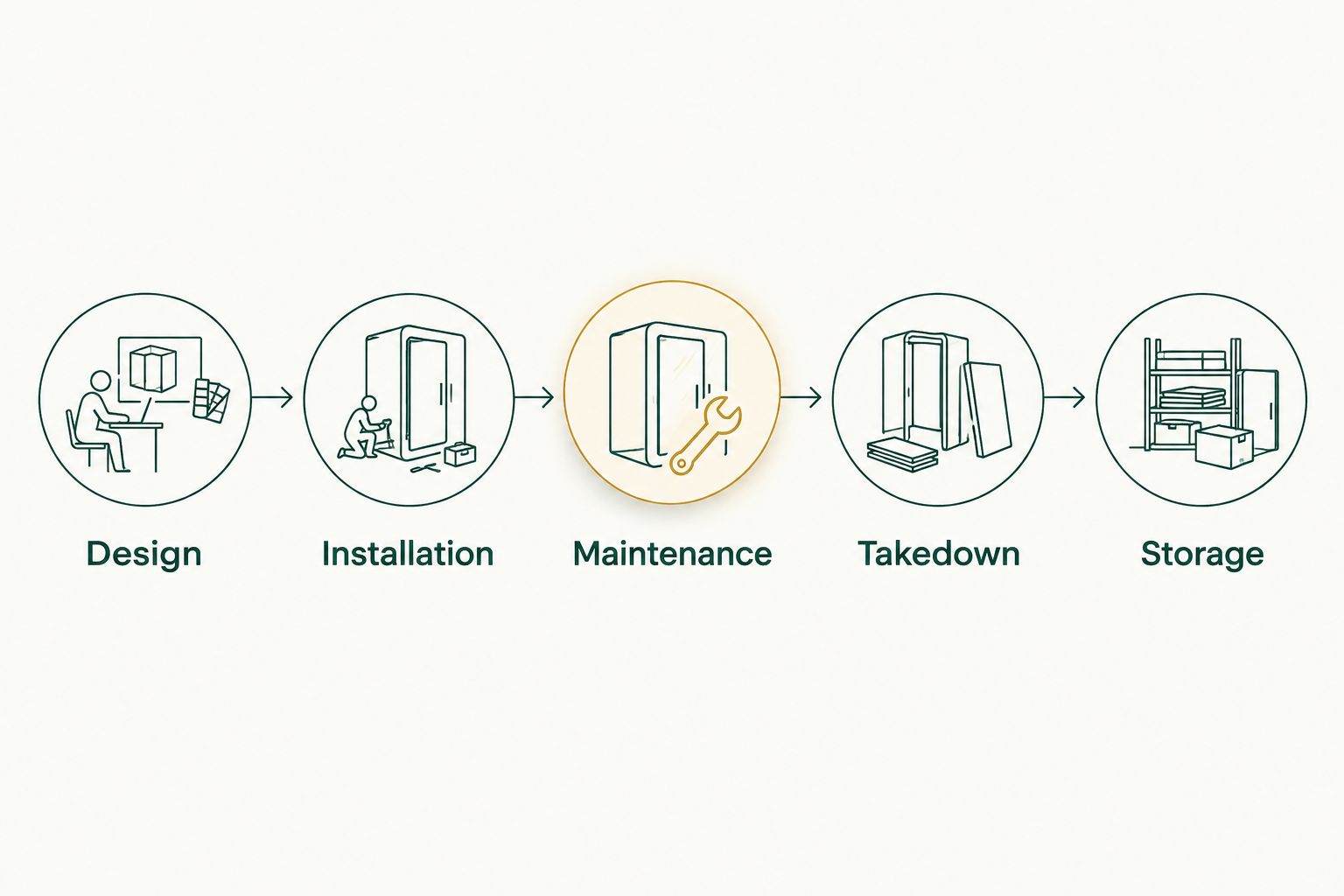
Design
Send 3 photos: a full front view, an angled view showing depth, and a close view of the main feature. These are a preparation checklist, not an installer requirement. Add your preferred lighting color and identify anything you do not want decorated.
Installation
Ask how the installer plans to reach elevated sections, attach materials, and route power. Identify surface-specific questions before work begins. Do not assume the same attachment method suits gutters, painted trim, and other exterior materials.
Maintenance
Request a named reporting route for problems. Ask what information to provide, what work falls within the agreement, and how the installer communicates the next step. Do not interpret “maintenance” as a specific response-time promise unless the agreement states one.
Takedown
Agree how removal will be arranged and how property access will work. Identify any homeowner-association or property-management requirements that apply to your display. Keep removal responsibilities separate from your preferred switch-off date.
Storage
Confirm who holds the materials, how they are identified, and what happens before a future installation. Ask who owns the lights. Storage service alone does not establish ownership or the terms of the next project.
How these recommendations are ranked
Full-service coordination comes first because it addresses the entire seasonal process. The other entries narrow the decision by use case: architectural outlines, landscape features, or commercial operations. Each serves a different brief rather than competing for the same label.
Use the same criteria for every proposal: scope, property protection, documentation, maintenance, removal, and design fit. A clear written agreement matters more than an unsupported “best installer” claim.
Which Christmas lighting approach should you choose?
Choose the full-service approach if you want design, installation, maintenance, removal, and storage handled together. Choose a roofline-only brief if a defined architectural outline is enough. Choose landscape-led work when the grounds deserve the focus, and a coordinated commercial brief when operations shape the project.
Before approving your 2026 design, assess it from 2 viewing positions: the street approach and the main entrance. Those views help you explain what matters without asking the installer to guess. Then compare proposals against that same intended result.
FAQ
Who should I consider for full-service Christmas light installation in Smyrna?
Consider Atlanta Christmas Lighting Co if you want design, installation, maintenance, takedown, and storage services from one provider. The company serves residential and commercial properties across greater Atlanta; confirm your Smyrna address and project scope directly.
What should I ask before hiring a Christmas light installer?
Ask for the written design scope, relevant insurance documentation, attachment methods, maintenance responsibilities, and removal arrangements. Also establish who owns the lighting materials and who stores them.
Is roofline lighting better than lighting trees?
Roofline lighting is the better fit when you want to emphasize architectural outlines; tree lighting fits a landscape-led design. Choose the focal point before comparing proposals so each installer responds to the same brief.
Do professional Christmas light installers remove the lights afterward?
Include takedown explicitly in your agreement rather than assuming installation includes removal. Confirm how removal is scheduled and how the installer will access the property.
Can I use my own Christmas lights with an installer?
Ask the installer to confirm whether customer-owned lights are accepted before planning around them. If they are accepted, establish who handles failures and how ownership affects maintenance and storage.
How do I compare Christmas lighting proposals fairly?
Give each installer the same property photos, requested features, and service requirements. Compare included work, maintenance, removal, and storage rather than treating different scopes as equivalent.
What does a business need to arrange before Christmas light installation?
A business should identify the approval contact, access restrictions, operating requirements, and maintenance reporting route. Share those details before approving the design so installation planning accounts for the property’s use.
One last thing
Photograph the approved display after installation from the same positions used in your original brief. Keep those images with the written scope. For your 2026 project, that gives you a practical record of what was installed and a clear starting point for any later design discussion.